
中试模块运行后BaSrCoFeO膜的失效机制
Failure Mechanisms of BaSrCoFeO Membranes after Pilot Module Operation.
作者信息
Herzog Simone, Liu Chao, Nauels Nicolas, Kaletsch Anke, Broeckmann Christoph
机构信息
Institute for Materials Applications in Mechanical Engineering (IWM), RWTH Aachen University, Augustinerbach 4, 52062 Aachen, Germany.
Aachener Verfahrenstechnik (AVT), Mechanical Process Engineering, RWTH Aachen University, Forckenbeckstraße 51, 52074 Aachen, Germany.
出版信息
Membranes (Basel). 2022 Nov 3;12(11):1093. doi: 10.3390/membranes12111093.
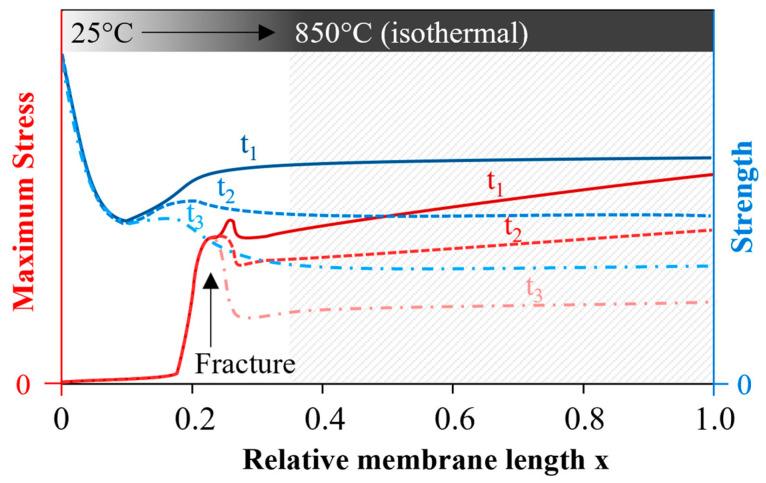
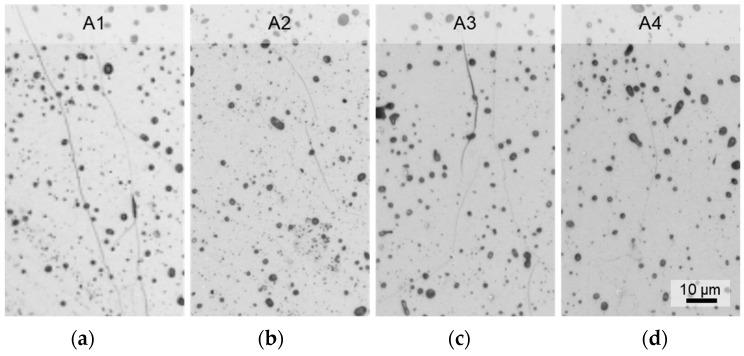
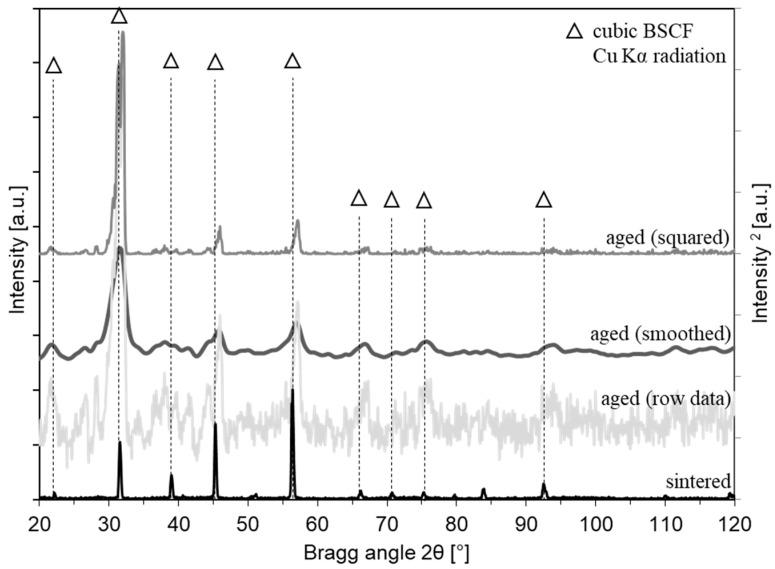
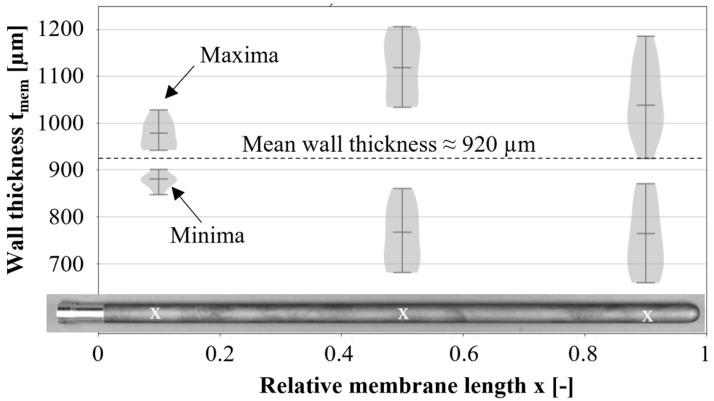
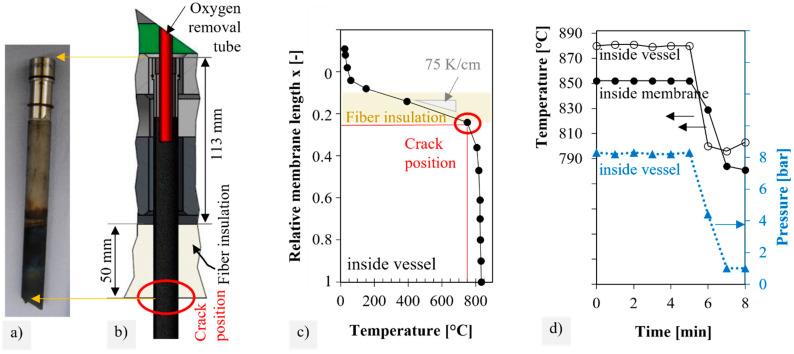
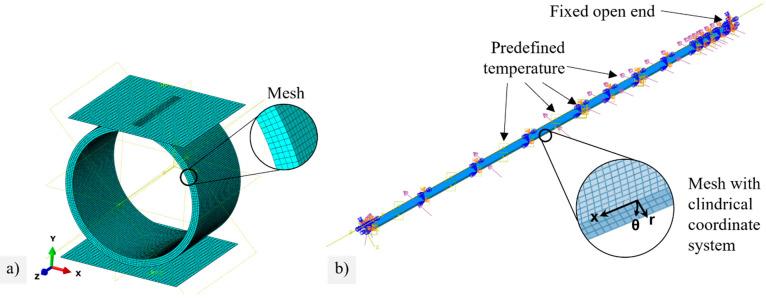
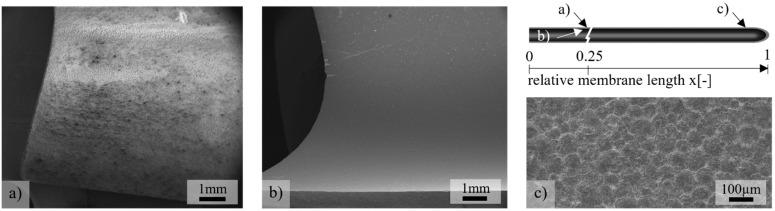
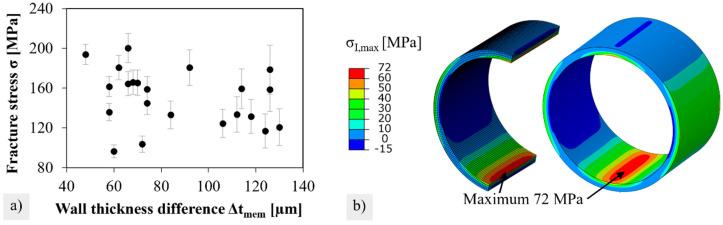
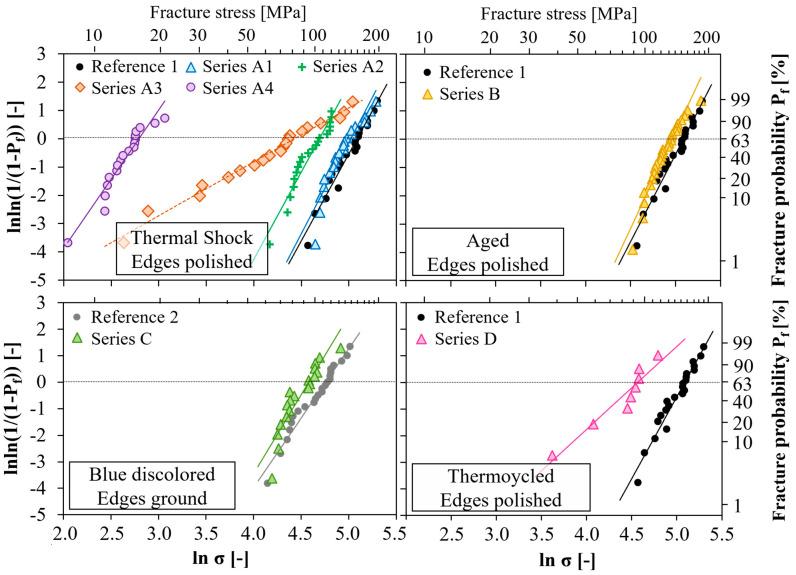
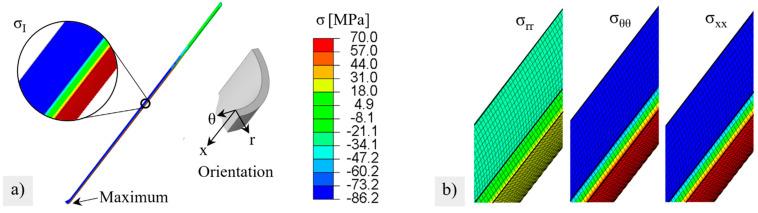
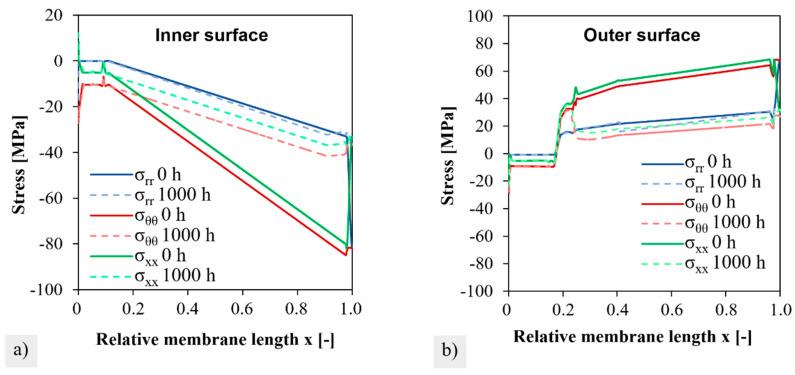
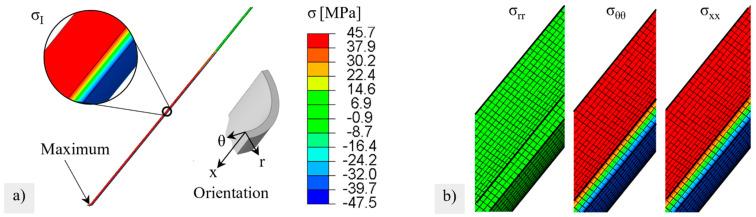
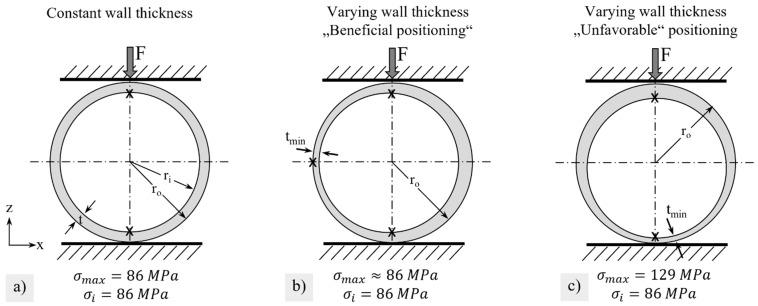
The step from the testing of oxygen transport membranes on a lab scale to long-term operation on a large scale is a challenge. In a previous study, membrane failure was observed at defined positions of one end of the cooled tubular BaSrCoFeO membranes after an emergency shutdown. To understand the failure mechanisms, strength degradation and transient stress distribution were investigated by brittle-ring tests and finite element simulations, respectively. A 15% decrease in the characteristic strength of 162 MPa was proven after aging at 850 °C and was attributed to grain coarsening. The reduction in characteristic strength after thermal shock ranged from 5 to 90% depending on the cooling rates, and from 5 to 40% after the first and 20th soft thermal cycling. Simulations indicated the chemical strains induced by a 10-bar feed air and 50 mbar permeate pressure, which caused tensile stresses of up to 70 MPa at the outer surface. These stresses relaxed to 43 MPa by creep within a 1000 h operation. A remaining local stress maximum seemed to be responsible for the fracture. It evolved near the experimentally observed fracture position during a 1000 h permeation and exceeded the temperature and time-dependent strength. The maximum stress was formed by a chemical strain at temperatures above 500 °C but effective creep relaxation needed temperatures above 750 °C.
从实验室规模的氧传输膜测试到大规模长期运行是一项挑战。在先前的一项研究中,在冷却的管状BaSrCoFeO膜一端的特定位置观察到紧急停机后的膜失效。为了解失效机制,分别通过脆环试验和有限元模拟研究了强度退化和瞬态应力分布。在850°C时效后,特征强度162MPa下降了15%,这归因于晶粒粗化。热冲击后的特征强度降低幅度在5%至90%之间,具体取决于冷却速率,在第一次和第20次软热循环后降低幅度在5%至40%之间。模拟表明,10巴的进料空气和50毫巴的渗透压力会引起化学应变,在外表面产生高达70MPa的拉应力。在1000小时的运行过程中,这些应力通过蠕变松弛至43MPa。剩余的局部应力最大值似乎是导致断裂的原因。它在1000小时的渗透过程中在实验观察到的断裂位置附近演变,并超过了温度和时间相关的强度。最大应力是由温度高于500°C时的化学应变形成的,但有效的蠕变松弛需要温度高于750°C。







 Zotero 插件