
基于计算机的全基因组分析揭示了 SARS-CoV-2 奥密克戎结构变化对宿主免疫逃逸和抗病毒治疗的影响及其进化。
In Silico Genome Analysis Reveals the Evolution and Potential Impact of SARS-CoV-2 Omicron Structural Changes on Host Immune Evasion and Antiviral Therapeutics.
机构信息
Tata Institute for Genetics and Society, Centre at inStem, Bangalore 560065, India.
Department of Epidemiology, University of California, Los Angeles, CA 90095, USA.
出版信息
Viruses. 2022 Nov 6;14(11):2461. doi: 10.3390/v14112461.
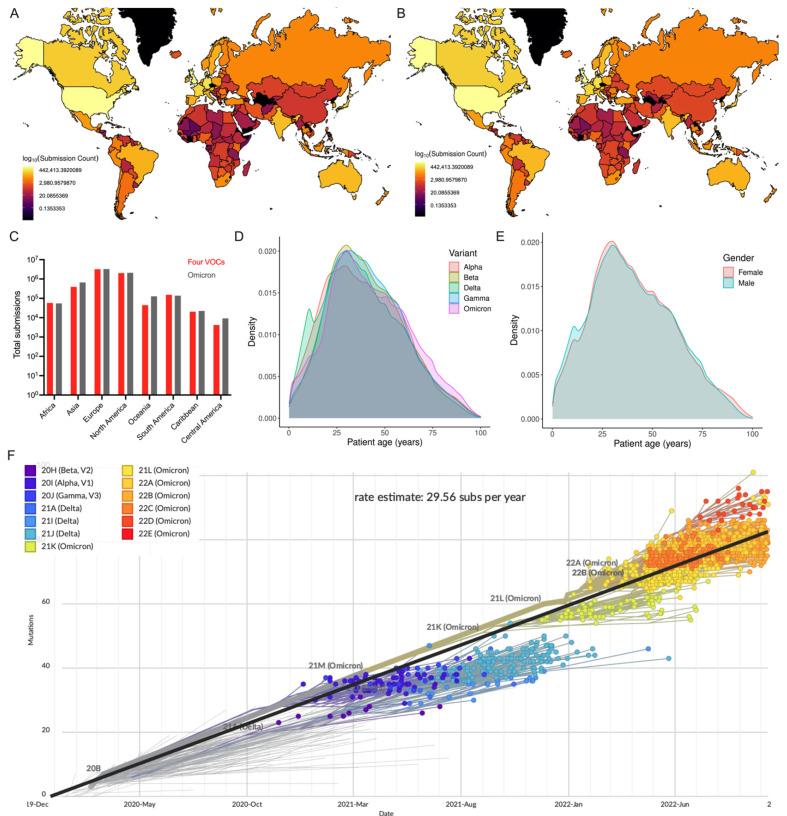
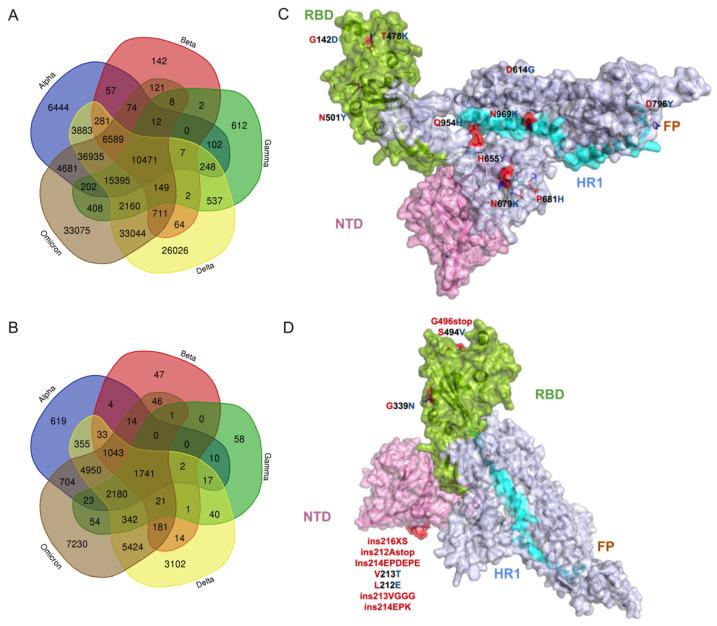
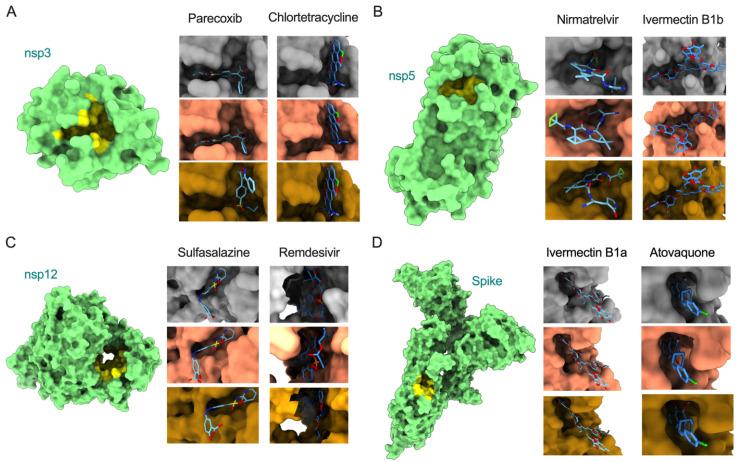
New variants of SARS-CoV-2 continue to evolve. The novel SARS-CoV-2 variant of concern (VOC) B.1.1.529 (Omicron) was particularly menacing due to the presence of numerous consequential mutations. In this study, we reviewed about 12 million SARS-CoV-2 genomic and associated metadata using extensive bioinformatic approaches to understand how evolutionary and mutational changes affect Omicron variant properties. Subsampled global data based analysis of molecular clock in the phylogenetic tree showed 29.56 substitutions per year as the evolutionary rate of five VOCs. We observed extensive mutational changes in the spike structural protein of the Omicron variant. A total of 20% of 7230 amino acid and structural changes exclusive to Omicron's spike protein were detected in the receptor binding domain (RBD), suggesting differential selection pressures exerted during evolution. Analyzing key drug targets revealed mutation-derived differential binding affinities between Delta and Omicron variants. Nine single-RBD substitutions were detected within the binding site of approved therapeutic monoclonal antibodies. T-cell epitope prediction revealed eight immunologically important functional hotspots in three conserved non-structural proteins. A universal vaccine based on these regions may likely protect against all these SARS-CoV-2 variants. We observed key structural changes in the spike protein, which decreased binding affinities, indicating that these changes may help the virus escape host cellular immunity. These findings emphasize the need for continuous genomic surveillance of SARS-CoV-2 to better understand how novel mutations may impact viral spread and disease outcome.
新型 SARS-CoV-2 变体不断进化。新型 SARS-CoV-2 变体关注(VOC)B.1.1.529(奥密克戎)由于存在大量重要突变而特别具有威胁性。在这项研究中,我们使用广泛的生物信息学方法对约 1200 万 SARS-CoV-2 基因组及其相关元数据进行了回顾,以了解进化和突变变化如何影响奥密克戎变体特性。基于对系统发育树中分子钟的全球数据进行的抽样分析显示,五个 VOC 的进化率为每年 29.56 个替换。我们观察到奥密克戎变体刺突结构蛋白发生了广泛的突变。在受体结合域(RBD)中,共检测到奥密克戎刺突蛋白的 7230 个氨基酸和结构变化中,有 20%是特有的,这表明在进化过程中受到了不同的选择压力。对关键药物靶点的分析表明,Delta 和奥密克戎变体之间的突变导致了不同的结合亲和力。在已批准的治疗性单克隆抗体的结合位点内检测到 9 个单 RBD 取代。T 细胞表位预测揭示了三个保守非结构蛋白中的 8 个免疫重要功能热点。基于这些区域的通用疫苗可能能够预防所有这些 SARS-CoV-2 变体。我们观察到刺突蛋白中的关键结构变化,这降低了结合亲和力,表明这些变化可能有助于病毒逃避宿主细胞免疫。这些发现强调了需要对 SARS-CoV-2 进行持续的基因组监测,以更好地了解新突变如何影响病毒的传播和疾病结果。

 Zotero 插件