
四嗪修饰的菁-苯乙烯染料的双因子荧光性用于 DNA 的生物正交标记。
Two-Factor Fluorogenicity of Tetrazine-Modified Cyanine-Styryl Dyes for Bioorthogonal Labelling of DNA.
机构信息
Institute of Organic Chemistry, Karlsruhe Institute of Technology (KIT), Fritz-Haber-Weg 6, 76131, Karlsruhe, Germany.
出版信息
Chemistry. 2023 Feb 7;29(8):e202203156. doi: 10.1002/chem.202203156. Epub 2022 Dec 19.
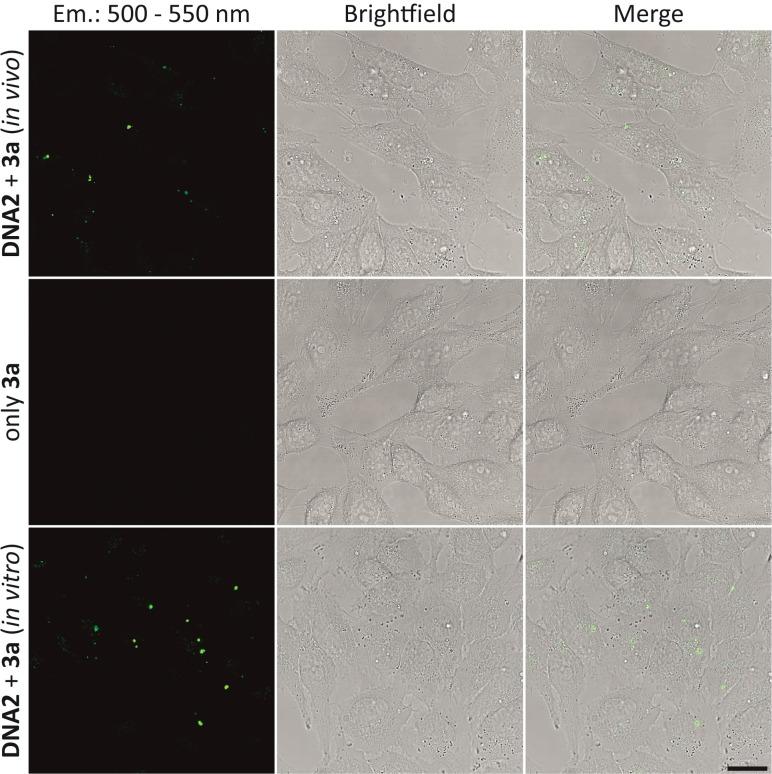
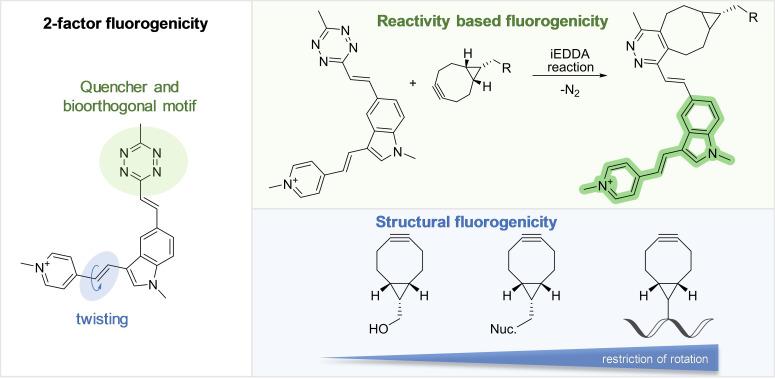
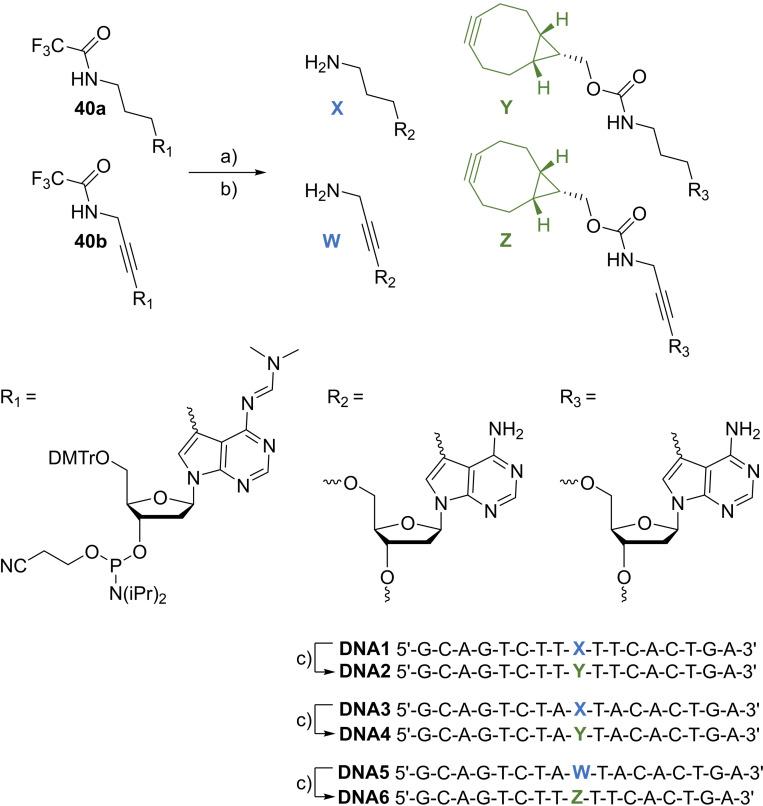
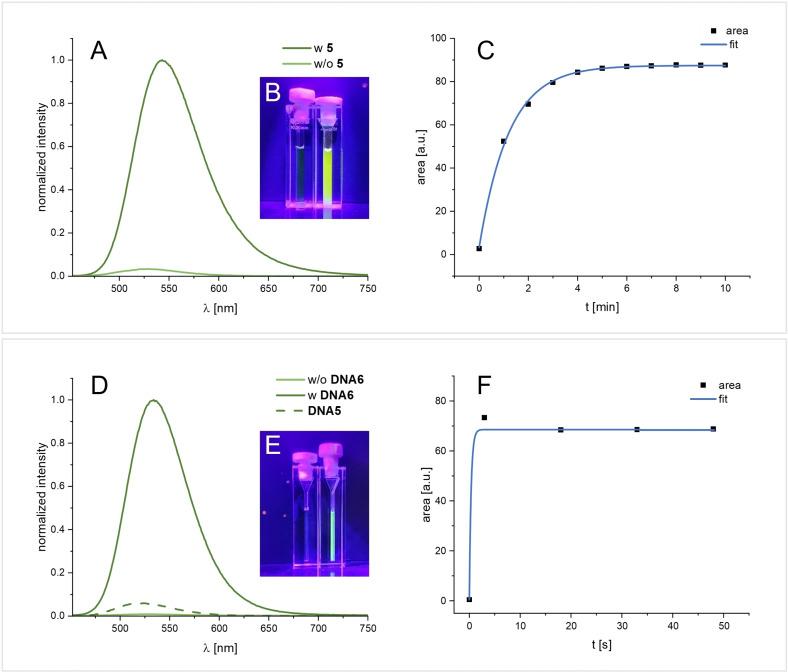
Two green fluorescent tetrazine-modified cyanine-styryl dyes were synthesized for bioorthogonal labelling of DNA by means of the Diels-Alder reaction with inverse electron demand. With DNA as target biopolymer the fluorescence of these dyes is released by two factors: (i) sterically by their interaction with DNA, and (ii) structurally via the conjugated tetrazine as quencher moiety. As a result, the reaction with bicyclononyne-modified DNA is significantly accelerated up to ≥284,000 M s , and the fluorescence turn-on is enhanced up to 560 by the two-factor fluorogenicity. These dyes are cell permeable even in low concentrations and undergo fluorogenic reactions with BCN-modified DNA in living HeLa cells. The two-factor fluorescence release improves the signal-to-noise ratio such that washing procedures prior to cell imaging are not needed, which is a great advantage for live cell imaging of DNA and RNA in the future.
两种绿色荧光四嗪修饰的菁染料被合成出来,用于通过逆电子需求的 Diels-Alder 反应对 DNA 进行生物正交标记。以 DNA 为靶生物聚合物,这些染料的荧光通过两个因素释放:(i)通过与 DNA 的相互作用在空间上受到限制,和(ii)通过共轭四嗪作为猝灭部分在结构上受到限制。结果,与双环壬炔修饰的 DNA 的反应显著加速至≥284,000 M s ,并且通过两因素荧光性将荧光开启增强至 560。即使在低浓度下,这些染料也可穿透细胞,并在活 HeLa 细胞中与 BCN 修饰的 DNA 发生荧光反应。两因素荧光释放提高了信噪比,使得在细胞成像之前不需要进行洗涤步骤,这对于未来 DNA 和 RNA 的活细胞成像来说是一个巨大的优势。





 Zotero 插件