
马亚罗病毒复制周期的研究:病毒增殖动力学与病毒形态发生之间的相关性。
A study of the MAYV replication cycle: Correlation between the kinetics of viral multiplication and viral morphogenesis.
作者信息
Mendonça Diogo C, Reis Erik V S, Arias Nídia E C, Valencia Hugo J, Bonjardim Cláudio A
机构信息
Grupo de Transdução de Sinal, Laboratório de Vírus, Department of Microbiology, Institute of Biological Sciences, Universidade Federal de Minas Gerais., 31270-901, Avenida Antonio Carlos, 6627, Belo Horizonte, Minas Gerais, Brazil.
Grupo de Transdução de Sinal, Laboratório de Vírus, Department of Microbiology, Institute of Biological Sciences, Universidade Federal de Minas Gerais., 31270-901, Avenida Antonio Carlos, 6627, Belo Horizonte, Minas Gerais, Brazil.
出版信息
Virus Res. 2023 Jan 2;323:199002. doi: 10.1016/j.virusres.2022.199002. Epub 2022 Nov 10.
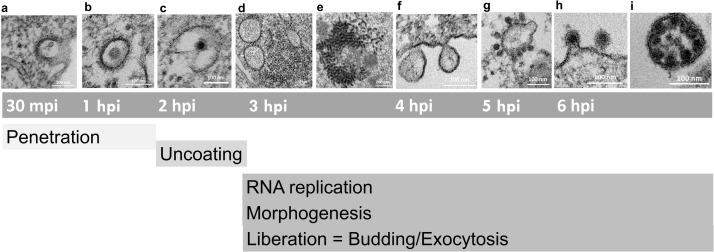
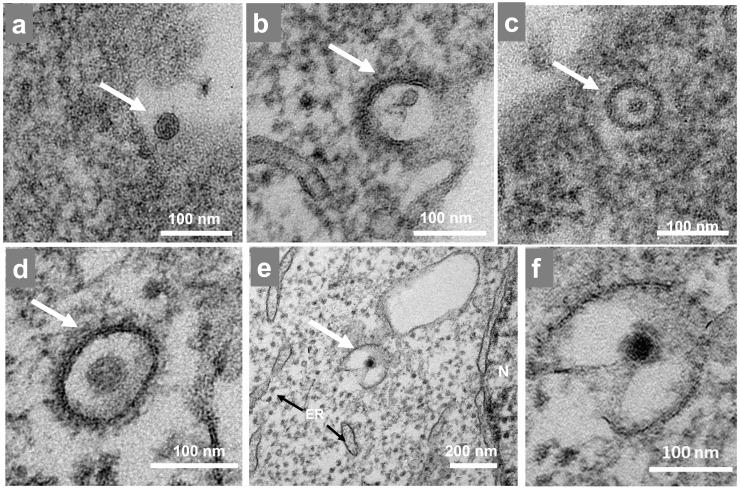
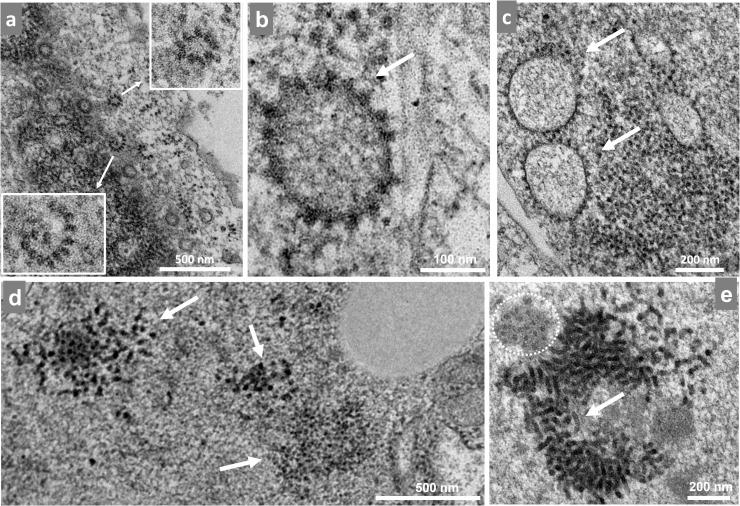
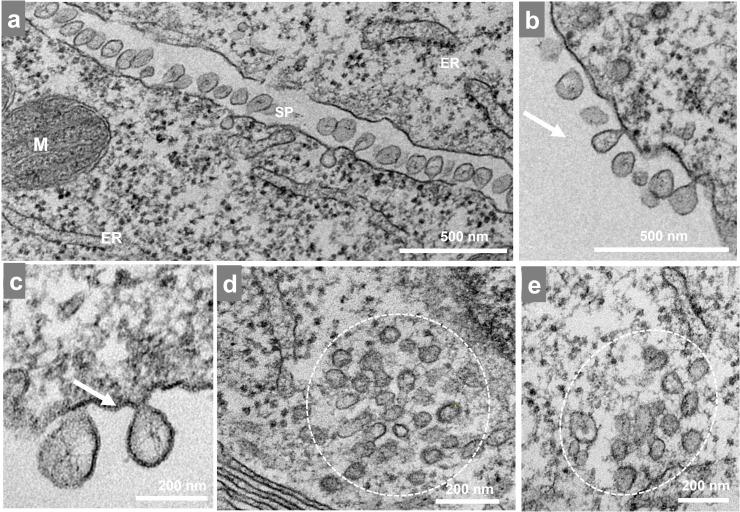
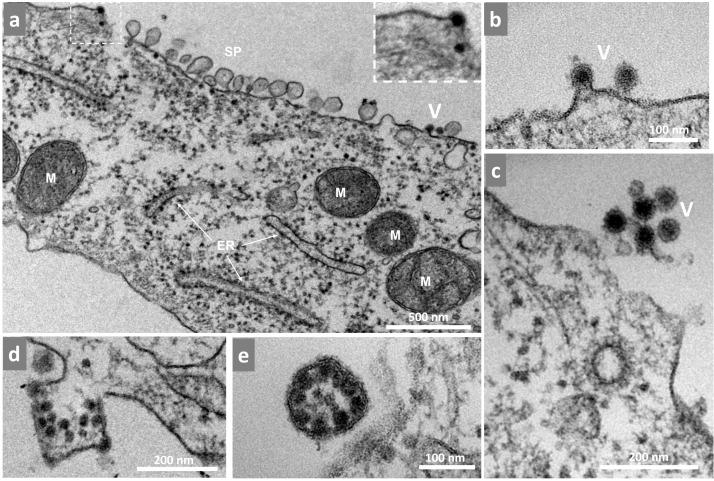
Mayaro virus (MAYV) is mainly found in Central and South America and causes a febrile illness followed by debilitating arthritis and arthralgia similar to chikungunya virus (CHIKV). Infection leads to long-term sequelae with a direct impact on the patient's productive capacity, resulting in economic losses. Mayaro fever is a neglected disease due to the limited epidemiological data. In Brazil, it is considered a potential public health risk with the number of cases increasing every year. Most of our knowledge about MAYV biology is inferred from data obtained from other alphaviruses as well as more recent studies on MAYV. Here, we analyzed the kinetics of viral replication through standard growth curves, quantification of intracellular and extracellular particles, and RNA quantification. We compared transmission electron microscopy data during different stages of infection. This approach allowed us to establish a chronological order of events during MAYV replication and its respective timepoints including cell entry through clathrin-mediated endocytosis occurring at 15-30 min, genome replication at 2-3 h, morphogenesis at 4 hpi, and release at 4-6 hpi. We also present evidence of uncharacterized events such as ribosome reorganization as well as clusters of early viral precursors and release through exocytosis in giant forms. Our work sheds new and specific light on the MAYV replication cycle and may contribute to future studies on the field.
马亚罗病毒(MAYV)主要在中美洲和南美洲被发现,可引发一种发热性疾病,随后出现类似于基孔肯雅病毒(CHIKV)的使人衰弱的关节炎和关节痛。感染会导致长期后遗症,直接影响患者的生产能力,从而造成经济损失。由于流行病学数据有限,马亚罗热是一种被忽视的疾病。在巴西,随着病例数量逐年增加,它被视为一种潜在的公共卫生风险。我们对MAYV生物学的大多数了解是从其他甲病毒获得的数据以及最近对MAYV的研究中推断出来的。在这里,我们通过标准生长曲线、细胞内和细胞外颗粒的定量以及RNA定量分析了病毒复制的动力学。我们比较了感染不同阶段的透射电子显微镜数据。这种方法使我们能够确定MAYV复制过程中事件的时间顺序及其各自的时间点,包括在15 - 30分钟时通过网格蛋白介导的内吞作用进入细胞、在2 - 3小时时进行基因组复制、在感染后4小时进行形态发生以及在4 - 6小时时释放。我们还提供了一些未被描述的事件的证据,如核糖体重组以及早期病毒前体的聚集和以巨大形式通过胞吐作用释放。我们的工作为MAYV复制周期提供了新的具体见解,并可能有助于该领域未来的研究。



 Zotero 插件