
邻苯二甲酸单-(2-乙基-5-羟基己基)酯通过色氨酸-犬尿氨酸-AHR 途径激活促进子宫平滑肌瘤细胞存活。
Mono-(2-ethyl-5-hydroxyhexyl) phthalate promotes uterine leiomyoma cell survival through tryptophan-kynurenine-AHR pathway activation.
机构信息
Division of Reproductive Science in Medicine, Department of Obstetrics and Gynecology, Feinberg School of Medicine, Northwestern University, Chicago, IL 60610.
Division of Obstetrics and Gynecology, Department of Clinical Science, Intervention and Technology, Karolinska Institute and Karolinska University Hospital, 171 64 Stockholm, Sweden.
出版信息
Proc Natl Acad Sci U S A. 2022 Nov 22;119(47):e2208886119. doi: 10.1073/pnas.2208886119. Epub 2022 Nov 14.
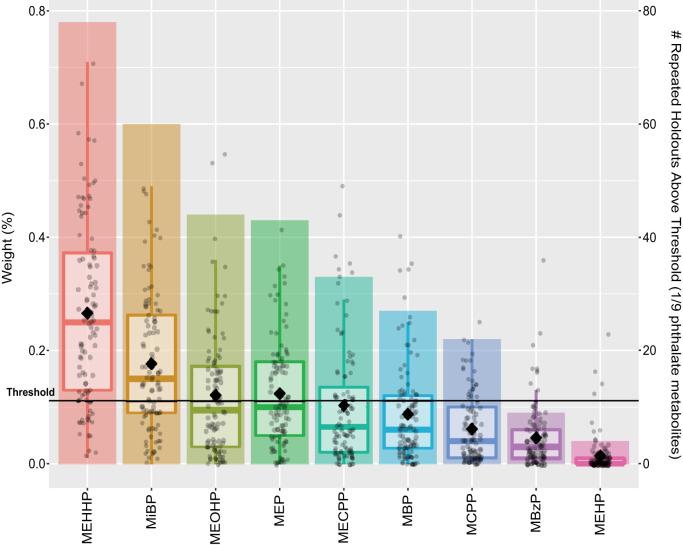
Uterine leiomyoma is the most common tumor in women and causes severe morbidity in 15 to 30% of reproductive-age women. Epidemiological studies consistently indicate a correlation between leiomyoma development and exposure to endocrine-disrupting chemical phthalates, especially di-(2-ethylhexyl) phthalate (DEHP); however, the underlying mechanisms are unknown. Here, among the most commonly encountered phthalate metabolites, we found the strongest association between the urine levels of mono(2-ethyl-5-hydroxyhexyl) phthalate (MEHHP), the principal DEHP metabolite, and the risk of uterine leiomyoma diagnosis ( = 712 patients). The treatment of primary leiomyoma and smooth muscle cells ( = 29) with various mixtures of phthalate metabolites, at concentrations equivalent to those detected in urine samples, significantly increased cell viability and decreased apoptosis. MEHHP had the strongest effects on both cell viability and apoptosis. MEHHP increased cellular tryptophan and kynurenine levels strikingly and induced the expression of the tryptophan transporters SLC7A5 and SLC7A8, as well as, tryptophan 2,3-dioxygenase (TDO2), the key enzyme catalyzing the conversion of tryptophan to kynurenine that is the endogenous ligand of aryl hydrocarbon receptor (AHR). MEHHP stimulated nuclear localization of AHR and up-regulated the expression of CYP1A1 and CYP1B1, two prototype targets of AHR. siRNA knockdown or pharmacological inhibition of SLC7A5/SLC7A8, TDO2, or AHR abolished MEHHP-mediated effects on leiomyoma cell survival. These findings indicate that MEHHP promotes leiomyoma cell survival by activating the tryptophan-kynurenine-AHR pathway. This study pinpoints MEHHP exposure as a high-risk factor for leiomyoma growth, uncovers a mechanism by which exposure to environmental phthalate impacts leiomyoma pathogenesis, and may lead to the development of novel druggable targets.
子宫肌瘤是女性最常见的肿瘤,在 15%至 30%的育龄妇女中导致严重的发病率。流行病学研究一致表明,子宫肌瘤的发展与内分泌干扰化学物质邻苯二甲酸酯的暴露之间存在相关性,特别是邻苯二甲酸二(2-乙基己基)酯(DEHP);然而,其潜在机制尚不清楚。在这里,在最常见的邻苯二甲酸代谢物中,我们发现尿液中单(2-乙基-5-羟基己基)邻苯二甲酸(MEHHP)水平与子宫肌瘤诊断风险之间存在最强的关联(=712 例患者)。用各种邻苯二甲酸代谢物混合物处理原发性子宫肌瘤和平滑肌细胞(=29),浓度相当于尿液样本中检测到的浓度,可显著增加细胞活力并降低细胞凋亡。MEHHP 对细胞活力和细胞凋亡均有最强的影响。MEHHP 可显著增加细胞色氨酸和犬尿氨酸水平,并诱导色氨酸转运蛋白 SLC7A5 和 SLC7A8 的表达,以及色氨酸 2,3-双加氧酶(TDO2)的表达,TDO2 是催化色氨酸转化为犬尿氨酸的关键酶,犬尿氨酸是芳烃受体(AHR)的内源性配体。MEHHP 刺激 AHR 的核定位,并上调 CYP1A1 和 CYP1B1 的表达,这两种是 AHR 的典型靶标。siRNA 敲低或 SLC7A5/SLC7A8、TDO2 或 AHR 的药理学抑制消除了 MEHHP 对子宫肌瘤细胞存活的影响。这些发现表明,MEHHP 通过激活色氨酸-犬尿氨酸-AHR 途径促进子宫肌瘤细胞存活。这项研究指出 MEHHP 暴露是子宫肌瘤生长的高危因素,揭示了环境邻苯二甲酸酯暴露影响子宫肌瘤发病机制的机制,并可能导致新的可药物治疗靶点的开发。



 Zotero 插件