
基于铜死亡相关 lncRNA 特征构建胰腺癌预后模型。
Construction of a Prognostic Model Based on Cuproptosis-Related lncRNA Signatures in Pancreatic Cancer.
机构信息
The First Clinical Medical College of Lanzhou University, No. 222, Tianshui Road (South), Chengguan, Lanzhou, Gansu 730000, China.
出版信息
Can J Gastroenterol Hepatol. 2022 Nov 11;2022:4661929. doi: 10.1155/2022/4661929. eCollection 2022.
AIM
The aim of this study is to identify cuproptosis-related lncRNAs and construct a prognostic model for pancreatic cancer patients for clinical use.
METHODS
The expression profile of lncRNAs was downloaded from The Cancer Genome Atlas database, and cuproptosis-related lncRNAs were identified. The prognostic cuproptosis-related lncRNAs were obtained and used to establish and validate a prognostic risk score model in pancreatic cancer.
RESULTS
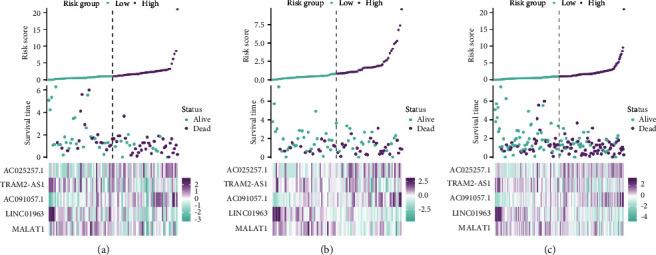
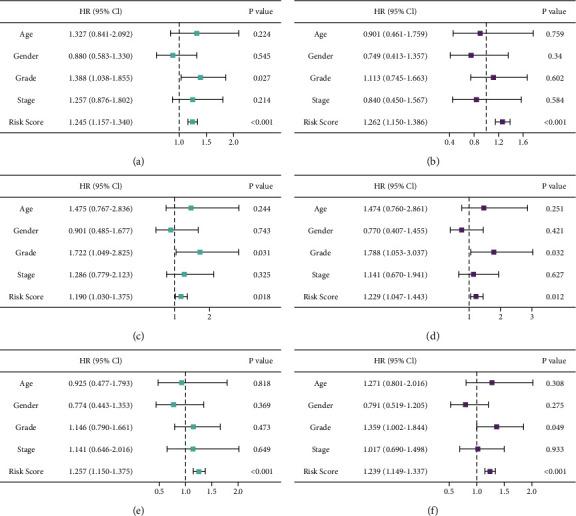
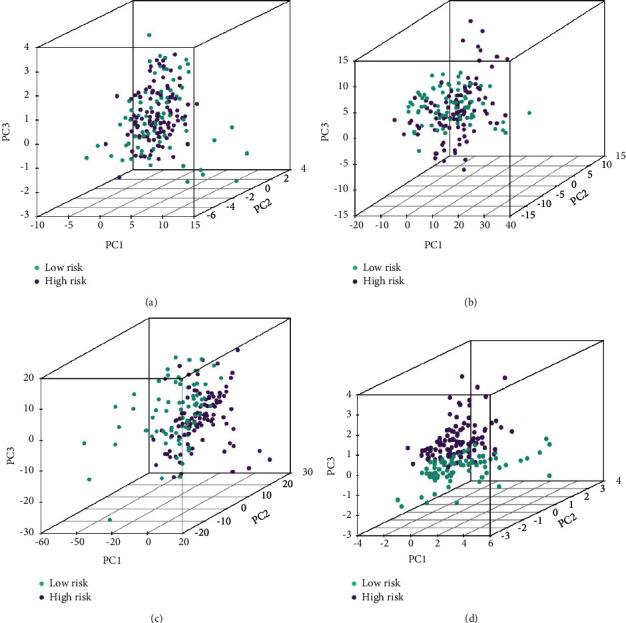
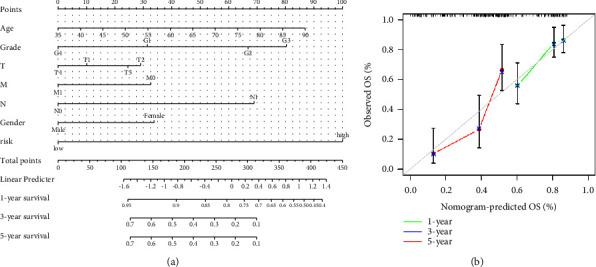
In total, 181 cuproptosis-related lncRNAs were obtained. The prognostic risk score model was constructed based on five lncRNAs (AC025257.1, TRAM2-AS1, AC091057.1, LINC01963, and MALAT1). Patients were assigned to two groups according to the median risk score. Kaplan-Meier survival curves showed that the difference in the prognosis between the high- and low-risk groups was statistically significant. Multivariate Cox analysis showed that our risk score was an independent risk factor for pancreatic cancer patients. Receiver operator characteristic curves revealed that the cuproptosis-related lncRNA model can effectively predict the prognosis of pancreatic cancer. The principal component analysis showed a difference between the high- and low-risk groups intuitively. Functional enrichment analysis showed that different genes were involved in cancer-related pathways in patients in the high- and low-risk groups.
CONCLUSION
The risk model based on five prognostic cuproptosis-related lncRNAs can well predict the prognosis of pancreatic cancer patients. Cuproptosis-related lncRNAs could be potential biomarkers for pancreatic cancer diagnosis and treatment.
目的
本研究旨在鉴定与铜死亡相关的 lncRNAs,并构建用于临床的胰腺癌患者预后模型。
方法
从癌症基因组图谱数据库中下载 lncRNAs 的表达谱,鉴定与铜死亡相关的 lncRNAs。获得预后相关的铜死亡 lncRNAs,并用于建立和验证胰腺癌的预后风险评分模型。
结果
共获得 181 个与铜死亡相关的 lncRNAs。基于 5 个 lncRNAs(AC025257.1、TRAM2-AS1、AC091057.1、LINC01963 和 MALAT1)构建预后风险评分模型。根据中位风险评分将患者分为两组。Kaplan-Meier 生存曲线表明,高低风险组之间的预后差异具有统计学意义。多因素 Cox 分析表明,我们的风险评分是胰腺癌患者的独立危险因素。受试者工作特征曲线表明,铜死亡相关 lncRNA 模型可有效预测胰腺癌的预后。主成分分析直观地显示了高低风险组之间的差异。功能富集分析表明,高低风险组患者的不同基因参与了癌症相关通路。
结论
基于 5 个预后相关的铜死亡相关 lncRNAs 的风险模型可很好地预测胰腺癌患者的预后。铜死亡相关 lncRNAs 可能是胰腺癌诊断和治疗的潜在生物标志物。




 Zotero 插件