
与对照组相比,功能性腹痛障碍患者的肠道微生物群保持稳定:诊断工具的潜力。
Gut Microbiome Remains Static in Functional Abdominal Pain Disorders Patients Compared to Controls: Potential for Diagnostic Tools.
作者信息
Abomoelak Bassam, Saps Miguel, Sudakaran Sailendharan, Deb Chirajyoti, Mehta Devendra
机构信息
Arnold Palmer Pediatric Gastroenterology Clinic, Orlando Health, Orlando, FL 32806, USA.
Pediatric Gastroenterology, Hepatology and Nutrition Division, University of Miami Miller School of Medicine, Miami, FL 33136, USA.
出版信息
BioTech (Basel). 2022 Oct 27;11(4):50. doi: 10.3390/biotech11040050.
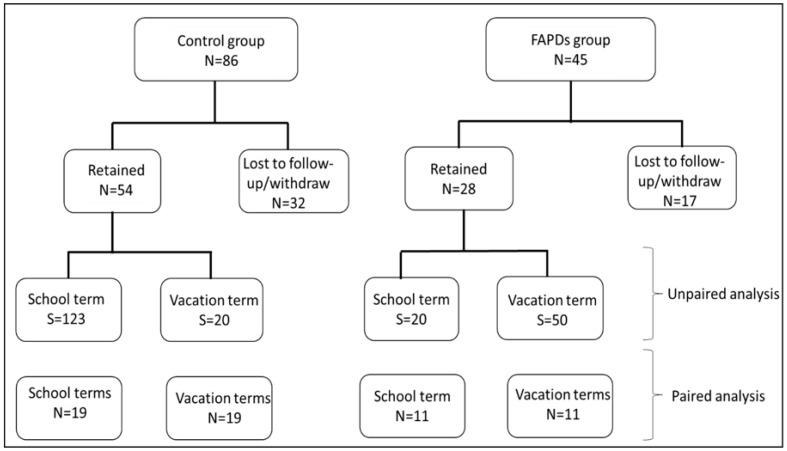
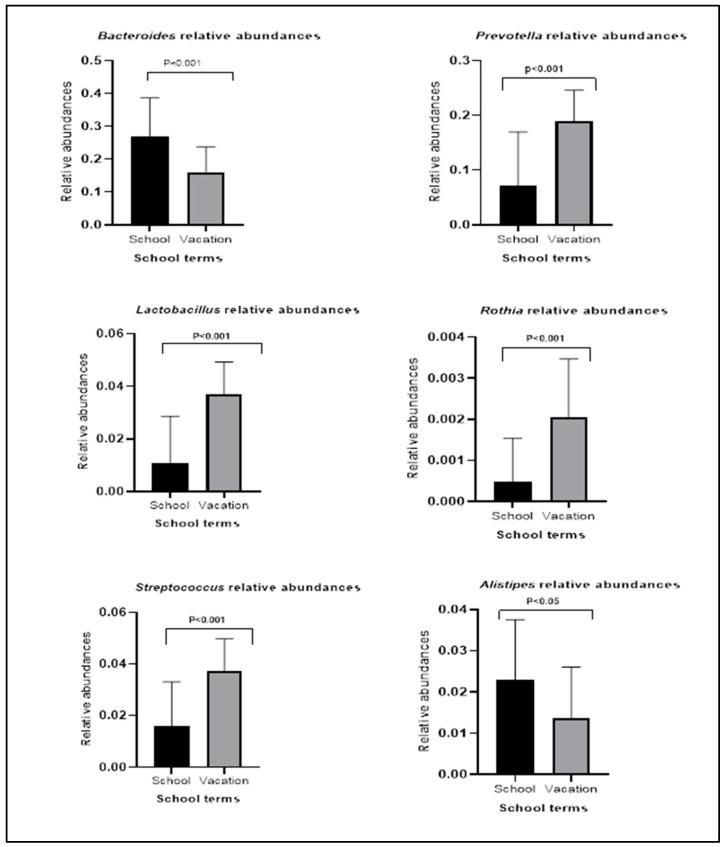
Background: Functional Abdominal Pain disorders (FAPDs) are a group of heterogeneous gastrointestinal disorders with unclear pathophysiology. In children, FAPDs are more common in the winter months than summer months. The possible influence of school stressors has been proposed. Previously, our group showed differences in bacterial relative abundances and alpha diversity in the gut microbiome and its relationship with stressors in a cross-sectional evaluation of children suffering from FAPDs compared to a healthy control group. We present longitudinal data to assess whether the gut microbiome changes over school terms in the control and FAPDs groups. Methods: The longitudinal study included children with FAPDs (n = 28) and healthy controls (n = 54). Gastrointestinal symptoms, as well as stool microbiome, were assessed in both groups. Stool samples were serially collected from all participants during both the school term and summer vacation. The stool samples were subjected to total genomic extraction, 16S rRNA amplicon sequencing, and bioinformatics analysis. The gut microbiome was compared at school and during vacation. Other metrics, alpha diversity, and beta diversity, were also compared between the two school terms in every group. Results: In the healthy group, there were differences in microbiome composition between school terms and summer vacation. Conversely, we found no differences in the FAPDs group between the two terms. The healthy control group revealed differences (p-value < 0.05) in 55 bacterial species between the school term and vacation. Several of the differentially abundant identified bacteria were involved in short-chain fatty acids production (SCFAs), inflammation reduction, and gut homeostasis. Alpha diversity metrics, such as the Shannon index, were different in the control group and remained unchanged in the FAPDs group. Conclusion: Although preliminary, our findings suggest that the gut microbiome is static in FAPDs. This compares with a more dynamic healthy gut microbiome. Further studies are warranted to corroborate this and understand the interplay between stress, symptoms, and a less diverse and static microbiome. Future studies will also account for different variables such as diet and other patient demographic criteria that were missing in the current study.
背景
功能性腹痛障碍(FAPDs)是一组病理生理学尚不明确的异质性胃肠道疾病。在儿童中,FAPDs在冬季比夏季更为常见。已有研究提出学校压力源可能产生影响。此前,我们团队在一项针对FAPDs患儿与健康对照组的横断面评估中发现,肠道微生物群的细菌相对丰度和α多样性存在差异,且与压力源有关。我们提供纵向数据以评估对照组和FAPDs组的肠道微生物群在学期期间是否会发生变化。
方法
纵向研究纳入了FAPDs患儿(n = 28)和健康对照组(n = 54)。对两组的胃肠道症状以及粪便微生物群进行评估。在学期和暑假期间,对所有参与者连续采集粪便样本。对粪便样本进行全基因组提取、16S rRNA扩增子测序和生物信息学分析。比较学期和假期期间的肠道微生物群。还比较了每组两个学期之间的其他指标、α多样性和β多样性。
结果
在健康组中,学期和暑假期间的微生物群组成存在差异。相反,我们发现FAPDs组在这两个时期没有差异。健康对照组在学期和假期之间有55种细菌存在差异(p值<0.05)。一些差异丰富的已鉴定细菌参与短链脂肪酸生成(SCFAs)、炎症减轻和肠道稳态维持。α多样性指标,如香农指数,在对照组中有所不同,而在FAPDs组中保持不变。
结论
尽管是初步研究,但我们的发现表明FAPDs患者的肠道微生物群是静态的。这与更具动态性的健康肠道微生物群形成对比。需要进一步研究来证实这一点,并了解压力、症状以及多样性较低且静态的微生物群之间的相互作用。未来的研究还将考虑本研究中缺失的不同变量,如饮食和其他患者人口统计学标准。



 Zotero 插件