
COVID-19 与剥夺放大:英格兰死亡率地理不平等的生态研究。
COVID-19 and deprivation amplification: An ecological study of geographical inequalities in mortality in England.
机构信息
Health Organisation, Policy and Economics Research Team, School of Health Sciences, University of Manchester, UK and NIHR Applied Research Collaboration Greater Manchester ARC-GM, United Kingdom.
Population Health Sciences Institute, Newcastle University, UK and NIHR Applied Research Collaboration North East and North Cumbria ARC-NENC, United Kingdom.
出版信息
Health Place. 2022 Nov;78:102933. doi: 10.1016/j.healthplace.2022.102933. Epub 2022 Nov 7.
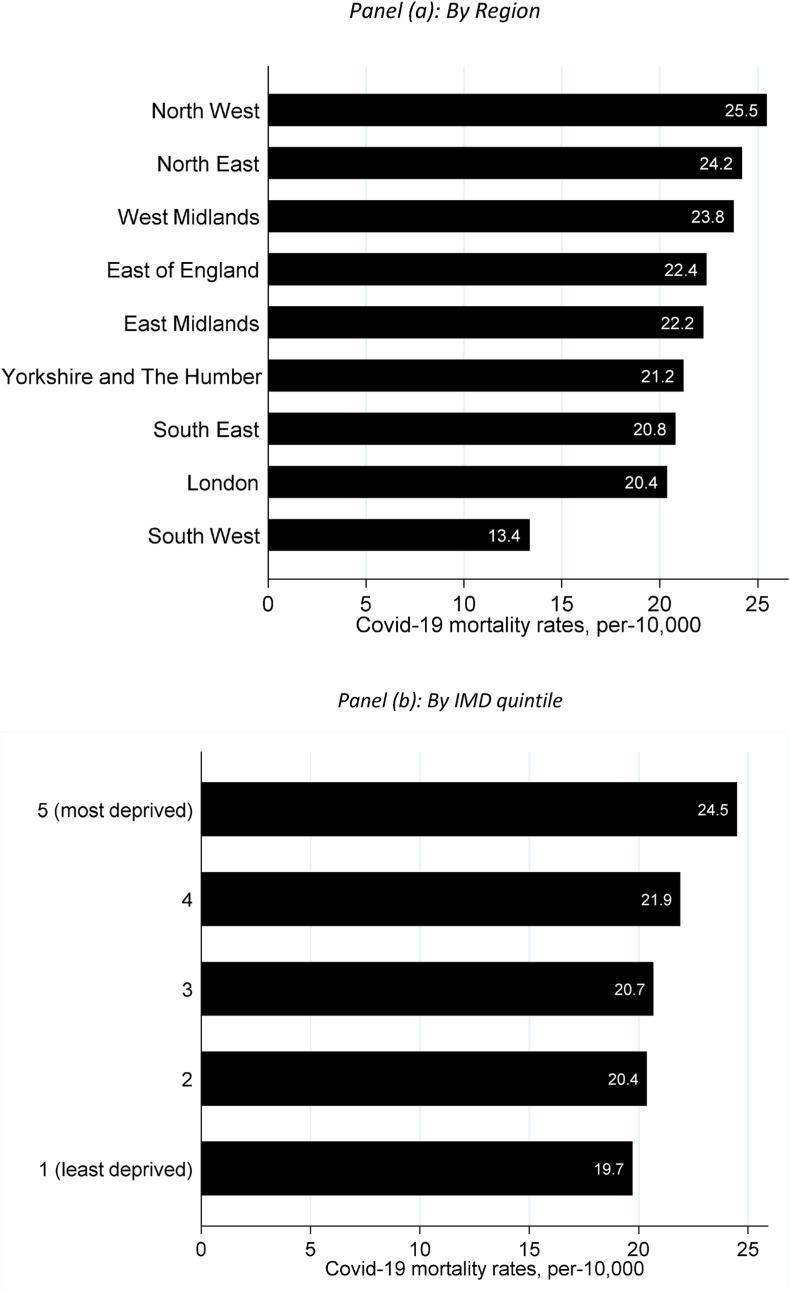
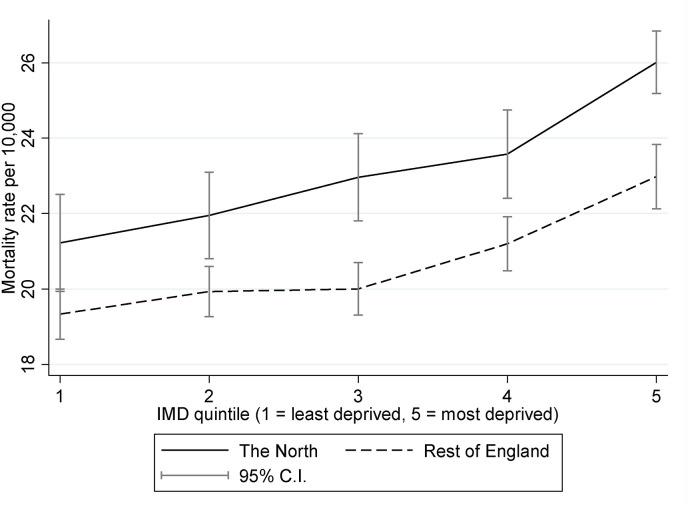
'Deprivation amplification' is used to understand the relationship between deprivation, scale and COVID-19 mortality rates. We found that more deprived Middle Super Output Areas (MSOAs) in the more deprived northern regions suffered greater COVID-19 mortality rates. Across England, the most deprived 20% of MSOAs had higher mortality than the least deprived (44.1% more COVID-19 deaths/10,000). However, the most deprived MSOAs in the north fared worse than equally deprived areas in the rest of England (14.5% more deaths/10,000, beta = 0.136, p < 0.01). There was also strong evidence of spatial clustering and spill-overs. We discuss these findings in relation to 'deprivation amplification', the 'syndemic pandemic', and the health and place literature.
“剥夺放大”用于理解剥夺、规模与 COVID-19 死亡率之间的关系。我们发现,北部较贫困地区的较贫困中级行政区划(MSOAs)的 COVID-19 死亡率更高。在整个英格兰,最贫困的 20%的 MSOAs 的死亡率高于最不贫困的地区(每 10000 人 COVID-19 死亡人数多 44.1%)。然而,北部最贫困的 MSOAs 的情况比英格兰其他地区同等贫困地区更糟(每 10000 人死亡人数多 14.5%,β=0.136,p<0.01)。还有强有力的证据表明存在空间集聚和溢出效应。我们将这些发现与“剥夺放大”、“综合征大流行”以及健康与地点文献联系起来进行讨论。

 Zotero 插件