
一种基于深度学习的老年人群抑郁症检测模型。
A deep learning-based model for detecting depression in senior population.
作者信息
Lin Yunhan, Liyanage Biman Najika, Sun Yutao, Lu Tianlan, Zhu Zhengwen, Liao Yundan, Wang Qiushi, Shi Chuan, Yue Weihua
机构信息
Institute of Mental Health, Peking University Sixth Hospital, Beijing, China.
Research Unit of Diagnosis and Treatment of Mood Cognitive Disorder, Chinese Academy of Medical Sciences (2018RU006), Beijing, China.
出版信息
Front Psychiatry. 2022 Nov 7;13:1016676. doi: 10.3389/fpsyt.2022.1016676. eCollection 2022.
OBJECTIVES
With the attention paid to the early diagnosis of depression, this study tries to use the biological information of speech, combined with deep learning to build a rapid binary-classification model of depression in the elderly who use Mandarin and test its effectiveness.
METHODS
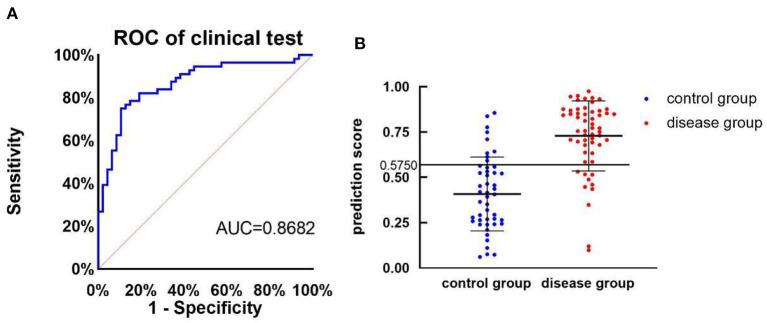
Demographic information and acoustic data of 56 Mandarin-speaking older adults with major depressive disorder (MDD), diagnosed with the Mini-International Neuropsychiatric Interview (MINI) and the fifth edition of Diagnostic and Statistical Manual of Mental Disorders (DSM-5), and 47 controls was collected. Acoustic data were recorded using different smart phones and analyzed by deep learning model which is developed and tested on independent validation set. The accuracy of the model is shown by the ROC curve.
RESULTS
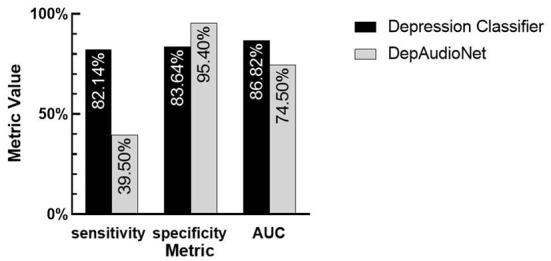
The quality of the collected speech affected the accuracy of the model. The initial sensitivity and specificity of the model were respectively 82.14% [95%CI, (70.16-90.00)] and 80.85% [95%CI, (67.64-89.58)].
CONCLUSION
This study provides a new method for rapid identification and diagnosis of depression utilizing deep learning technology. Vocal biomarkers extracted from raw speech signals have high potential for the early diagnosis of depression in older adults.
目的
随着对抑郁症早期诊断的关注,本研究尝试利用语音的生物信息,结合深度学习,构建一个针对说普通话的老年人的抑郁症快速二分类模型,并测试其有效性。
方法
收集了56名被诊断为重度抑郁症(MDD)的说普通话的老年人的人口统计学信息和声学数据,这些老年人通过迷你国际神经精神病学访谈(MINI)和《精神疾病诊断与统计手册》第五版(DSM-5)进行诊断,同时收集了47名对照者的数据。声学数据使用不同的智能手机进行记录,并通过在独立验证集上开发和测试的深度学习模型进行分析。模型的准确性通过ROC曲线显示。
结果
收集到的语音质量影响了模型的准确性。模型最初的敏感性和特异性分别为82.14% [95%CI,(70.16 - 90.00)]和80.85% [95%CI,(67.64 - 89.58)]。
结论
本研究提供了一种利用深度学习技术快速识别和诊断抑郁症的新方法。从原始语音信号中提取的声音生物标志物在老年人抑郁症的早期诊断中具有很高的潜力。
 Zotero 插件