
肺鳞癌和肺腺癌的网络模块功能富集分析。
Network module function enrichment analysis of lung squamous cell carcinoma and lung adenocarcinoma.
机构信息
College of Life Science, Shihezi University, Shihezi, China.
The First Affiliated Hospital, College of Medicine, Shihezi University, Shihezi, China.
出版信息
Medicine (Baltimore). 2022 Nov 25;101(47):e31798. doi: 10.1097/MD.0000000000031798.
BACKGROUND
Lung squamous cell carcinoma (LUSC) and lung adenocarcinoma (LUAD) are the two major subtypes of non-small cell lung cancer that pose a serious threat to human health. However, both subtypes currently lack effective indicators for early diagnosis.
METHODS
To identify tumor-specific indicators and predict cancer-related signaling pathways, LUSC and LUAD gene weighted co-expression networks were constructed. Combined with clinical data, core genes in LUSC and LUAD modules were then screened using protein-protein interaction networks and their functions and pathways were analyzed. Finally, the effect of core genes on survival of LUSC and LUAD patients was evaluated.
RESULTS
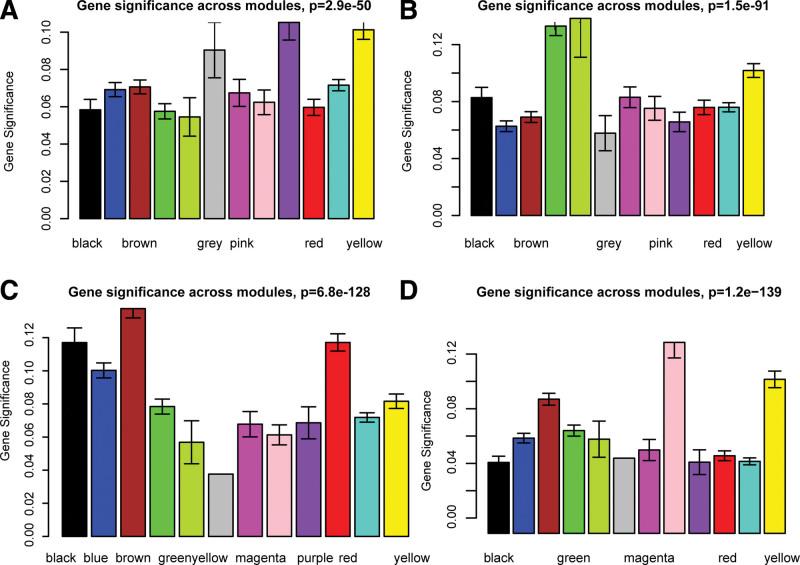
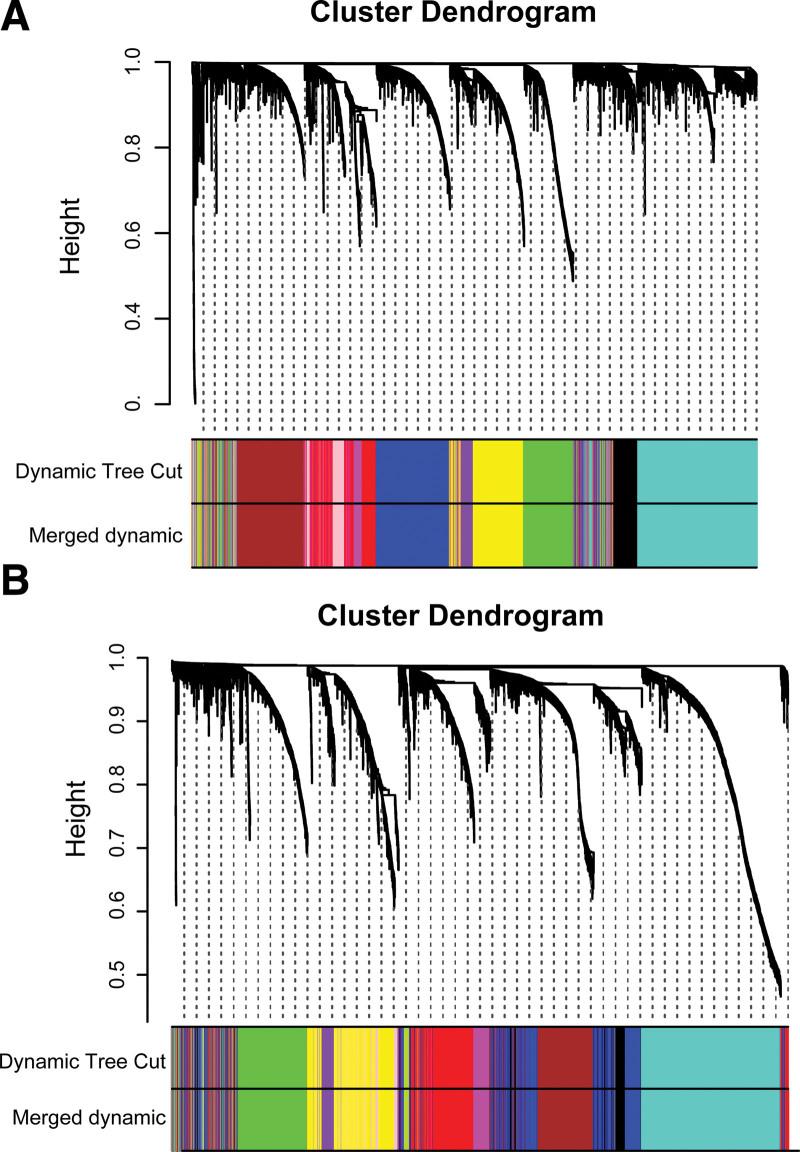
We identified 12 network modules in LUSC and LUAD, respectively. LUSC modules "purple" and "green" and LUAD modules "brown" and "pink" are significantly associated with overall survival and clinical traits of tumor node metastasis, respectively. Eleven genes from LUSC and eight genes from LUAD were identified as candidate core genes, respectively. Survival analysis showed that high expression of SLIT3, ABI3BP, MYOCD, PGM5, TNXB, and DNAH9 are associated with decreased survival in LUSC patients. Furthermore, high expression of BUB1, BUB1B, TTK, and UBE2C are associated with lower patient survival.
CONCLUSIONS
We found biomarker genes and biological pathways for LUSC and LUAD. These network hub genes are associated with clinical characteristics and patient outcomes and they may play important roles in LUSC and LUAD.
背景
肺鳞状细胞癌(LUSC)和肺腺癌(LUAD)是非小细胞肺癌的两种主要亚型,严重威胁着人类健康。然而,这两种亚型目前都缺乏有效的早期诊断指标。
方法
为了鉴定肿瘤特异性标志物并预测癌症相关信号通路,构建了 LUSC 和 LUAD 基因加权共表达网络。结合临床数据,利用蛋白质-蛋白质相互作用网络筛选 LUSC 和 LUAD 模块中的核心基因,并对其功能和通路进行分析。最后,评估核心基因对 LUSC 和 LUAD 患者生存的影响。
结果
我们分别在 LUSC 和 LUAD 中鉴定出 12 个网络模块。LUSC 模块“紫色”和“绿色”以及 LUAD 模块“棕色”和“粉色”与总生存和肿瘤淋巴结转移的临床特征显著相关。分别从 LUSC 和 LUAD 中鉴定出 11 个候选核心基因和 8 个候选核心基因。生存分析表明,SLIT3、ABI3BP、MYOCD、PGM5、TNXB 和 DNAH9 的高表达与 LUSC 患者的生存率降低相关。此外,BUB1、BUB1B、TTK 和 UBE2C 的高表达与患者生存率降低相关。
结论
我们发现了 LUSC 和 LUAD 的生物标志物基因和生物途径。这些网络枢纽基因与临床特征和患者预后相关,它们可能在 LUSC 和 LUAD 中发挥重要作用。

 Zotero 插件