
植物化学物质在头颈癌中调节的分子途径。
Molecular pathways modulated by phytochemicals in head and neck cancer.
作者信息
Kaushik Mahesh, Tiku Ashu Bhan
机构信息
Radiation and Cancer Therapeutics Lab, School of Life Sciences, Jawaharlal Nehru University, New Delhi, 110067, India.
出版信息
J Cell Commun Signal. 2023 Sep;17(3):469-483. doi: 10.1007/s12079-022-00711-0. Epub 2022 Dec 1.
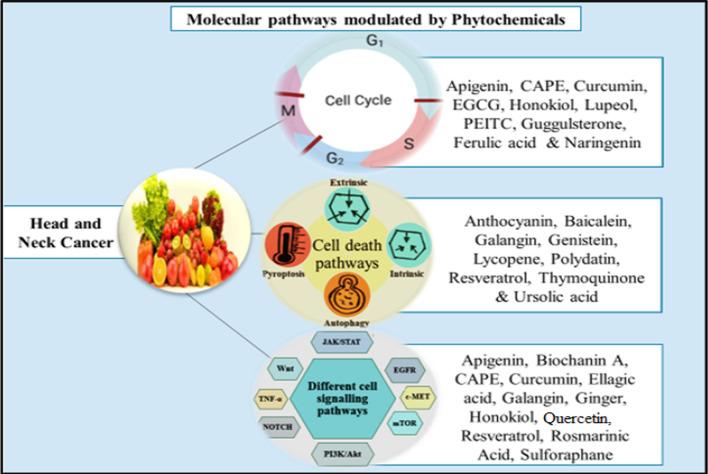
In the last few years, natural dietary phytochemicals have shown immense potential in the suppression and incidence of Head and Neck Cancer (HNC). From various in-vitro, animal, and epidemiological studies it is now clear that intake of foods rich in dietary phytochemicals lower the risk of HNC. These phytochemicals have been reported to target different stages of Head and Neck cancer (initiation to promotion) by modulating many cellular signaling pathways. A single phytochemical may target different pathways simultaneously or a single pathway may be targeted by a diversity of phytochemicals. This review highlights the molecular pathways modulated by a large number of phytochemicals relevant to HNC with an intent to identify specific signaling pathways that could be therapeutically targeted. Therefore, relevant literature was screened and scrutinized for molecular details. We have focused on the complexity of the molecular mechanisms that are modulated by various phytochemicals and the role they can play in better clinical efficacy and management of head and neck cancer. In-depth knowledge of these molecular mechanisms can lead to innovative therapeutic strategies using phytochemicals alone or along with available treatments for various cancers including HNC. Molecular pathways modulated by Phytochemicals.
在过去几年中,天然膳食植物化学物质在头颈部癌(HNC)的抑制和发病率方面显示出巨大潜力。从各种体外、动物和流行病学研究中可以清楚地看出,摄入富含膳食植物化学物质的食物可降低患头颈部癌的风险。据报道,这些植物化学物质通过调节许多细胞信号通路,靶向头颈部癌的不同阶段(从起始到促进)。单一植物化学物质可能同时靶向不同的通路,或者单一通路可能被多种植物化学物质靶向。本综述重点介绍了与头颈部癌相关的大量植物化学物质所调节的分子通路,旨在确定可作为治疗靶点的特定信号通路。因此,对相关文献进行了筛选和仔细审查以获取分子细节。我们关注了各种植物化学物质所调节的分子机制的复杂性,以及它们在提高头颈部癌的临床疗效和管理中所起的作用。深入了解这些分子机制可以带来创新的治疗策略,单独使用植物化学物质或与包括头颈部癌在内的各种癌症的现有治疗方法联合使用。植物化学物质调节的分子通路。
 Zotero 插件