
小儿患者中耳积液与腺样体肥大之间的相关性:一项系统评价
The Correlation Between Otitis Media With Effusion and Adenoid Hypertrophy Among Pediatric Patients: A Systematic Review.
作者信息
Mashat Ghadi D, Tran Hadrian Hoang-Vu, Urgessa Neway A, Geethakumari Prabhitha, Kampa Prathima, Parchuri Rakesh, Bhandari Renu, Alnasser Ali R, Akram Aqsa, Kar Saikat, Osman Fatema, Hamid Pousette
机构信息
Pediatrics, California Institute of Behavioral Neurosciences & Psychology, Fairfield, USA.
Internal Medicine, California Institute of Behavioral Neurosciences & Psychology, Fairfield, USA.
出版信息
Cureus. 2022 Nov 1;14(11):e30985. doi: 10.7759/cureus.30985. eCollection 2022 Nov.
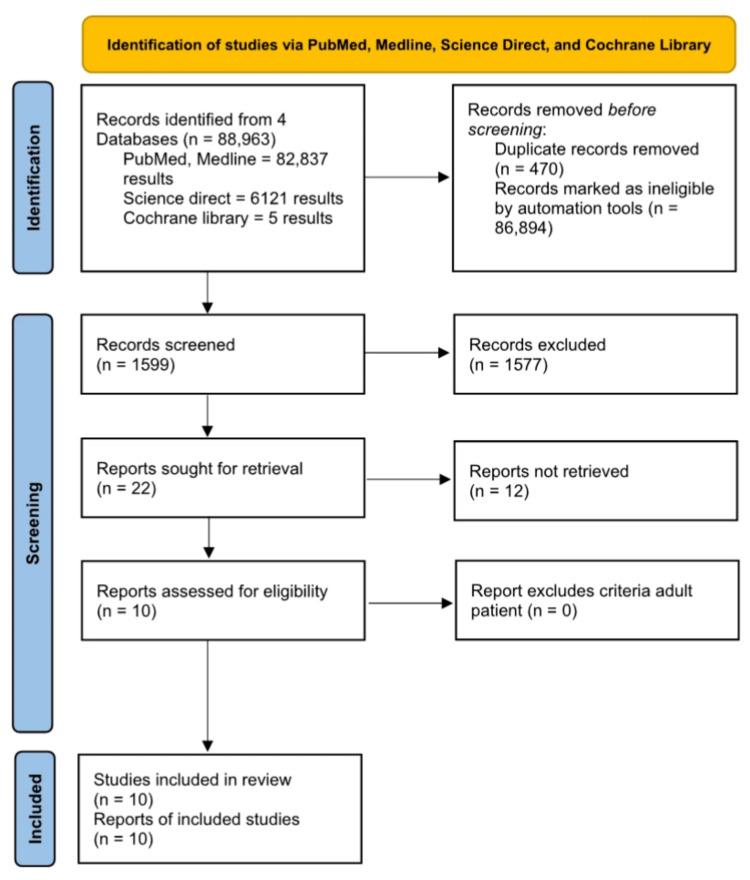
Otitis media with effusion (OME) affects approximately 80% of children due to the middle ear being flooded with fluids, though with no microbial infection manifestations. Multiple issues can drive recurring pediatric OME, such as environment-based issues, previous medical issues, inherited vulnerability from family, contact time at childcare institutes, passive smoking, and more than three siblings together with atopy or allergic rhinitis. If OME is not promptly addressed, this could eventually result in hearing impairment or loss, with consequent negative repercussions on the child's communicative and behavioral patterns. OME diagnosis within the clinic is possible, with hearing capacity being assessed pre- and post-therapy. Adenoid hypertrophy (AH) represents a typical causative factor for middle-ear conditions, stemming from mechanical or anatomical issues. Consequently, adenoid size is paramount when determining tympanometry types and ear fluids. This systematic review investigated PubMed, Medline, Cochrane Library, and Science Direct databases in order to retrieve knowledge related to this issue, adopting inclusion and exclusion criteria and maintaining review quality through the employment of the Assessment of Multiple Systematic Reviews (AMSTAR), the Newcastle-Ottawa tool, and the Axis scale. This systematic review analyzed a previous review article, six observation-based investigations, and three cross-sectional investigations. Previous randomized controlled trials (RCTs) were not found within previous literature, suggesting such scarcity in this research niche and thus warranting future RCT investigations based on this compelling research niche.
分泌性中耳炎(OME)影响着约80%的儿童,原因是中耳充满液体,但无微生物感染表现。多种因素可导致小儿OME复发,如环境因素、既往病史、家族遗传易感性、在托儿所的接触时间、被动吸烟,以及有三个以上兄弟姐妹且伴有特应性或过敏性鼻炎。如果OME得不到及时治疗,最终可能导致听力受损或丧失,进而对儿童的沟通和行为模式产生负面影响。在诊所内可以对OME进行诊断,在治疗前后评估听力。腺样体肥大(AH)是中耳疾病的典型致病因素,源于机械或解剖问题。因此,在确定鼓室导抗图类型和耳内积液时,腺样体大小至关重要。本系统评价检索了PubMed、Medline、Cochrane图书馆和科学Direct数据库,以获取与此问题相关的知识,采用纳入和排除标准,并通过使用多系统评价评估(AMSTAR)、纽卡斯尔-渥太华工具和轴量表来维持评价质量。本系统评价分析了一篇先前的综述文章、六项基于观察的调查和三项横断面调查。在先前的文献中未发现先前的随机对照试验(RCT),这表明该研究领域存在此类稀缺情况,因此有必要基于这一引人注目的研究领域进行未来的RCT研究。
 Zotero 插件