
鞘氨醇-1-磷酸受体调节剂对 COVID-19 和 SARS-CoV-2 疫苗接种的影响。
The impact of sphingosine-1-phosphate receptor modulators on COVID-19 and SARS-CoV-2 vaccination.
机构信息
Blizard Institute, Barts and the London School of Medicine and Dentistry, Queen Mary University of London, United Kingdom.
Blizard Institute, Barts and the London School of Medicine and Dentistry, Queen Mary University of London, United Kingdom.
出版信息
Mult Scler Relat Disord. 2023 Jan;69:104425. doi: 10.1016/j.msard.2022.104425. Epub 2022 Nov 22.
BACKGROUND
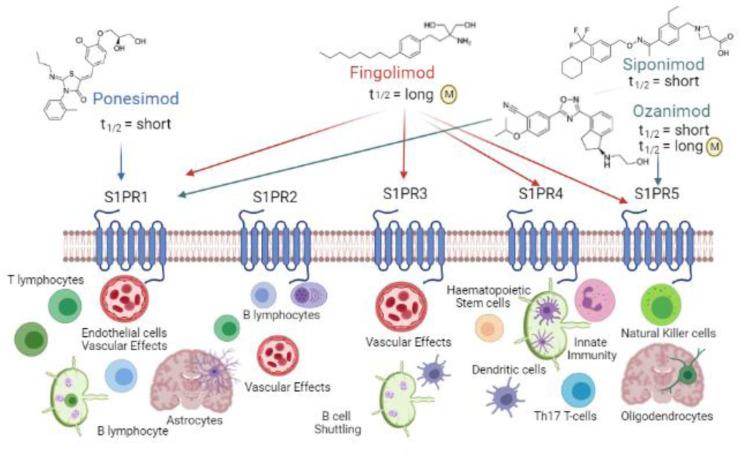
Sphingosine-one phosphate receptor (S1PR) modulation inhibits S1PR1-mediated lymphocyte migration, lesion formation and positively-impacts on active multiple sclerosis (MS). These S1PR modulatory drugs have different: European Union use restrictions, pharmacokinetics, metabolic profiles and S1PR receptor affinities that may impact MS-management. Importantly, these confer useful properties in dealing with COVID-19, anti-viral drug responses and generating SARS-CoV-2 vaccine responses.
OBJECTIVE
To examine the biology and emerging data that potentially underpins immunity to the SARS-CoV-2 virus following natural infection and vaccination and determine how this impinges on the use of current sphingosine-one-phosphate modulators used in the treatment of MS.
METHODS
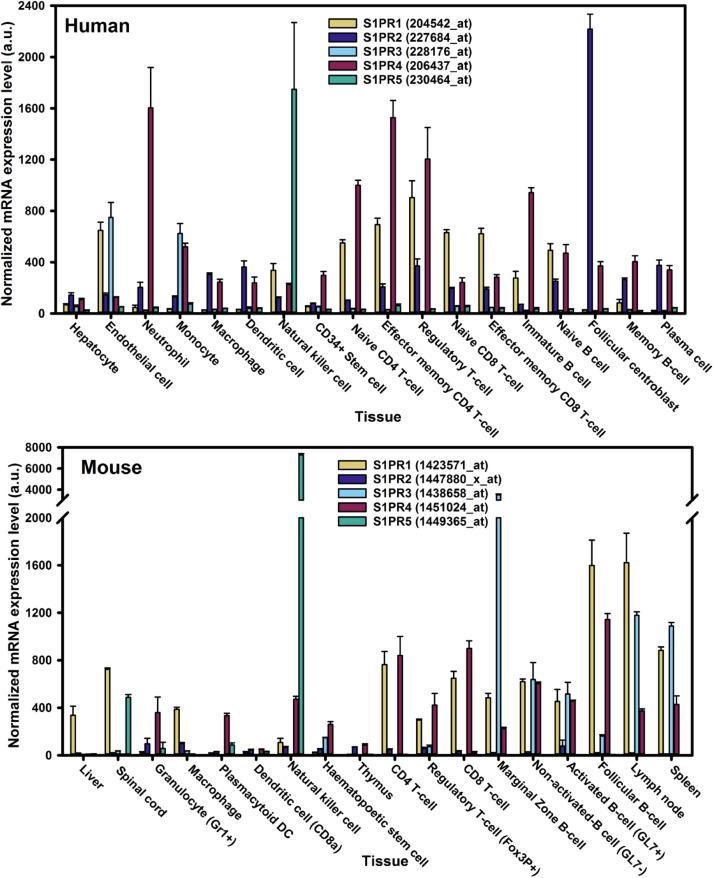
A literature review was performed, and data on infection, vaccination responses; S1PR distribution and functional activity was extracted from regulatory and academic information within the public domain.
OBSERVATIONS
Most COVID-19 related information relates to the use of fingolimod. This indicates that continuous S1PR1, S1PR3, S1PR4 and S1PR5 modulation is not associated with a worse prognosis following SARS-CoV-2 infection. Whilst fingolimod use is associated with blunted seroconversion and reduced peripheral T-cell vaccine responses, it appears that people on siponimod, ozanimod and ponesimod exhibit stronger vaccine-responses, which could be related notably to a limited impact on S1PR4 activity. Whilst it is thought that S1PR3 controls B cell function in addition to actions by S1PR1 and S1PR2, this may be species-related effect in rodents that is not yet substantiated in humans, as seen with bradycardia issues. Blunted antibody responses can be related to actions on B and T-cell subsets, germinal centre function and innate-immune biology. Although S1P1R-related functions are seeming central to control of MS and the generation of a fully functional vaccination response; the relative lack of influence on S1PR4-mediated actions on dendritic cells may increase the rate of vaccine-induced seroconversion with the newer generation of S1PR modulators and improve the risk-benefit balance IMPLICATIONS: Although fingolimod is a useful asset in controlling MS, recently-approved S1PR modulators may have beneficial biology related to pharmacokinetics, metabolism and more-restricted targeting that make it easier to generate infection-control and effective anti-viral responses to SARS-COV-2 and other pathogens. Further studies are warranted.
背景
鞘氨醇-1-磷酸受体(S1PR)调节剂抑制 S1PR1 介导的淋巴细胞迁移、损伤形成,并对活跃的多发性硬化症(MS)产生积极影响。这些 S1PR 调节剂具有不同的:欧盟使用限制、药代动力学、代谢谱和 S1PR 受体亲和力,这可能会影响 MS 的管理。重要的是,它们在应对 COVID-19、抗病毒药物反应和产生 SARS-CoV-2 疫苗反应方面具有有用的特性。
目的
检查自然感染和接种疫苗后 SARS-CoV-2 病毒免疫的生物学和新兴数据,并确定这如何影响目前用于治疗 MS 的鞘氨醇-1-磷酸调节剂的使用。
方法
进行了文献回顾,并从公共领域的监管和学术信息中提取了关于感染、疫苗反应;S1PR 分布和功能活性的数据。
观察结果
大多数与 COVID-19 相关的信息都与 fingolimod 的使用有关。这表明,S1PR1、S1PR3、S1PR4 和 S1PR5 的持续调节与 SARS-CoV-2 感染后预后不良无关。虽然 fingolimod 的使用与血清转化减弱和外周 T 细胞疫苗反应降低有关,但 siponimod、ozanimod 和 ponesimod 的使用者似乎表现出更强的疫苗反应,这可能与对 S1PR4 活性的影响有限有关。虽然 S1PR3 除了 S1PR1 和 S1PR2 的作用外,还控制 B 细胞功能,但这可能是与啮齿动物有关的物种相关效应,尚未在人类中得到证实,如心动过缓问题。抗体反应减弱可能与 B 和 T 细胞亚群、生发中心功能和先天免疫生物学有关。尽管 S1P1R 相关功能似乎对 MS 的控制和完全功能性疫苗反应的产生至关重要;但 S1PR4 介导的树突状细胞作用的相对缺乏可能会增加新一代 S1PR 调节剂诱导的疫苗血清转化率,并改善风险效益平衡。
影响
虽然 fingolimod 是控制 MS 的有用资产,但最近批准的 S1PR 调节剂可能具有与药代动力学、代谢和更受限的靶向相关的有益生物学特性,这使得更容易产生对 SARS-COV-2 和其他病原体的感染控制和有效的抗病毒反应。需要进一步研究。


 Zotero 插件