
含受阻 2-位甲基、丙基和苯基取代咪唑阳离子的可调节芳基烷基离子液体(TAAILs)的合成与物理性质。
Synthesis and Physical Properties of Tunable Aryl Alkyl Ionic Liquids (TAAILs) Comprising Imidazolium Cations Blocked with Methyl-, Propyl- and Phenyl-Groups at the C2 Position.
机构信息
Physikalische Organische Chemie, Technische Universität Dresden, Bergstrasse 66, 01069, Dresden, Germany.
出版信息
Chemistry. 2023 Feb 1;29(7):e202202795. doi: 10.1002/chem.202202795. Epub 2022 Dec 12.
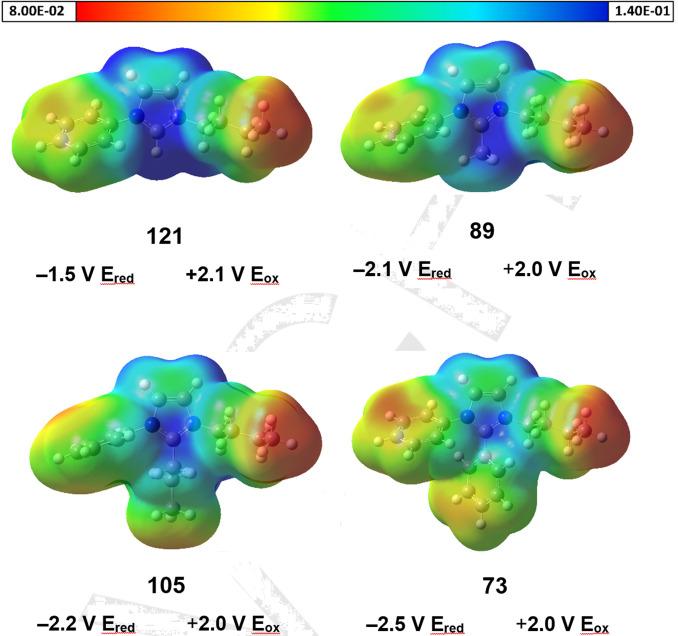
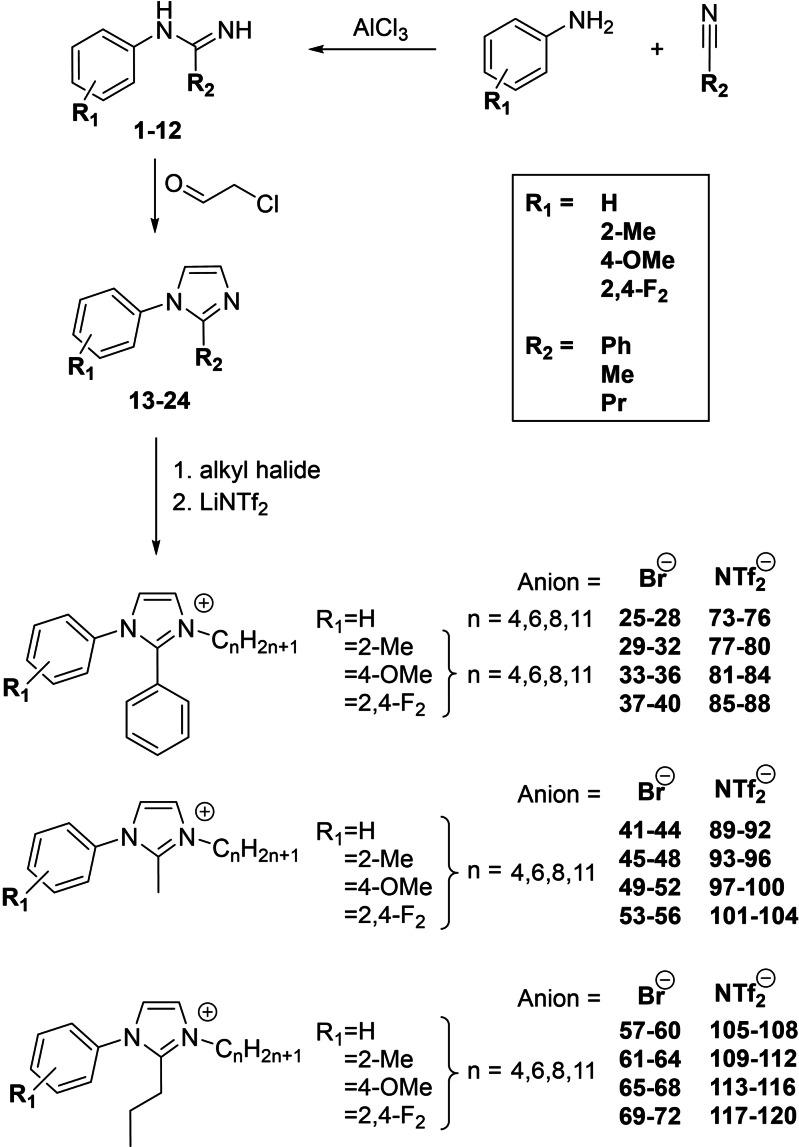
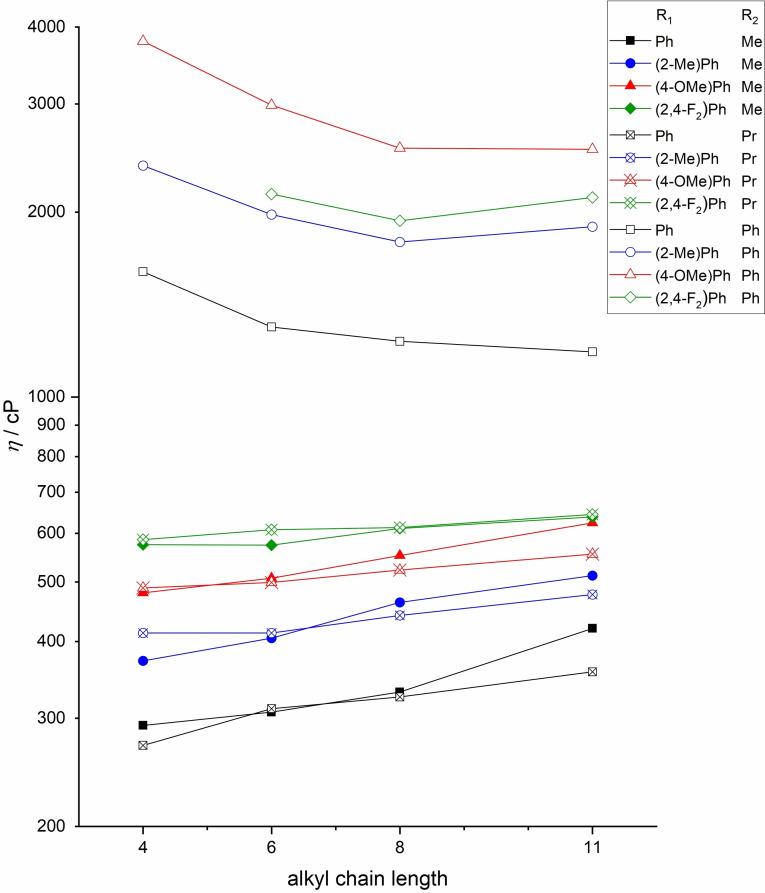
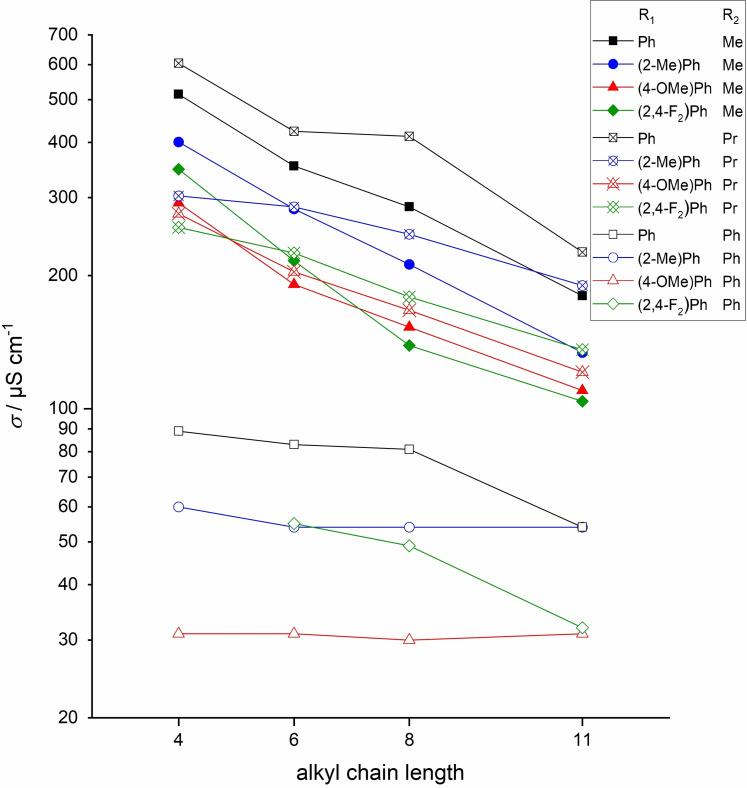
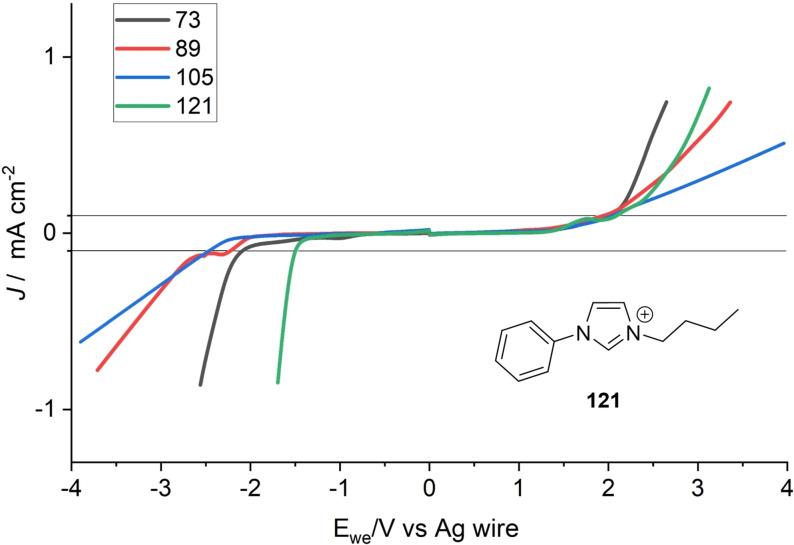
Imidazolium-based ionic liquids are very popular for different applications because of their low viscosity and melting point. However, the hydrogen atom at the C2 position of the imidazolium cation can easily be deprotonated by a base, resulting in a reactive carbene. If an inert ionic liquid is needed, it is necessary to introduce an unreactive alkyl or aryl group at the C2 position to prevent deprotonation. Tunable aryl alkyl ionic liquids (TAAILs) were first introduced by our group in 2009 and are characterized by a phenyl group at the N1 position, which offers the possibility to fine-tune the physicochemical properties by using different electron-donating or -withdrawing substituents. In this work, we present a new series of TAAILs where the C2 position is blocked by a methyl, propyl or phenyl group. For each of the blocking groups, the phenyl and three different phenyl derivatives (2-Me, 4-OMe, 2,4-F ) are compared with respect to melting point, viscosity, conductivity and electrochemical window. In addition, the differences between blocked and unblocked TAAILs with regard to their electrochemical reduction potentials are investigated by quantum chemical methods.
基于咪唑的离子液体因其低粘度和低熔点而在不同应用中非常受欢迎。然而,咪唑阳离子 C2 位上的氢原子很容易被碱脱去质子,生成反应性卡宾。如果需要使用惰性离子液体,则需要在 C2 位引入非反应性的烷基或芳基基团以防止去质子化。可调芳基烷基离子液体(TAAILs)于 2009 年首次由我们小组引入,其特点是在 N1 位上具有一个苯基,通过使用不同的供电子或吸电子取代基,可以精细调节其物理化学性质。在这项工作中,我们提出了一系列新的 TAAILs,其中 C2 位被甲基、丙基或苯基基团所阻断。对于每个阻断基团,我们比较了苯基和三个不同的苯基衍生物(2-Me、4-OMe、2,4-F)在熔点、粘度、电导率和电化学窗口方面的差异。此外,通过量子化学方法研究了受阻和无阻 TAAILs 之间电化学还原电位的差异。
 Zotero 插件