
一种新型纳米材料在橡胶硫化过程中减少氧化锌使用的体外和体内危害评估
On the In Vitro and In Vivo Hazard Assessment of a Novel Nanomaterial to Reduce the Use of Zinc Oxide in the Rubber Vulcanization Process.
作者信息
Bragato Cinzia, Mostoni Silvia, D'Abramo Christian, Gualtieri Maurizio, Pomilla Francesca Rita, Scotti Roberto, Mantecca Paride
机构信息
POLARIS Research Center, Department of Earth and Environmental Sciences, University of Milano-Bicocca, Piazza della Scienza 1, 20126 Milan, Italy.
Department of Materials Science (INSTM), University of Milano-Bicocca, Via R. Cozzi 55, 20125 Milan, Italy.
出版信息
Toxics. 2022 Dec 13;10(12):781. doi: 10.3390/toxics10120781.
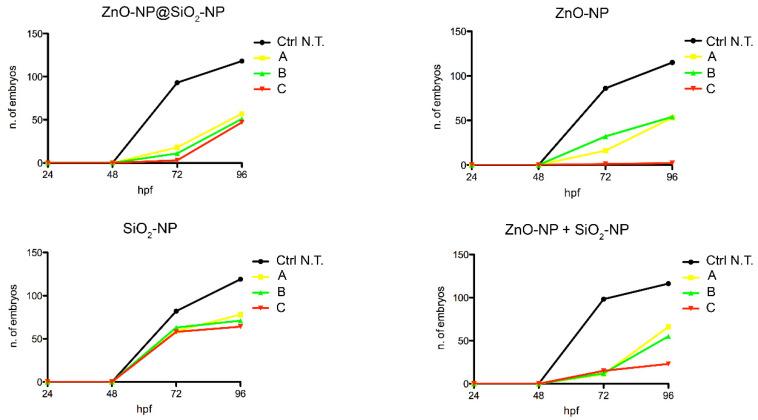
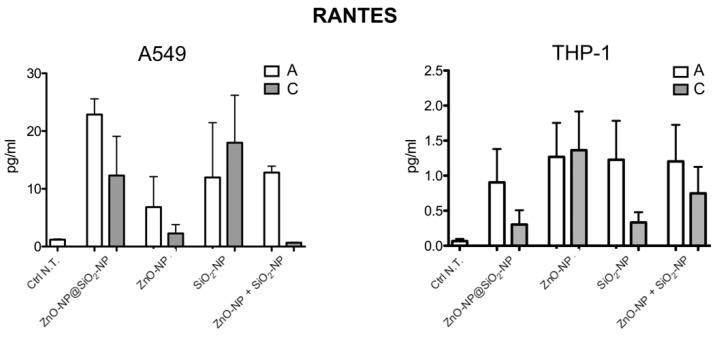
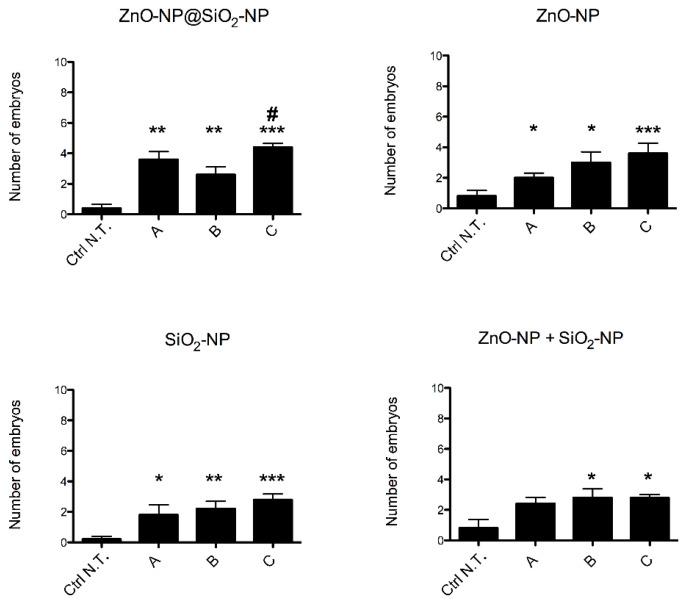
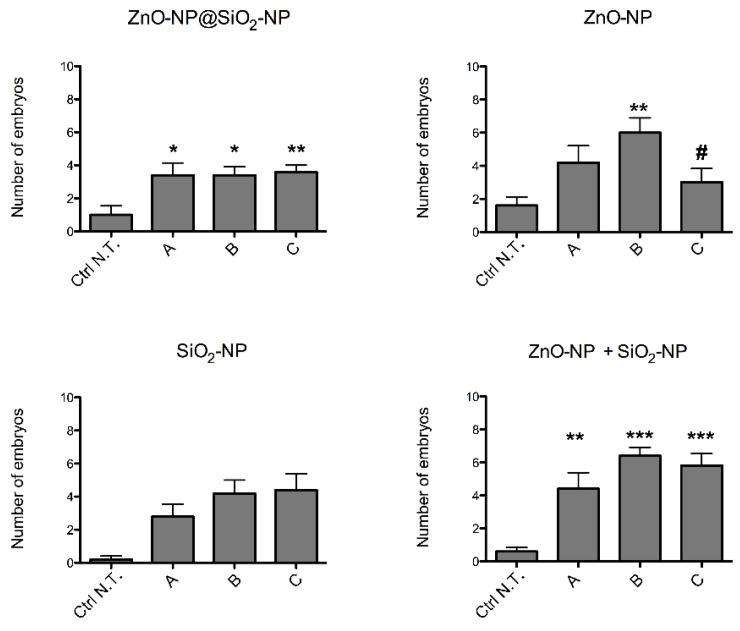
Zinc oxide (ZnO) is the most efficient curing activator employed in the industrial rubber production. However, ZnO and Zn(II) ions are largely recognized as an environmental hazard being toxic to aquatic organisms, especially considering Zn(II) release during tire lifecycle. In this context, aiming at reducing the amount of microcrystalline ZnO, a novel activator was recently synthetized, constituted by ZnO nanoparticles (NPs) anchored to silica NPs (ZnO-NP@SiO-NP). The objective of this work is to define the possible hazards deriving from the use of ZnO-NP@SiO-NP compared to ZnO and SiO NPs traditionally used in the tire industry. The safety of the novel activators was assessed by in vitro testing, using human lung epithelial (A549) and immune (THP-1) cells, and by the in vivo model zebrafish (). The novel manufactured nanomaterial was characterized morphologically and structurally, and its effects evaluated in vitro by the measurement of the cell viability and the release of inflammatory mediators, while in vivo by the Fish Embryo Acute Toxicity (FET) test. Resulting data demonstrated that ZnO-NP@SiO-NP, despite presenting some subtoxic events, exhibits the lack of acute effects both in vitro and in vivo, supporting the safe-by-design development of this novel material for the rubber industry.
氧化锌(ZnO)是工业橡胶生产中使用的最有效的硫化活性剂。然而,ZnO和Zn(II)离子在很大程度上被认为是一种环境危害,对水生生物有毒,特别是考虑到轮胎生命周期中Zn(II)的释放。在此背景下,为了减少微晶ZnO的用量,最近合成了一种新型活性剂,它由锚定在二氧化硅纳米颗粒(SiO-NP)上的ZnO纳米颗粒(ZnO-NP)组成(ZnO-NP@SiO-NP)。这项工作的目的是确定与传统上用于轮胎行业的ZnO和SiO纳米颗粒相比,使用ZnO-NP@SiO-NP可能产生的危害。通过体外测试,使用人肺上皮(A549)细胞和免疫(THP-1)细胞,以及体内斑马鱼模型来评估新型活性剂的安全性。对新型制造的纳米材料进行了形态和结构表征,并通过测量细胞活力和炎症介质的释放来体外评估其效果,同时通过鱼类胚胎急性毒性(FET)试验在体内评估其效果。所得数据表明,ZnO-NP@SiO-NP尽管存在一些亚毒性事件,但在体外和体内均未表现出急性影响,这支持了这种新型橡胶工业材料的设计安全性开发。




 Zotero 插件