
年龄、性别和既往合并症作为与新冠长期症状的新冠病毒感染无关的风险因素:一项系统评价和荟萃分析
Age, Sex and Previous Comorbidities as Risk Factors Not Associated with SARS-CoV-2 Infection for Long COVID-19: A Systematic Review and Meta-Analysis.
作者信息
Notarte Kin Israel, de Oliveira Maria Helena Santos, Peligro Princess Juneire, Velasco Jacqueline Veronica, Macaranas Imee, Ver Abbygail Therese, Pangilinan Flos Carmeli, Pastrana Adriel, Goldrich Nathaniel, Kavteladze David, Gellaco Ma Margarita Leticia, Liu Jin, Lippi Giuseppe, Henry Brandon Michael, Fernández-de-Las-Peñas César
机构信息
Department of Pathology, Johns Hopkins University School of Medicine, Baltimore, MD 21205, USA.
Department of Biostatistics, State University of Maringa, Maringá 87020-900, Brazil.
出版信息
J Clin Med. 2022 Dec 9;11(24):7314. doi: 10.3390/jcm11247314.
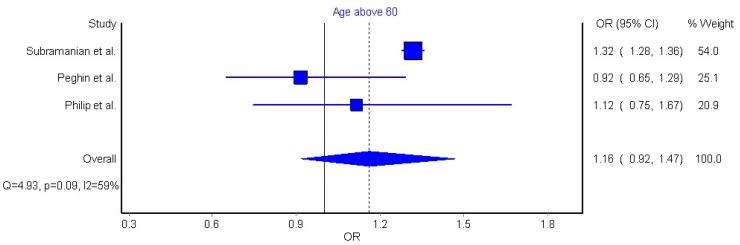
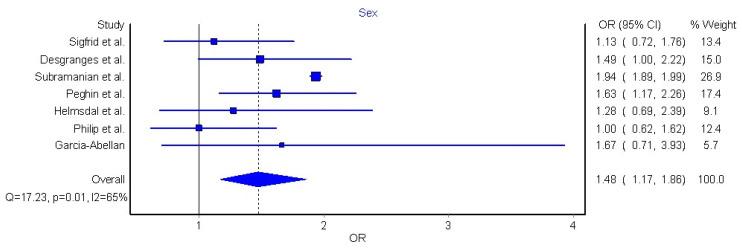
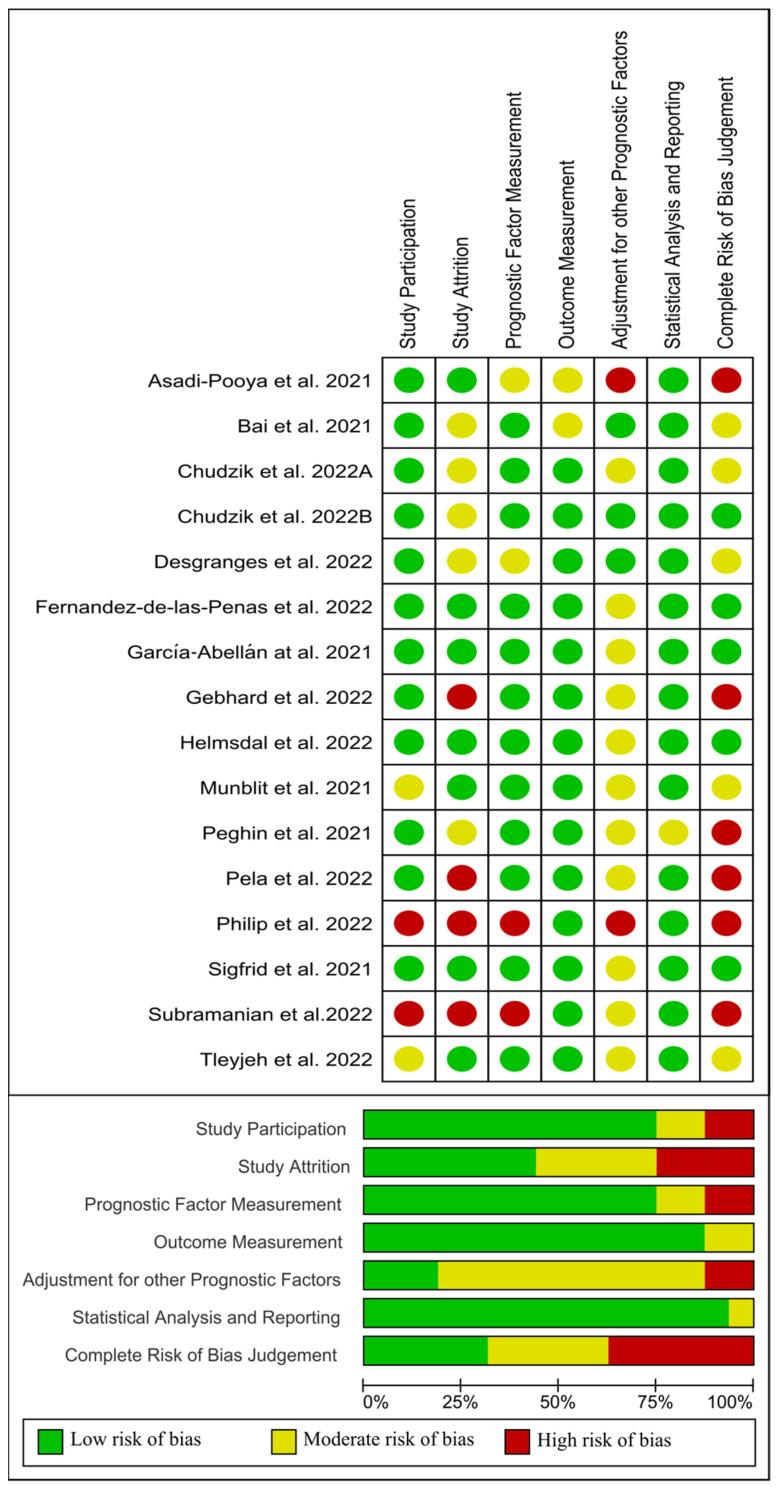
Identification of predictors of long COVID-19 is essential for managing healthcare plans of patients. This systematic literature review and meta-analysis aimed to identify risk factors not associated with Severe Acute Respiratory Syndrome Coronavirus 2 (SARS-CoV-2) infection, but rather potentially predictive of the development of long COVID-19. MEDLINE, CINAHL, PubMed, EMBASE, and Web of Science databases, as well as medRxiv and bioRxiv preprint servers were screened through 15 September 2022. Peer-reviewed studies or preprints evaluating potential pre-SARS-CoV-2 infection risk factors for the development of long-lasting symptoms were included. The methodological quality was assessed using the Quality in Prognosis Studies (QUIPSs) tool. Random-effects meta-analyses with calculation of odds ratio (OR) were performed in those risk factors where a homogenous long COVID-19 definition was used. From 1978 studies identified, 37 peer-reviewed studies and one preprint were included. Eighteen articles evaluated age, sixteen articles evaluated sex, and twelve evaluated medical comorbidities as risk factors of long COVID-19. Overall, single studies reported that old age seems to be associated with long COVID-19 symptoms (n = 18); however, the meta-analysis did not reveal an association between old age and long COVID-19 (n = 3; OR 0.86, 95% CI 0.73 to 1.03, = 0.17). Similarly, single studies revealed that female sex was associated with long COVID-19 symptoms (n = 16); which was confirmed in the meta-analysis (n = 7; OR 1.48, 95% CI 1.17 to 1.86, = 0.01). Finally, medical comorbidities such as pulmonary disease (n = 4), diabetes (n = 1), obesity (n = 6), and organ transplantation (n = 1) were also identified as potential risk factors for long COVID-19. The risk of bias of most studies (71%, n = 27/38) was moderate or high. In conclusion, pooled evidence did not support an association between advancing age and long COVID-19 but supported that female sex is a risk factor for long COVID-19. Long COVID-19 was also associated with some previous medical comorbidities.
识别新冠后长期症状的预测因素对于管理患者的医疗保健计划至关重要。本系统文献综述和荟萃分析旨在识别与严重急性呼吸综合征冠状病毒2(SARS-CoV-2)感染无关,但可能预测新冠后长期症状发生的风险因素。检索了MEDLINE、CINAHL、PubMed、EMBASE和Web of Science数据库,以及medRxiv和bioRxiv预印本服务器,检索截至2022年9月15日。纳入了评估SARS-CoV-2感染前潜在风险因素与长期症状发生关系的同行评审研究或预印本。使用预后研究质量(QUIPS)工具评估方法学质量。对使用统一的新冠后长期症状定义的风险因素进行随机效应荟萃分析并计算比值比(OR)。在1978项检索到的研究中,纳入了37项同行评审研究和1篇预印本。18篇文章评估了年龄,16篇文章评估了性别,12篇文章评估了合并症作为新冠后长期症状的风险因素。总体而言,单项研究报告老年似乎与新冠后长期症状相关(n = 18);然而,荟萃分析未发现老年与新冠后长期症状之间存在关联(n = 3;OR 0.86,95% CI 0.73至1.03,P = 0.17)。同样,单项研究表明女性与新冠后长期症状相关(n = 16);这在荟萃分析中得到了证实(n = 7;OR 1.48,95% CI 1.17至1.86,P = 0.01)。最后,肺部疾病(n = 4)、糖尿病(n = 1)、肥胖(n = 6)和器官移植(n = 1)等合并症也被确定为新冠后长期症状的潜在风险因素。大多数研究(71%,n = 27/38)的偏倚风险为中度或高度。总之,汇总证据不支持年龄增长与新冠后长期症状之间存在关联,但支持女性是新冠后长期症状的一个风险因素。新冠后长期症状也与一些既往合并症有关。




 Zotero 插件