
直接作用抗病毒药物与乙型和丙型肝炎合并感染患者中乙型肝炎再激活的风险:一项系统评价和荟萃分析。
Direct-Acting Antivirals and the Risk of Hepatitis B Reactivation in Hepatitis B and C Co-Infected Patients: A Systematic Review and Meta-Analysis.
作者信息
Oh Joo Hyun, Park Dong Ah, Ko Min Jung, Yoo Jeong-Ju, Yim Sun Young, Ahn Ji-Hyun, Jun Dae Won, Ahn Sang Bong
机构信息
Department of Internal Medicine, Nowon Eulji Medical Center, Eulji University School of Medicine, Seoul 01830, Republic of Korea.
Division of Healthcare Technology Assessment Research, National Evidence-based Healthcare Collaborating Agency (NECA), Seoul 04933, Republic of Korea.
出版信息
J Pers Med. 2022 Nov 26;12(12):1957. doi: 10.3390/jpm12121957.
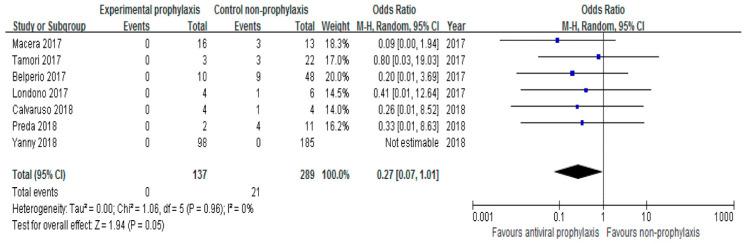
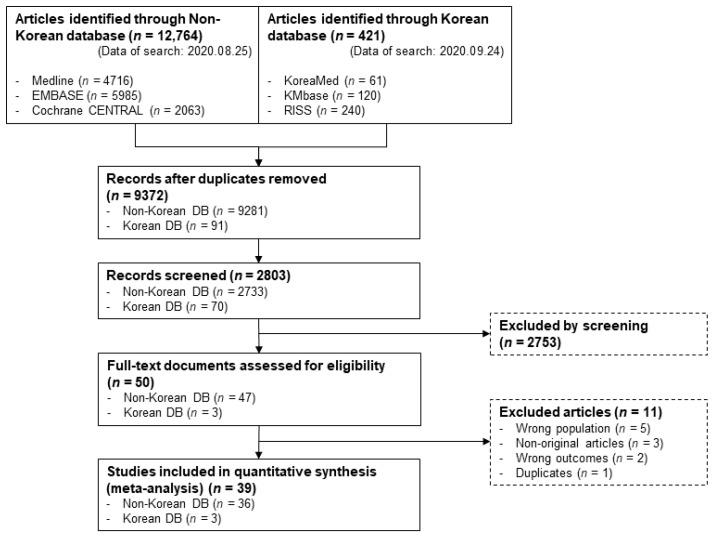
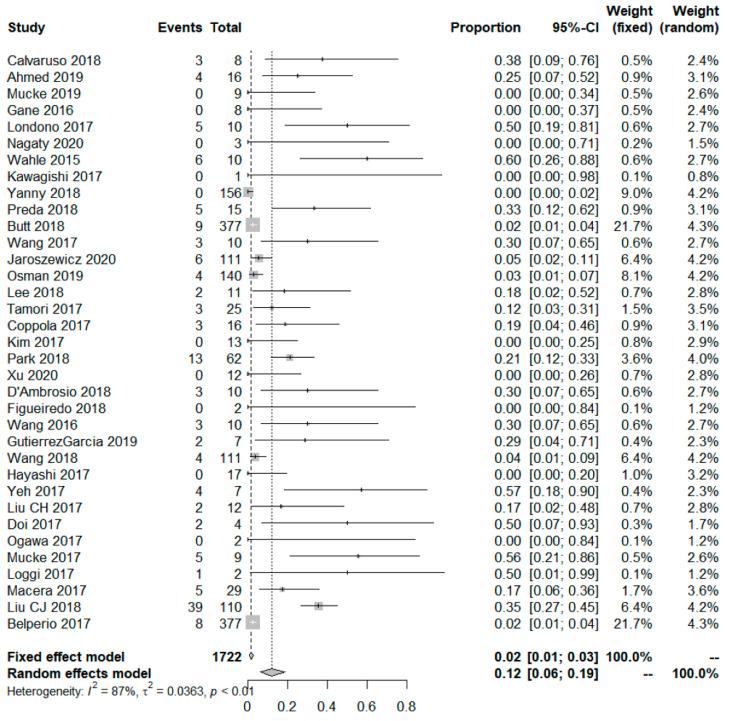
Hepatitis B (HBV) reactivation was observed to be more than 10% in patients receiving interferon-based therapy for hepatitis C (HCV) co-infection. At present, when direct-acting antiviral (DAA) has become the main treatment for HCV, there are few large-scale studies on the reactivation of HBV in these population. We studied HBV reactivation risk and prophylactic HBV treatment efficacy in HBV/HCV co-infected patients receiving DAA therapy. Relevant studies were selected from the Ovid-Medline, Ovid-EMBASE, Cochrane Central Register of Controlled Trials, KoreaMed, KMbase, and RISS databases through 4 September 2020. Data pooling was carried out using the random-effects method. We identified 39 articles with 119,484 patients with chronic ( = 1673) or resolved ( = 13,497) HBV infection under DAA therapy. When the studies were pooled, the HBV reactivation rate was 12% (95% confidence interval (CI) 6-19, I2 = 87%), indicating that this population needs careful attention. When stratified by baseline HBV DNA, the undetectable HBV DNA group showed a significantly lower risk of reactivation than the detectable HBV DNA group (odds ratio (OR) 0.30, 95% CI 0.11-0.86, I2 = 0%). Prophylactic HBV therapy reduced HBV reactivation risk (OR 0.25, 95% CI 0.07-0.92, I2 = 0%). Patients with a resolved HBV infection showed a negligible rate (0.4%) of HBV reactivation. In conclusion, patients with detectable HBV DNA levels warrant careful monitoring for HBV reactivation and may benefit from preventive anti-HBV treatment.
在接受基于干扰素治疗丙型肝炎(HCV)合并感染的患者中,观察到乙肝病毒(HBV)再激活率超过10%。目前,当直接抗病毒药物(DAA)已成为HCV的主要治疗方法时,针对这些人群中HBV再激活的大规模研究较少。我们研究了接受DAA治疗的HBV/HCV合并感染患者的HBV再激活风险及预防性HBV治疗的疗效。通过检索截至2020年9月4日的Ovid-Medline、Ovid-EMBASE、Cochrane对照试验中心注册库、KoreaMed、KMbase和RISS数据库,选取相关研究。采用随机效应方法进行数据合并。我们纳入了39篇文章,共119484例接受DAA治疗的慢性(n = 1673)或已治愈(n = 13497)HBV感染患者。合并分析这些研究时,HBV再激活率为12%(95%置信区间(CI)6 - 19,I² = 87%),表明该人群需要密切关注。按基线HBV DNA分层时,HBV DNA检测不到的组再激活风险显著低于HBV DNA可检测到的组(比值比(OR)0.30,95% CI 0.11 - 0.86,I² = 0%)。预防性HBV治疗降低了HBV再激活风险(OR 0.25,95% CI 0.07 - 0.92,I² = 0%)。已治愈HBV感染的患者HBV再激活率极低(0.4%)。总之,HBV DNA水平可检测到的患者有必要密切监测HBV再激活情况,且可能从预防性抗HBV治疗中获益。

 Zotero 插件