
纤维素醚和淀粉醚对水泥水化过程及水泥砂浆新拌性能的影响
Effect of Cellulose Ether and Starch Ether on Hydration of Cement Processes and Fresh-State Properties of Cement Mortars.
作者信息
Spychał Edyta, Stępień Piotr
机构信息
Faculty of Civil Engineering and Architecture, Kielce University of Technology, 25-314 Kielce, Poland.
出版信息
Materials (Basel). 2022 Dec 8;15(24):8764. doi: 10.3390/ma15248764.
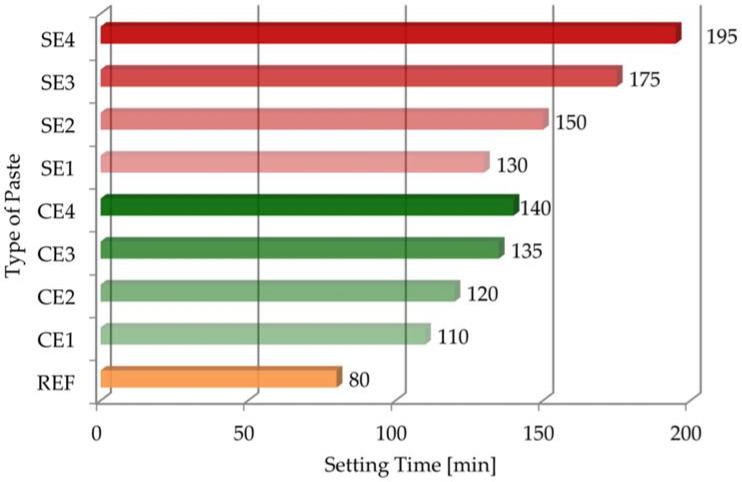
The production of factory-made mortars is a multicomponent system. Viscosity-modifying admixtures (VMAs) are an inherent ingredient of these materials. The correct choice of the amount and type of these admixtures is important from the practical and scientific points of view. In this article, the use of cellulose ether (CE) and starch ether (SE) in cement pastes and mortars is studied. This research focuses on the hydration process and fresh-state properties of mortars because this subject determines the correct choice of the amount and type of admixture used, and the results determine the application and properties of hardened mortars. Polymers were added in the range from 0.056% to 0.22% in relation to the dry ingredients of the mortar. The research showed that cellulose ether had the greatest impact on the consistency, air content, bulk density, and water retention of ordinary dry-mix mortars. On the other hand, starch ether affected the hydration process, delaying the setting and hardening processes much more than cellulose ether. The action of these admixtures rose with the increase in the amount of polymer used in different ways (depending on the type of ether).
工厂生产的砂浆是一种多组分体系。粘度改性外加剂(VMA)是这些材料的固有成分。从实际和科学的角度来看,正确选择这些外加剂的用量和类型很重要。在本文中,研究了纤维素醚(CE)和淀粉醚(SE)在水泥浆体和砂浆中的应用。本研究聚焦于砂浆的水化过程和新拌状态性能,因为该主题决定了所用外加剂用量和类型的正确选择,而研究结果决定了硬化砂浆的应用和性能。相对于砂浆的干成分,聚合物的添加量在0.056%至0.22%的范围内。研究表明,纤维素醚对普通干混砂浆的稠度、含气量、堆积密度和保水性影响最大。另一方面,淀粉醚影响水化过程,比纤维素醚更能延缓凝结和硬化过程。这些外加剂的作用随着所用聚合物量的增加而以不同方式增强(取决于醚的类型)。





 Zotero 插件