
烯丙胺类、苄胺类与真菌细胞通透性:对真菌病原体作用机制及效用的综述
Allylamines, Benzylamines, and Fungal Cell Permeability: A Review of Mechanistic Effects and Usefulness against Fungal Pathogens.
作者信息
Hammoudi Halat Dalal, Younes Samar, Mourad Nisreen, Rahal Mohamad
机构信息
Department of Pharmaceutical Sciences, School of Pharmacy, Lebanese International University, Bekaa 146404, Lebanon.
Department of Biomedical Sciences, School of Pharmacy, Lebanese International University, Bekaa 146404, Lebanon.
出版信息
Membranes (Basel). 2022 Nov 22;12(12):1171. doi: 10.3390/membranes12121171.
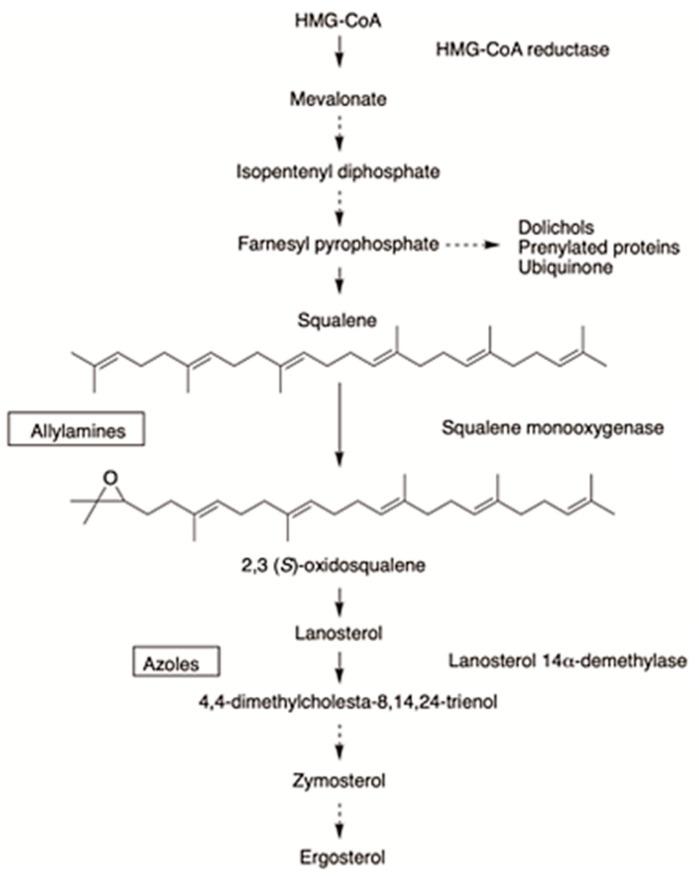
Allylamines, naftifine and terbinafine, and the benzylamine, butenafine, are antifungal agents with activity on the fungal cell membrane. These synthetic compounds specifically inhibit squalene epoxidase, a key enzyme in fungal sterol biosynthesis. This results in a deficiency in ergosterol, a major fungal membrane sterol that regulates membrane fluidity, biogenesis, and functions, and whose damage results in increased membrane permeability and leakage of cellular components, ultimately leading to fungal cell death. With the fungal cell membrane being predominantly made up of lipids including sterols, these lipids have a vital role in the pathogenesis of fungal infections and the identification of improved therapies. This review will focus on the fungal cell membrane structure, activity of allylamines and benzylamines, and the mechanistic damage they cause to the membrane. Furthermore, pharmaceutical preparations and clinical uses of these drugs, mainly in dermatophyte infections, will be reviewed.
烯丙胺类药物,如萘替芬和特比萘芬,以及苄胺类药物布替萘芬,都是对真菌细胞膜有活性的抗真菌剂。这些合成化合物特异性抑制角鲨烯环氧酶,这是真菌甾醇生物合成中的一种关键酶。这导致麦角甾醇缺乏,麦角甾醇是一种主要的真菌膜甾醇,可调节膜流动性、生物合成和功能,其受损会导致膜通透性增加和细胞成分泄漏,最终导致真菌细胞死亡。由于真菌细胞膜主要由包括甾醇在内的脂质组成,这些脂质在真菌感染的发病机制和改进治疗方法的识别中起着至关重要的作用。本综述将重点关注真菌细胞膜结构、烯丙胺类和苄胺类药物的活性以及它们对膜造成的机制性损伤。此外,还将综述这些药物的药物制剂和临床用途,主要用于皮肤癣菌感染。


 Zotero 插件