
不同污泥龄条件下HMBR减少膜污染的机制:污泥负荷对微生物特性的影响
Mechanism of HMBR in Reducing Membrane Fouling under Different SRT: Effect of Sludge Load on Microbial Properties.
作者信息
Yao Ying, Wang Yanju, Liu Qiang, Li Ying, Yan Junwei
机构信息
Foreign Environmental Cooperation Center, Ministry of Ecology and Environment of the People's Republic of China, No. 5 Houyingfang Hutong, Xicheng District, Beijing 100035, China.
Xuzhou Dazhong Water Operation Co., Ltd., No. 128 Heping Road, Yunlong District, Xuzhou 221000, China.
出版信息
Membranes (Basel). 2022 Dec 8;12(12):1242. doi: 10.3390/membranes12121242.
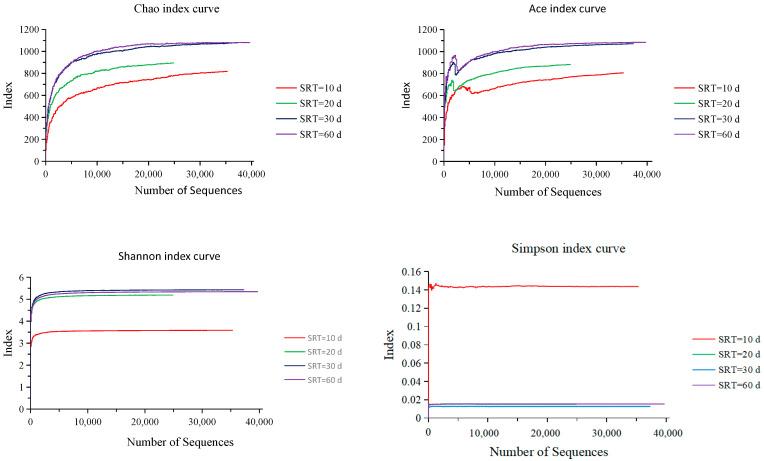
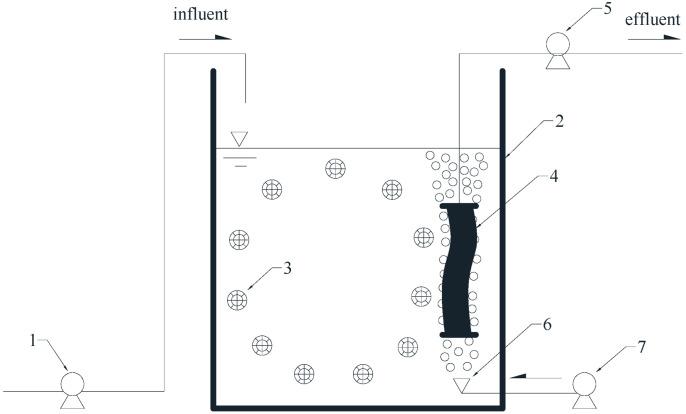
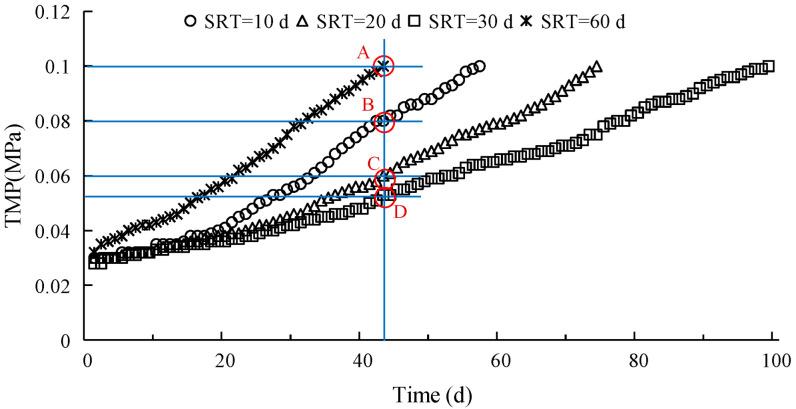
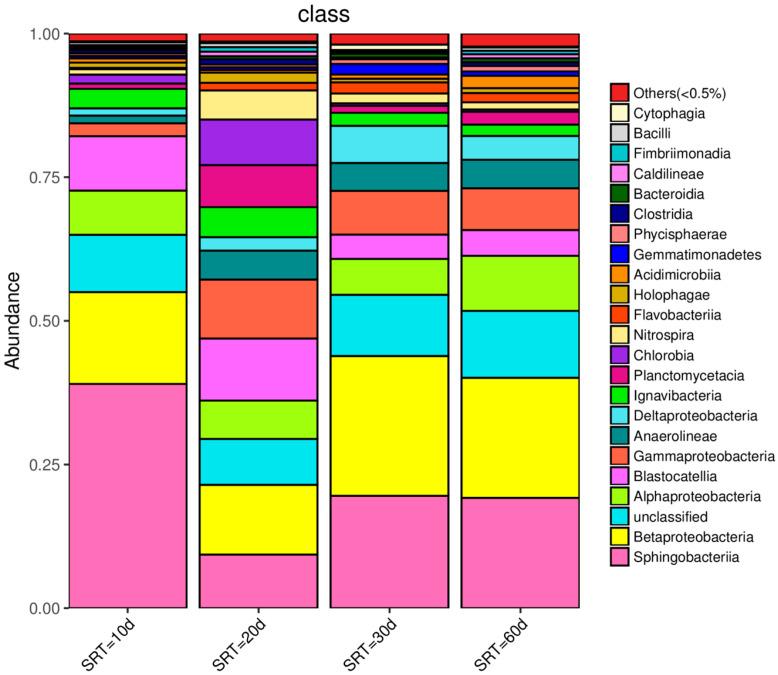
Extracellular polymeric substances (EPS) are the main causative agents of membrane fouling, and the use of a hybrid membrane bioreactor (HMBR) can mitigate this by reducing the EPS content. Four bench scale sets of HMBRs were used simultaneously to treat domestic wastewater. The effect of sludge retention times (SRT) on membrane fouling in HMBRs and the underlying mechanism were investigated by comparing and analyzing the changes in sludge load, microbial characteristics, EPS distribution characteristics, and transmembrane pressure under different SRTs. Results revealed that, among the four SRTs (10 d, 20 d, 30 d, and 60 d), the best removal rates of chemical oxygen demand and total nitrogen were observed for an SRT of 30 d, with average removal rates of 95.0% and 57.1%, respectively. The best results for ammonia nitrogen and total phosphorus removal were observed at an SRT of 20 d, with average removal rates of 84.3% and 99.5%, respectively. SRT can affect sludge load by altering the biomass, which significantly impacts the microbial communities. The highest microbial diversity was observed at an SRT of 30 d (with a BOD sludge load of 0.0310 kg/kg∙d), with Sphingobacteriales exhibiting the highest relative abundance at 19.6%. At this SRT setting, the microorganisms produced the least amount of soluble EPS and loosely bond EPS by metabolism, 3.41 mg/g and 4.52 mg/g, respectively. Owing to the reduced EPS content, membrane fouling was effectively controlled and the membrane module working cycle was effectively enhanced up to 99 d, the longest duration among the four SRTs.
胞外聚合物(EPS)是膜污染的主要致病因素,而使用复合膜生物反应器(HMBR)可以通过降低EPS含量来缓解这一问题。同时使用四组实验室规模的HMBR来处理生活污水。通过比较和分析不同污泥停留时间(SRT)下污泥负荷、微生物特性、EPS分布特征和跨膜压力的变化,研究了SRT对HMBR中膜污染的影响及其潜在机制。结果表明,在四个SRT(10天、20天、30天和60天)中,SRT为30天时化学需氧量和总氮的去除率最佳,平均去除率分别为95.0%和57.1%。氨氮和总磷去除的最佳结果出现在SRT为20天时,平均去除率分别为84.3%和99.5%。SRT可通过改变生物量来影响污泥负荷,这对微生物群落有显著影响。在SRT为30天(生化需氧量污泥负荷为0.0310 kg/kg∙d)时观察到最高的微生物多样性,其中鞘脂杆菌目相对丰度最高,为19.6%。在该SRT设置下,微生物通过代谢产生的可溶性EPS和松散结合EPS最少,分别为3.41 mg/g和4.52 mg/g。由于EPS含量降低,膜污染得到有效控制,膜组件工作周期有效延长至99天,是四个SRT中最长的持续时间。

 Zotero 插件