
两种唇形科植物(和 subsp. )的新生物学和化学证据:体外、计算机模拟和体内外方法。
New Biological and Chemical Evidences of Two Lamiaceae Species ( and subsp. ): In Vitro, In Silico and Ex Vivo Approaches.
机构信息
Department of Physical and Analytical Chemistry, Faculty of Experimental Sciences, University of Jaén, Campus Las Lagunillas S/N, E-23071 Jaén, Spain.
Department of Biology, Science Faculty, Selcuk University, Konya 42300, Turkey.
出版信息
Molecules. 2022 Dec 18;27(24):9029. doi: 10.3390/molecules27249029.
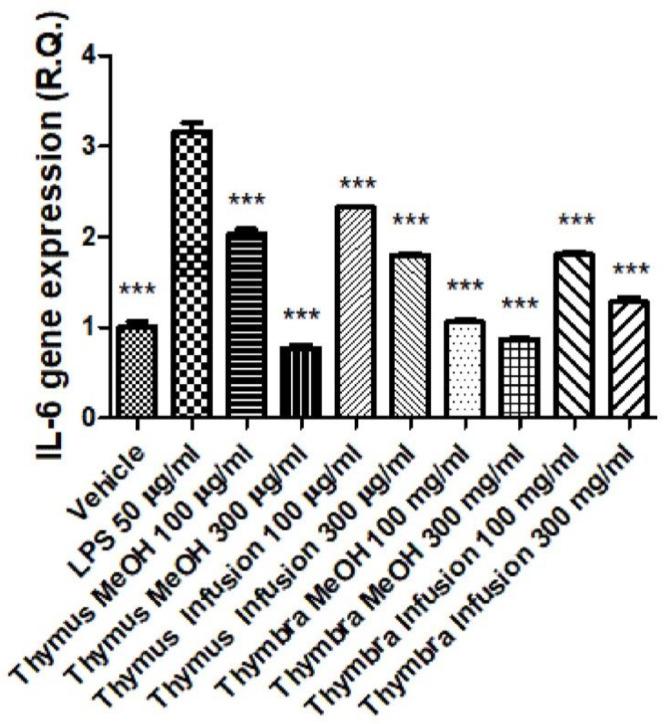
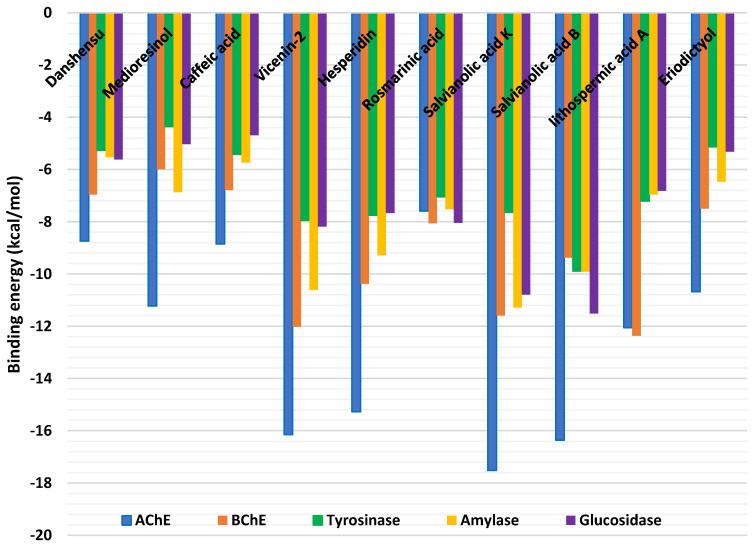
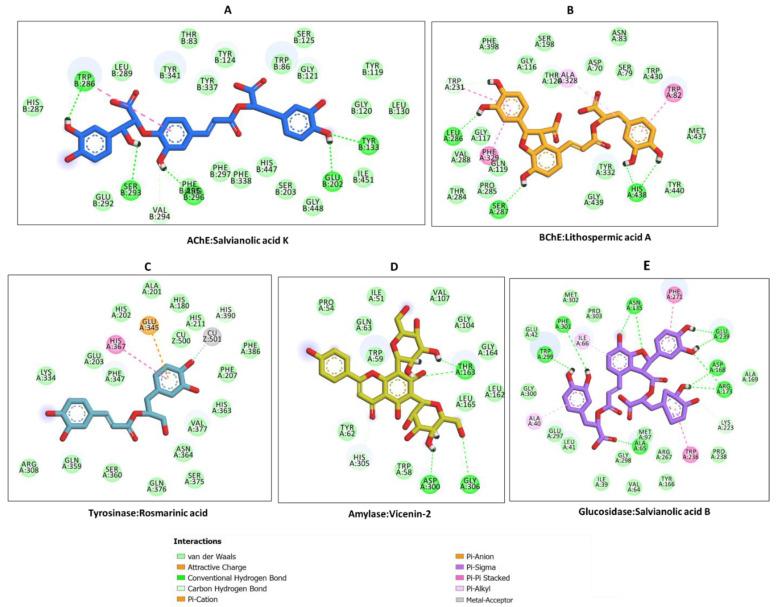
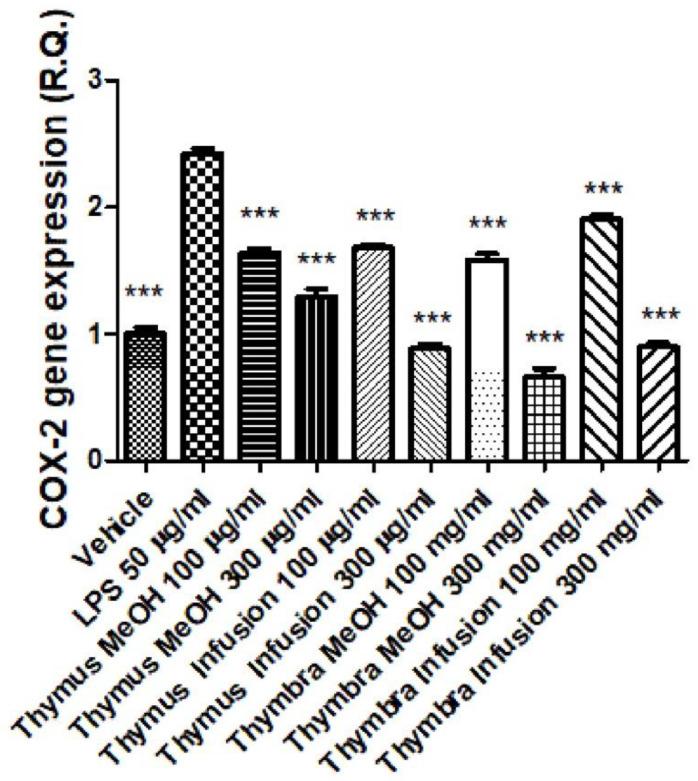
In this study, the methanolic and infusion extracts of two species, and subsp. , were tested for their chemical composition and biological abilities (antioxidant, enzyme inhibitory and anti-inflammatory effects). The extracts yielded total phenolic and flavonoid contents in the range of 83.43-127.52 mg GAE/g and 9.41-46.34 mg RE/g, respectively. HPLC analysis revealed rosmarinic acid to be a major component of the studied extracts (15.85-26.43%). The best ABTS radical scavenging ability was observed in the methanol extract of with 379.11 mg TE/g, followed by in the methanol extract of (360.93 mg TE/g). In the CUPRAC assay, the highest reducing ability was also found in the methanol extract of with 802.22 mg TE/g. The phosphomolybdenum ability ranged from 2.39 to 3.61 mmol TE/g. In terms of tyrosinase inhibitory effects, the tested methanol extracts (83.18-89.66 mg KAE/g) were higher than the tested water extracts (18.74-19.11 mg KAE/g). Regarding the BChE inhibitory effects, the methanol extracts were active on the enzyme while the water extracts showed no inhibitory effect on it. Overall, the methanolic extracts showed better enzyme inhibition compared to the infusion extracts. Molecular docking also showed the selected exhibited potential binding affinities with all enzymes, with a preference for cholinesterases. Additionally, the extracts were effective in attenuating the LPS-induced increase in COX-2 and IL-6 gene expression in isolated colon, thus indicating promising anti-inflammatory effects. The preliminary results of this study suggest that these species are good natural sources of antioxidants and also provide some scope as enzyme inhibitors, most likely due to their bioactive contents such as phenolic acids, and thus can be exploited for different applications related to health promotion and disease prevention.
在这项研究中,测试了两种物种( 和 亚种)的甲醇提取物和浸膏提取物的化学成分和生物活性(抗氧化、酶抑制和抗炎作用)。提取物的总酚和类黄酮含量分别在 83.43-127.52 mg GAE/g 和 9.41-46.34 mg RE/g 的范围内。HPLC 分析表明迷迭香酸是研究提取物的主要成分(15.85-26.43%)。甲醇提取物对 ABTS 自由基清除能力最强,其中 的甲醇提取物最高,为 379.11 mg TE/g,其次是 的甲醇提取物(360.93 mg TE/g)。在 CUPRAC 测定中,也发现 的甲醇提取物的还原能力最高,为 802.22 mg TE/g。磷钼酸盐能力范围为 2.39-3.61 mmol TE/g。就酪氨酸酶抑制作用而言,测试的甲醇提取物(83.18-89.66 mg KAE/g)高于测试的水提取物(18.74-19.11 mg KAE/g)。关于 BChE 抑制作用,甲醇提取物对酶有活性,而水提取物对其没有抑制作用。总体而言,与浸膏提取物相比,甲醇提取物对酶的抑制作用更好。分子对接也表明所选化合物与所有酶都具有潜在的结合亲和力,对胆碱酯酶有偏好。此外,提取物可有效减轻 LPS 诱导的离体结肠 COX-2 和 IL-6 基因表达的增加,从而表明具有有希望的抗炎作用。这项研究的初步结果表明,这些物种是抗氧化剂的良好天然来源,并且还提供了作为酶抑制剂的一些潜力,这很可能是由于它们的生物活性成分,如酚酸,因此可以用于与促进健康和预防疾病相关的不同应用。
 Zotero 插件