
学生对大学的适应和在 COVID-19 期间的应对与调整的关系:一种机器学习方法。
Student adaptation to college and coping in relation to adjustment during COVID-19: A machine learning approach.
机构信息
Computer and Information Sciences Department, Fordham University, New York, New York, United States of America.
Graduate School of Education, Fordham University, New York, New York, United States of America.
出版信息
PLoS One. 2022 Dec 30;17(12):e0279711. doi: 10.1371/journal.pone.0279711. eCollection 2022.
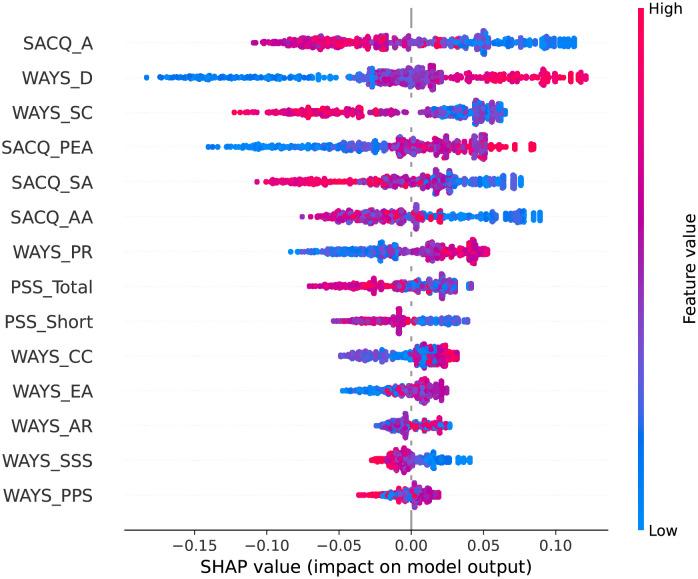
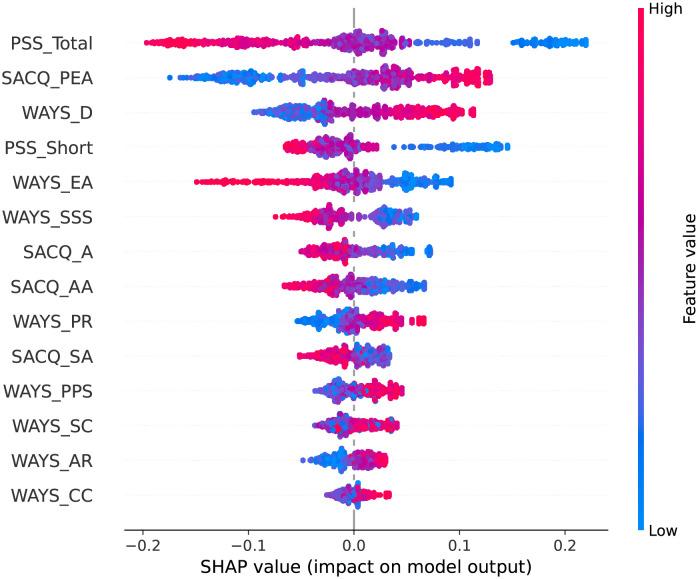
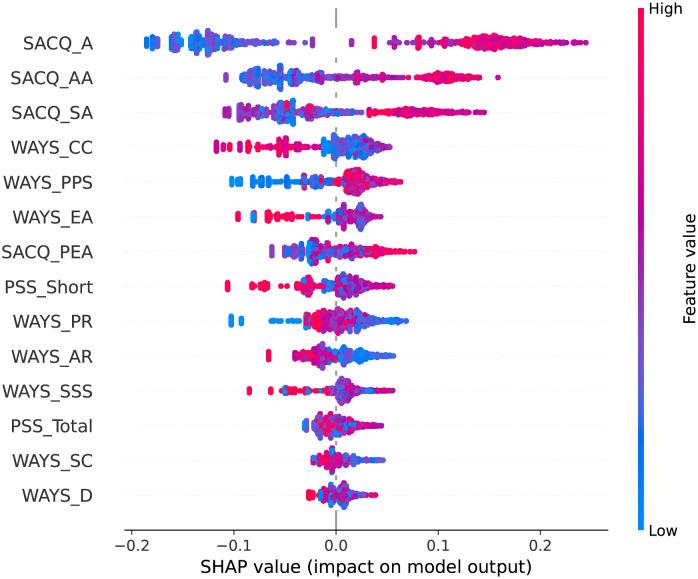
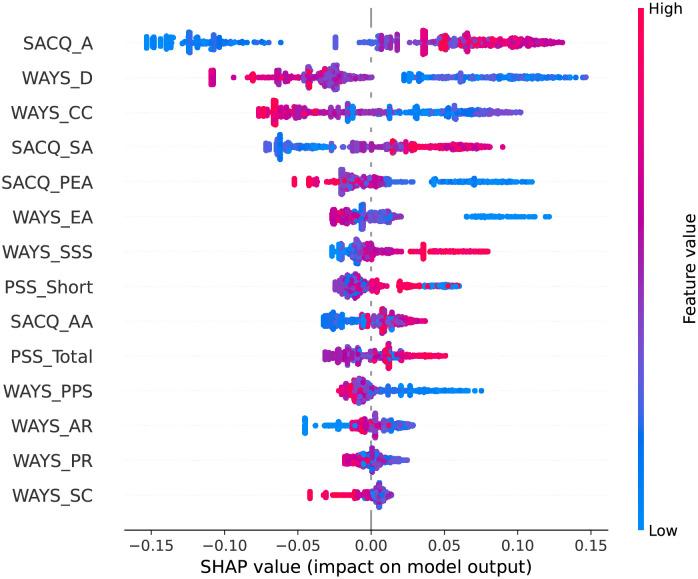
The COVID-19 pandemic has presented unprecedented challenges for university students, creating uncertainties for their academic careers, social lives, and mental health. Our study utilized a machine learning approach to examine the degree to which students' college adjustment and coping styles impacted their adjustment to COVID-19 disruptions. More specifically, we developed predictive models to distinguish between well-adjusted and not well-adjusted students in each of five psychological domains: academic adjustment, emotionality adjustment, social support adjustment, general COVID-19 regulations response, and discriminatory impact. The predictive features used for these models are students' individual characteristics in three psychological domains, i.e., Ways of Coping (WAYS), Adaptation to College (SACQ), and Perceived Stress Scale (PSS), assessed using established commercial and open-access questionnaires. We based our study on a proprietary survey dataset collected from 517 U.S. students during the initial peak of the pandemic. Our models achieved an average of 0.91 AUC score over the five domains. Using the SHAP method, we further identified the most relevant risk factors associated with each classification task. The findings reveal the relationship of students' general adaptation to college and coping in relation to their adjustment during COVID-19. Our results could help universities identify systemic and individualized strategies to support their students in coping with stress and to facilitate students' college adjustment in this era of challenges and uncertainties.
新冠疫情大流行给大学生带来了前所未有的挑战,给他们的学业、社交生活和心理健康带来了不确定性。我们使用机器学习方法研究了学生的大学适应和应对方式在多大程度上影响了他们对新冠疫情干扰的适应。更具体地说,我们开发了预测模型,以区分五个心理领域中适应良好和适应不良的学生:学业适应、情绪适应、社会支持适应、一般新冠疫情规定反应和歧视性影响。这些模型使用的预测特征是学生在三个心理领域的个体特征,即应对方式问卷(WAYS)、大学生适应量表(SACQ)和感知压力量表(PSS),使用已建立的商业和开放获取问卷进行评估。我们的研究基于一项从疫情初期在美国收集的 517 名学生的专有调查数据集。我们的模型在五个领域的平均 AUC 评分为 0.91。使用 SHAP 方法,我们进一步确定了与每个分类任务相关的最相关风险因素。研究结果揭示了学生的一般适应能力和应对方式与他们在新冠疫情期间的适应能力之间的关系。我们的研究结果可以帮助大学确定系统和个性化的策略,以支持学生应对压力,并促进学生在这个充满挑战和不确定性的时代适应大学生活。

 Zotero 插件