
阿替利珠单抗联合贝伐单抗对比索拉非尼治疗不可切除肝细胞癌:IMbrave150随机临床试验中老年人的结果
Atezolizumab plus Bevacizumab versus Sorafenib for Unresectable Hepatocellular Carcinoma: Results from Older Adults Enrolled in the IMbrave150 Randomized Clinical Trial.
作者信息
Li Daneng, Toh Han Chong, Merle Philippe, Tsuchiya Kaoru, Hernandez Sairy, Verret Wendy, Nicholas Alan, Kudo Masatoshi
机构信息
Department of Medical Oncology & Therapeutics Research, City of Hope National Medical Center, Duarte, California, USA.
National Cancer Centre Singapore, Singapore, Singapore.
出版信息
Liver Cancer. 2022 Jul 13;11(6):558-571. doi: 10.1159/000525671. eCollection 2022 Dec.
INTRODUCTION
The efficacy of systemic first-line treatments in older adults with unresectable hepatocellular carcinoma (HCC) has not been well-studied. We compared the safety and efficacy of atezolizumab plus bevacizumab versus sorafenib as a first-line treatment in younger versus older patients with unresectable HCC.
METHODS
This global, phase 3, open-label, randomized clinical trial (IMbrave150) recruited patients aged ≥18 years with locally advanced metastatic or unresectable HCC, an Eastern Cooperative Oncology Group performance status score of 0 or 1, and Child-Pugh class A liver function who had not previously received systemic therapy for liver cancer. Patients received either 1,200 mg atezolizumab plus 15 mg/kg bevacizumab intravenously every 3 weeks or 400 mg sorafenib orally twice daily until loss of clinical benefit or unacceptable toxicity. Primary endpoints were overall survival (OS) and progression-free survival (PFS). Secondary outcomes were the incidence of adverse events and time to deterioration of patient-reported outcomes (PROs). This subgroup analysis evaluated safety and efficacy endpoints in patients <65 years, ≥65 to <75 years, and ≥75 years.
RESULTS
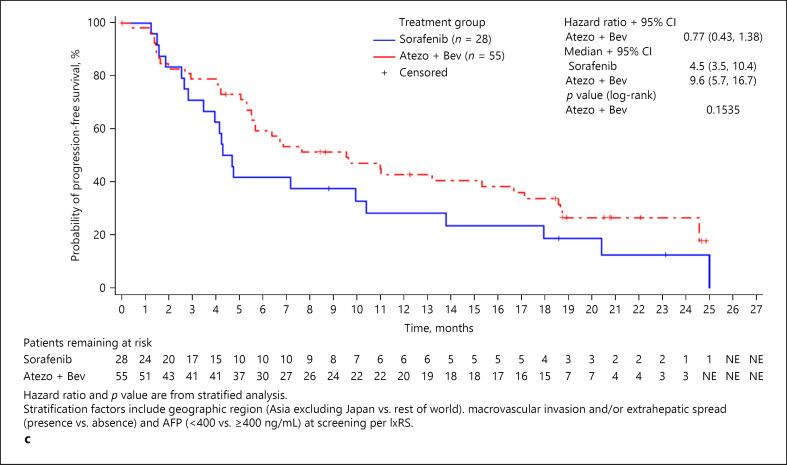
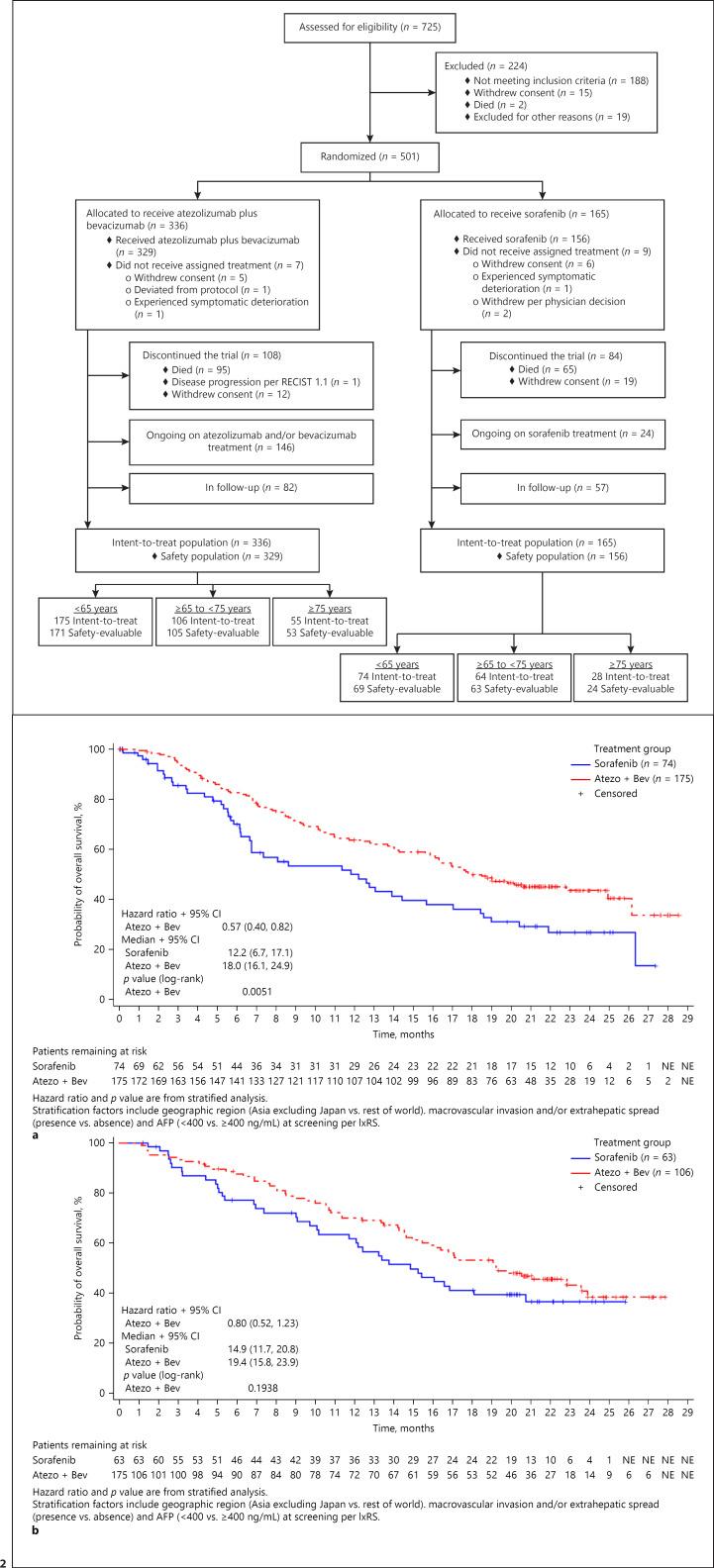
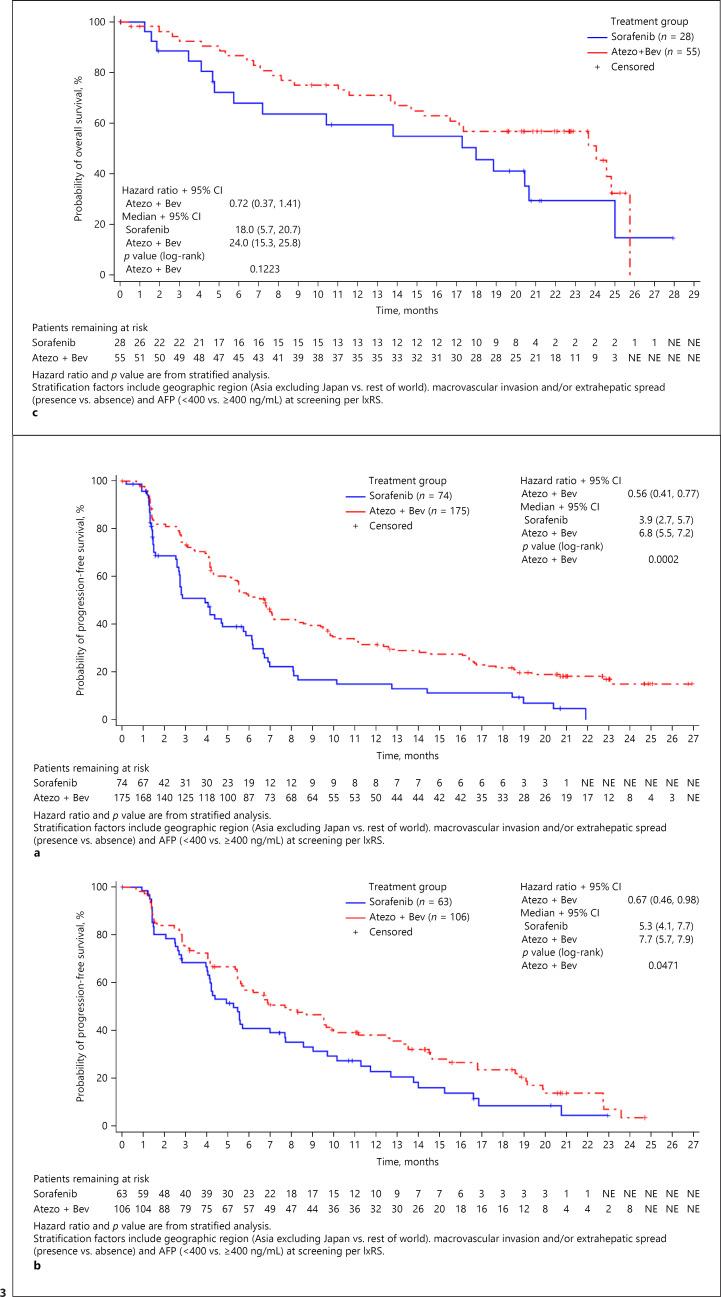
Of 501 patients, 165 patients were randomized to sorafenib and 336 were randomized to atezolizumab plus bevacizumab (175 patients <65 years; 106 patients ≥65 to <75 years; 55 patients ≥75 years). Across all age groups, patients receiving atezolizumab plus bevacizumab had longer median OS (<65: 18.0 vs. 12.2 months [HR, 0.57; 95% CI: 0.40-0.82]; ≥65 to <75: 19.4 vs. 14.9 months [HR, 0.80; 95% CI: 0.52-1.23]; ≥75: 24.0 vs. 18.0 months [HR, 0.72, 95% CI: 0.37-1.41]) and PFS than those receiving sorafenib. Time to deterioration for multiple PROs was delayed for patients receiving atezolizumab plus bevacizumab, including older adults. There were no clinically meaningful differences in toxicity between age groups.
CONCLUSION
Atezolizumab plus bevacizumab is safe and effective in adults <65, ≥65 to <75, and ≥75. Treatment was well-tolerated even in elderly patients.
引言
对于无法切除的肝细胞癌(HCC)老年患者,一线全身治疗的疗效尚未得到充分研究。我们比较了阿替利珠单抗联合贝伐珠单抗与索拉非尼作为一线治疗对无法切除的HCC年轻和老年患者的安全性和疗效。
方法
这项全球性、3期、开放标签、随机临床试验(IMbrave150)招募了年龄≥18岁、患有局部晚期转移性或无法切除的HCC、东部肿瘤协作组体能状态评分为0或1且肝功能为Child-Pugh A级且此前未接受过肝癌全身治疗的患者。患者每3周接受一次静脉注射1200mg阿替利珠单抗加15mg/kg贝伐珠单抗,或每日口服两次400mg索拉非尼,直至失去临床获益或出现不可接受的毒性。主要终点为总生存期(OS)和无进展生存期(PFS)。次要结局为不良事件发生率和患者报告结局(PRO)恶化时间。该亚组分析评估了年龄<65岁、≥65至<75岁和≥75岁患者的安全性和疗效终点。
结果
在501例患者中,165例患者被随机分配至索拉非尼组,336例患者被随机分配至阿替利珠单抗联合贝伐珠单抗组(175例患者年龄<65岁;106例患者年龄≥65至<75岁;55例患者年龄≥75岁)。在所有年龄组中,接受阿替利珠单抗联合贝伐珠单抗治疗的患者中位OS更长(<65岁:18.0个月对12.2个月[HR,0.57;95%CI:0.40-0.82];≥65至<75岁:19.4个月对14.9个月[HR,0.80;95%CI:0.52-1.23];≥75岁:24.0个月对18.0个月[HR,0.72,95%CI:0.37-1.41]),PFS也长于接受索拉非尼治疗的患者。接受阿替利珠单抗联合贝伐珠单抗治疗的患者,包括老年人,多种PRO的恶化时间延迟。各年龄组之间在毒性方面无临床意义上的差异。
结论
阿替利珠单抗联合贝伐珠单抗在年龄<65岁、≥65至<75岁和≥7岁患者中安全有效。即使在老年患者中,治疗耐受性也良好。
 Zotero 插件