
系膜细胞:狼疮肾炎的中心环节。
Mesangial cell: A hub in lupus nephritis.
机构信息
Jiangsu Key Laboratory of Infection and Immunity, Institutes of Biology and Medical Sciences, Soochow University, Suzhou, China.
Cyrus Tang Hematology Center, State Key Laboratory of Radiation Medicine and Protection, Soochow University, Suzhou, China.
出版信息
Front Immunol. 2022 Dec 14;13:1063497. doi: 10.3389/fimmu.2022.1063497. eCollection 2022.
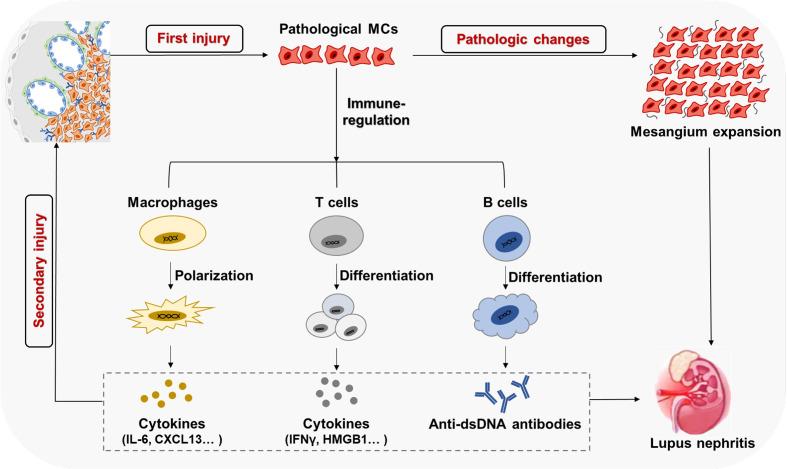
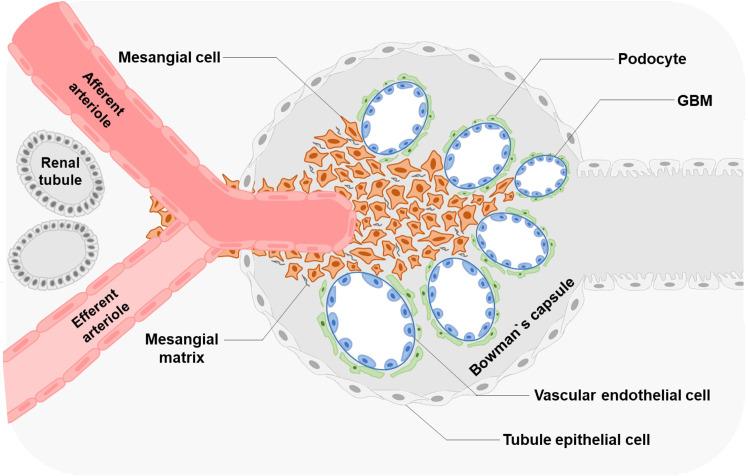
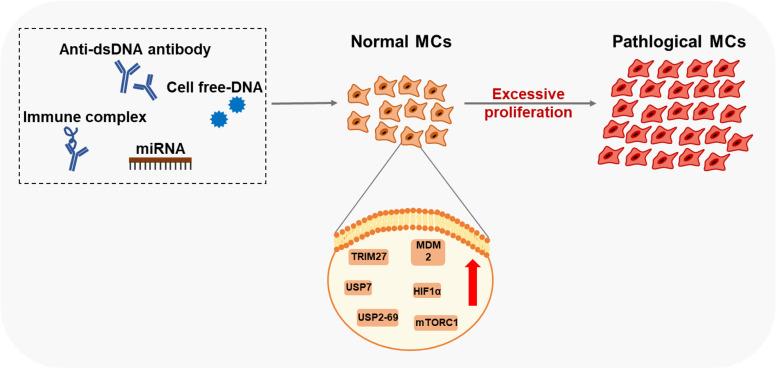
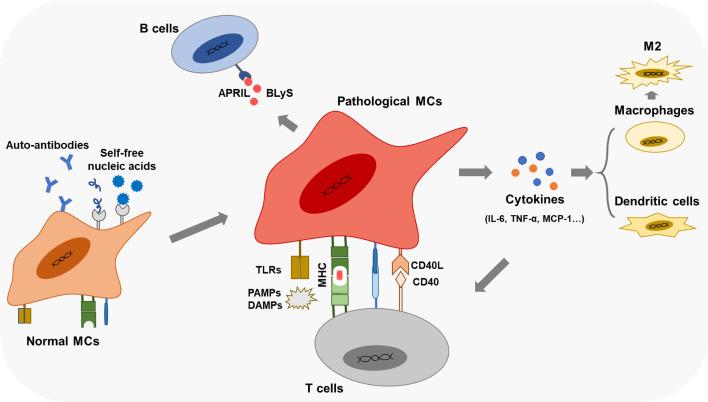
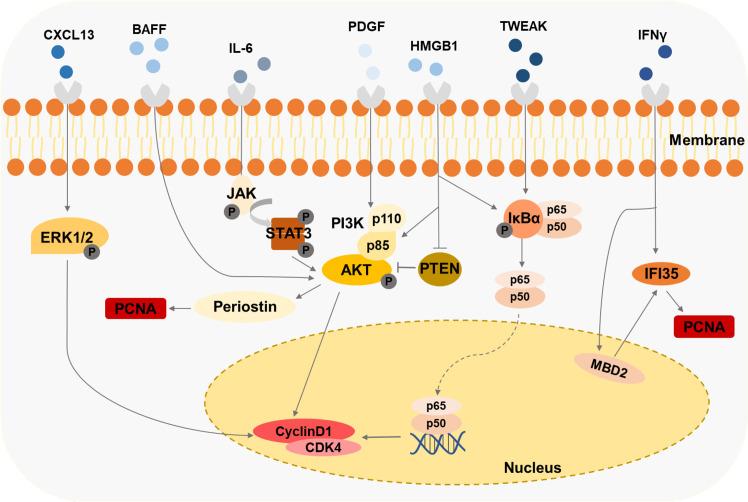
Lupus nephritis (LN) is a severe renal disease caused by the massive deposition of the immune complexes (ICs) in renal tissue, acting as one of the significant organ manifestations of systemic lupus erythematosus (SLE) and a substantial cause of death in clinical patients. As mesangium is one of the primary sites for IC deposition, mesangial cells (MCs) constantly undergo severe damage, resulting in excessive proliferation and increased extracellular matrix (ECM) production. In addition to playing a role in organizational structure, MCs are closely related to immunomodulation by phagocytosis, antigen-presenting function, and inflammatory effects, aberrantly participating in the tissue-resident immune responses and leading to immune-mediated renal lesions. Notably, such renal-resident immune responses drive a second wave of MC damage, accelerating the development of LN. This review summarized the damage mechanisms and the immune regulation of MCs in LN, facilitating the current drug research for exploring clinical treatment strategies.
狼疮性肾炎 (LN) 是一种严重的肾脏疾病,由免疫复合物 (ICs) 在肾脏组织中的大量沉积引起,是系统性红斑狼疮 (SLE) 的重要器官表现之一,也是临床患者死亡的主要原因。由于系膜是 IC 沉积的主要部位之一,系膜细胞 (MCs) 会不断受到严重损伤,导致过度增殖和细胞外基质 (ECM) 产生增加。除了在组织结构中发挥作用外,MCs 还通过吞噬作用、抗原呈递功能和炎症作用密切参与免疫调节,异常参与组织驻留免疫反应,导致免疫介导的肾脏损伤。值得注意的是,这种肾脏驻留免疫反应引发了 MC 损伤的第二波,加速了 LN 的发展。本综述总结了 LN 中 MC 的损伤机制和免疫调节,有助于当前药物研究探索临床治疗策略。
 Zotero 插件