
TRX1 的表达优化了人源 CAR T 细胞的抗肿瘤功能,并赋予其对促氧化肿瘤微环境的抗性。
Expression of TRX1 optimizes the antitumor functions of human CAR T cells and confers resistance to a pro-oxidative tumor microenvironment.
机构信息
Section of Molecular Immunology, Institute of Immunology, Heidelberg University Hospital, Heidelberg, Germany.
Leibniz Institute for Immunotherapy, Division of Genetic Immunotherapy, University Regensburg, Regensburg, Germany.
出版信息
Front Immunol. 2022 Dec 14;13:1063313. doi: 10.3389/fimmu.2022.1063313. eCollection 2022.
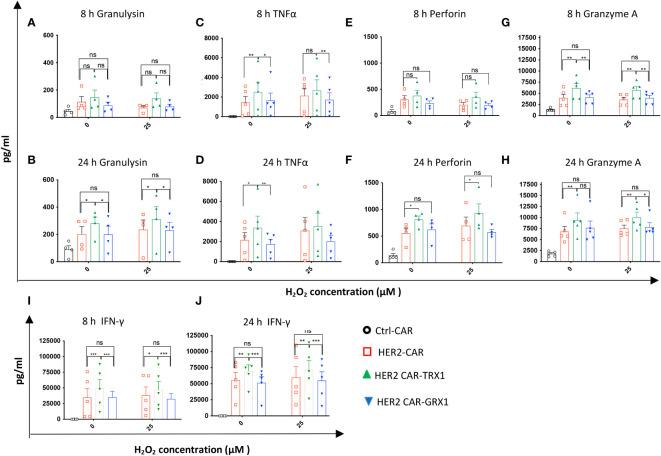
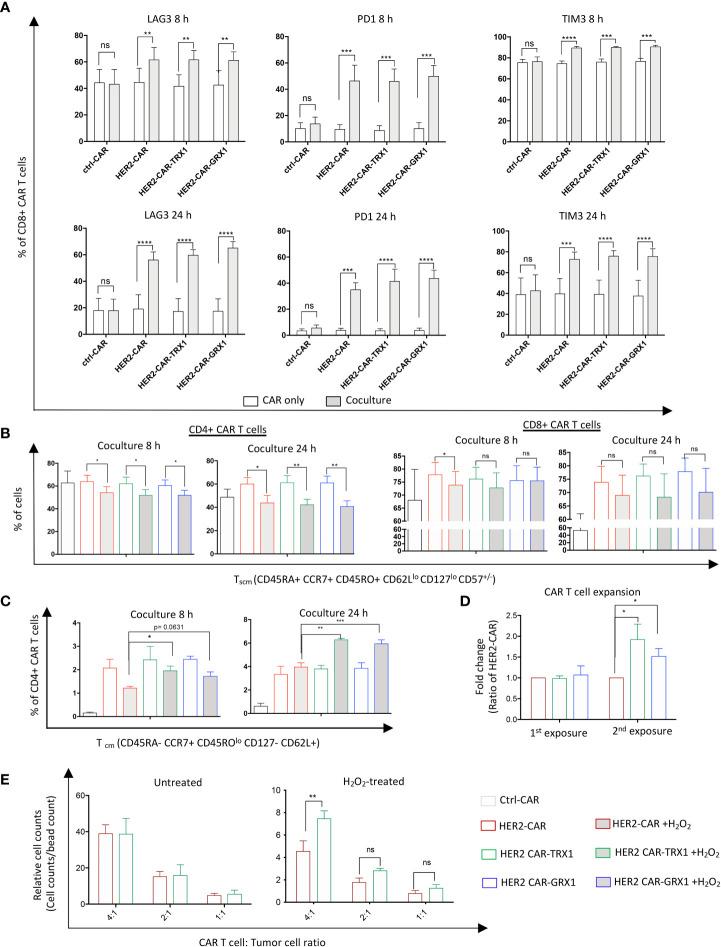
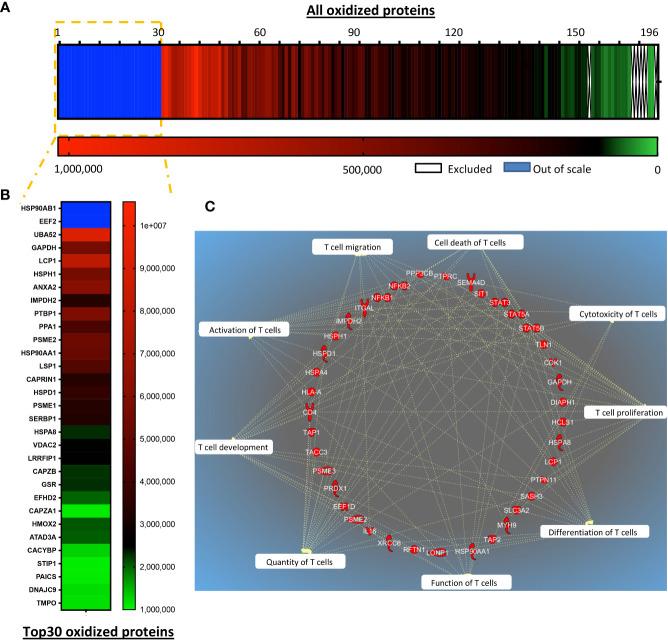
Use of chimeric antigen receptor (CAR) T cells to treat B cell lymphoma and leukemia has been remarkably successful. Unfortunately, the therapeutic efficacy of CAR T cells against solid tumors is very limited, with immunosuppression by the pro-oxidative tumor microenvironment (TME) a major contributing factor. High levels of reactive oxygen species are well-tolerated by tumor cells due to their elevated expression of antioxidant proteins; however, this is not the case for T cells, which consequently become hypo-responsive. The aim of this study was to improve CAR T cell efficacy in solid tumors by empowering the antioxidant capacity of CAR T cells against the pro-oxidative TME. To this end, HER2-specific human CAR T cells stably expressing two antioxidant systems: thioredoxin-1 (TRX1), and glutaredoxin-1 (GRX1) were generated and characterized. Thereafter, antitumor functions of CAR T cells were evaluated under control or pro-oxidative conditions. To provide insights into the role of antioxidant systems, gene expression profiles as well as global protein oxidation were analyzed. Our results highlight that TRX1 is pivotal for T cell redox homeostasis. TRX1 expression allows CAR T cells to retain their cytolytic immune synapse formation, cytokine release, proliferation, and tumor cell-killing properties under pro-oxidative conditions. Evaluation of differentially expressed genes and the first comprehensive redoxosome analysis of T cells by mass spectrometry further clarified the underlying mechanisms. Taken together, enhancement of the key antioxidant TRX1 in human T cells opens possibilities to increase the efficacy of CAR T cell treatment against solid tumors.
嵌合抗原受体 (CAR) T 细胞治疗 B 细胞淋巴瘤和白血病已取得显著成功。不幸的是,CAR T 细胞对实体瘤的治疗效果非常有限,促氧化肿瘤微环境 (TME) 的免疫抑制是一个主要因素。由于肿瘤细胞表达高水平的抗氧化蛋白,因此它们可以耐受高水平的活性氧;然而,T 细胞则不然,因此它们变得反应迟钝。本研究旨在通过增强 CAR T 细胞对抗促氧化 TME 的抗氧化能力来提高 CAR T 细胞在实体瘤中的疗效。为此,生成并表征了稳定表达两种抗氧化系统:硫氧还蛋白-1 (TRX1) 和谷氧还蛋白-1 (GRX1) 的 HER2 特异性人源 CAR T 细胞。然后,在对照或促氧化条件下评估 CAR T 细胞的抗肿瘤功能。为了深入了解抗氧化系统的作用,分析了基因表达谱和全局蛋白质氧化。我们的结果强调了 TRX1 对 T 细胞氧化还原稳态的重要性。TRX1 表达使 CAR T 细胞能够在促氧化条件下保持其细胞毒性免疫突触形成、细胞因子释放、增殖和杀伤肿瘤细胞的特性。通过质谱对差异表达基因的评估和对 T 细胞的首次全面氧化还原体分析进一步阐明了潜在机制。总之,增强人 T 细胞中的关键抗氧化剂 TRX1 为提高 CAR T 细胞治疗实体瘤的疗效提供了可能。
 Zotero 插件