
施万细胞在糖尿病周围神经病变中的作用机制:综述。
Mechanism of Schwann cells in diabetic peripheral neuropathy: A review.
机构信息
Heilongjiang University of Traditional Chinese Medicine, Harbin, Heilongjiang Province, China.
Second Affiliated Hospital of Heilongjiang University of Traditional Chinese Medicine, Harbin, Heilongjiang Province, China.
出版信息
Medicine (Baltimore). 2023 Jan 6;102(1):e32653. doi: 10.1097/MD.0000000000032653.
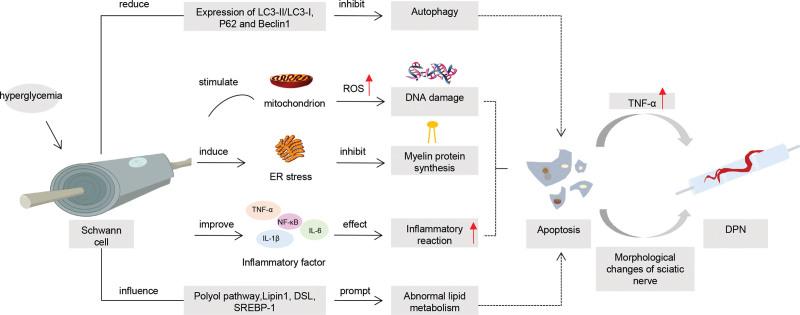
Diabetic peripheral neuropathy (DPN) is the most common neuropathy in the world, mainly manifested as bilateral symmetry numbness, pain or paresthesia, with a high rate of disability and mortality. Schwann cells (SCs), derived from neural ridge cells, are the largest number of glial cells in the peripheral nervous system, and play an important role in DPN. Studies have found that SCs are closely related to the pathogenesis of DPN, such as oxidative stress, endoplasmic reticulum stress, inflammation, impaired neurotrophic support and dyslipidemia. This article reviews the mechanism of SCs in DPN.
糖尿病周围神经病变(DPN)是世界上最常见的神经病变,主要表现为双侧对称性麻木、疼痛或感觉异常,致残率和死亡率高。许旺细胞(SCs)来源于神经嵴细胞,是周围神经系统中数量最多的神经胶质细胞,在 DPN 中起重要作用。研究发现,SCs 与 DPN 的发病机制密切相关,如氧化应激、内质网应激、炎症、神经营养支持受损和血脂异常。本文综述了SCs 在 DPN 中的作用机制。
 Zotero 插件