
新冠患者疾病进展过程中miRNA-200c的上调
Upregulation of miRNA-200c during Disease Progression in COVID-19 Patients.
作者信息
van de Sand Lukas, Braß Peer, Gregorius Jonas, Pattberg Kevin, Engler Andrea, Dittmer Ulf, Taube Christian, Brock Stephan, Berger Marc Moritz, Brenner Thorsten, Witzke Oliver, Krawczyk Adalbert
机构信息
Department of Infectious Diseases, West German Centre of Infectious Diseases, University Duisburg-Essen, 45147 Essen, Germany.
Department of Anesthesiology and Intensive Care Medicine, University Hospital Essen, University Duisburg-Essen, 45147 Essen, Germany.
出版信息
J Clin Med. 2022 Dec 29;12(1):283. doi: 10.3390/jcm12010283.
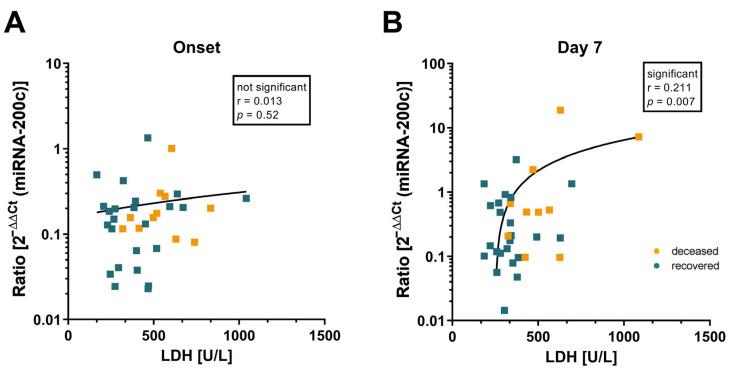
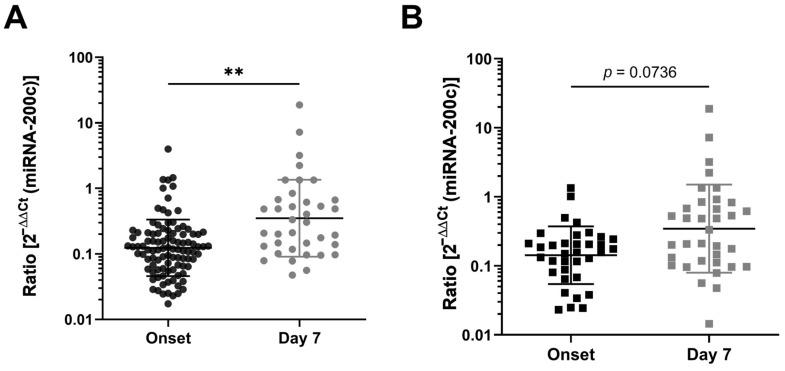
The COVID-19 pandemic has caused more than 6 million deaths worldwide since its first outbreak in December 2019 and continues to be a major health problem. Several studies have established that the infection by SARS-CoV-2 can be categorized in a viremic, acute and recovery or severe phase. Hyperinflammation during the acute pneumonia phase is a major cause of severe disease progression and death. Treatment of COVID-19 with directly acting antivirals is limited within a narrow window of time between first clinical symptoms and the hyperinflammatory response. Therefore, early initiation of treatment is crucial to assure optimal health care for patients. Molecular diagnostic biomarkers represent a potent tool to predict the course of disease and thus to assess the optimal treatment regimen and time point. Here, we investigated miRNA-200c as a potential marker for the prediction of the severity of COVID-19 to preventively initiate and personalize therapeutic interventions in the future. We found that miRNA-200c correlates with the severity of disease. With retrospective analysis, however, there is no correlation with prognosis at the time of hospitalization. Our study provides the basis for further evaluation of miRNA-200c as a predictive biomarker for the progress of COVID-19.
自2019年12月首次爆发以来,新冠疫情已在全球造成600多万人死亡,并且仍然是一个主要的健康问题。多项研究表明,严重急性呼吸综合征冠状病毒2(SARS-CoV-2)感染可分为病毒血症期、急性期、恢复期或重症期。急性肺炎期的过度炎症是疾病严重进展和死亡的主要原因。在首次临床症状出现至过度炎症反应之间的狭窄时间窗内,使用直接作用抗病毒药物治疗新冠病毒病(COVID-19)的效果有限。因此,尽早开始治疗对于确保为患者提供最佳医疗护理至关重要。分子诊断生物标志物是预测疾病进程从而评估最佳治疗方案和时间点的有力工具。在此,我们研究了微小RNA-200c(miRNA-200c)作为预测COVID-19严重程度的潜在标志物,以便将来预防性地启动并个性化治疗干预措施。我们发现miRNA-200c与疾病严重程度相关。然而,通过回顾性分析,其与住院时的预后并无关联。我们的研究为进一步评估miRNA-200c作为COVID-19病情进展的预测生物标志物提供了依据。
 Zotero 插件