
荧光碳点的生物合成及其在农作物生物成像中的应用。
Biogenic Synthesis of Fluorescent Carbon Dots (CDs) and Their Application in Bioimaging of Agricultural Crops.
作者信息
Pete Akshay M, Ingle Pramod U, Raut Rajesh W, Shende Sudhir S, Rai Mahendra, Minkina Tatiana M, Rajput Vishnu D, Kalinitchenko Valery P, Gade Aniket K
机构信息
Nanobiotechnology Laboratory, Department of Biotechnology, Sant Gadge Baba Amravati University, Amravati 444602, Maharashtra, India.
Department of Botany, The Institute of Science, 15, Madame Cama Road, Mumbai 400032, Maharashtra, India.
出版信息
Nanomaterials (Basel). 2023 Jan 3;13(1):209. doi: 10.3390/nano13010209.
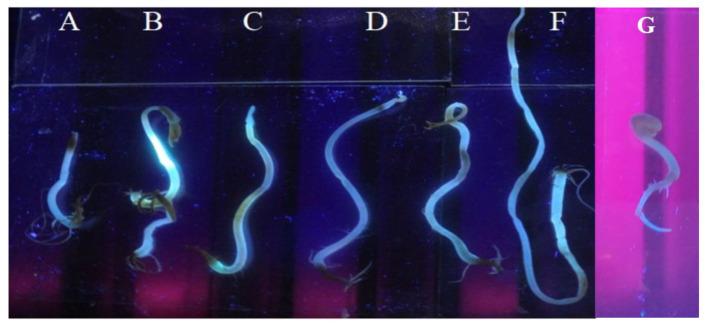
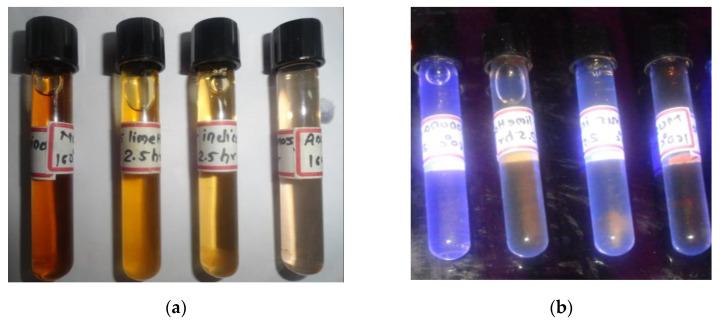
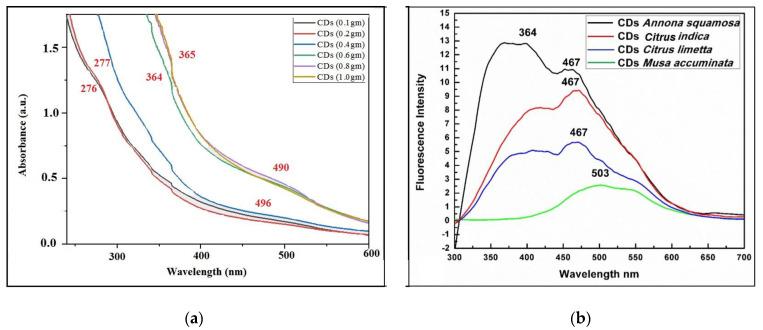
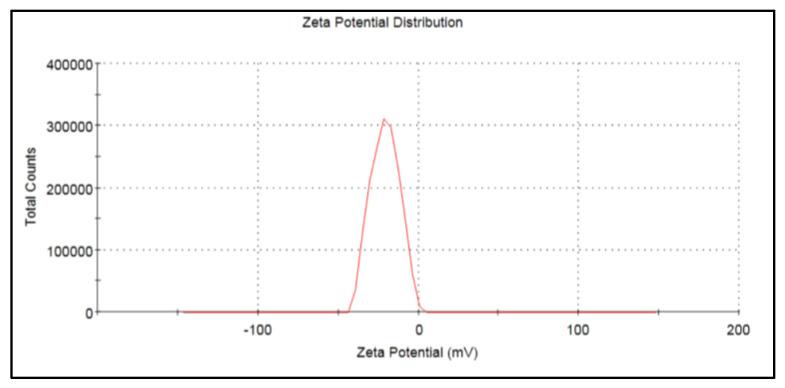
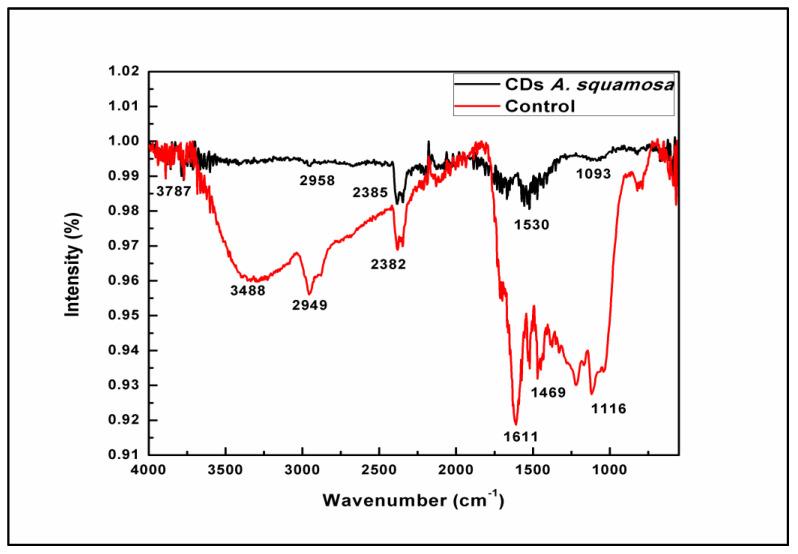
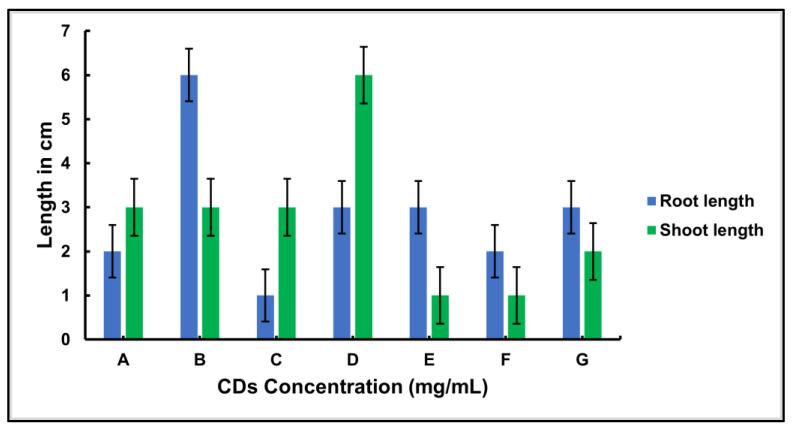
Fluorescent nanoparticles have a transformative potential for advanced sensors and devices for point-of-need diagnostics and bioimaging, bypassing the technical burden of meeting the assay performance requirements. Carbon dots (CDs) are rapidly emerging carbon-based nanomaterials. Regardless of their fate, they will find increasing applications. In this study, a simple approach for synthesizing CDs from fruit peels was developed. The CDs were fabricated from (L.) peels using a carbonization technique through microwave-assisted hydrothermal digestion at temperatures around 200 °C. Synthesized CDs were detected using a UV transilluminator for the preliminary confirmation of the presence of fluorescence. UV-Vis spectrophotometry (absorbance at 505 nm) analysis, zeta potential measurement (-20.8 mV), nanoparticles tracking analysis (NTA) (average size: 15.4 nm and mode size: 9.26 nm), photoluminescence, and Fourier transform infrared (FT-IR) analysis were used to identify the capping functional groups on the CDs. The total quantum yield exhibited was 8.93%, and the field emission scanning electron microscopy (FESEM) showed the size range up to 40 nm. The germinating mung bean ( (L.)) seeds were incubated with biogenically synthesized CDs to check the absorption of CDs by them. The fluorescence was observed under a UV-transilluminator in the growing parts of seeds, indicating the absorption of CDs during the germination, development, and growth. These fluorescent CDs could be used as a bioimaging agent. This novel method of synthesizing CDs was found to be eco-friendly, rapid, and cost-effective.
荧光纳米颗粒对于用于即时诊断和生物成像的先进传感器及设备具有变革潜力,可绕过满足检测性能要求的技术负担。碳点(CDs)是迅速兴起的碳基纳米材料。无论其最终用途如何,它们都将获得越来越多的应用。在本研究中,开发了一种从果皮合成碳点的简单方法。这些碳点是通过在约200°C的温度下采用微波辅助水热消化的碳化技术由(此处原文水果名称不完整)果皮制备而成。使用紫外透射仪检测合成的碳点,以初步确认荧光的存在。采用紫外-可见分光光度法(505nm处的吸光度)分析、zeta电位测量(-20.8mV)、纳米颗粒跟踪分析(NTA)(平均尺寸:15.4nm,模态尺寸:9.26nm)、光致发光以及傅里叶变换红外(FT-IR)分析来识别碳点上的封端官能团。所展示的总量子产率为8.93%,场发射扫描电子显微镜(FESEM)显示尺寸范围可达40nm。将发芽的绿豆(此处原文绿豆名称不完整)种子与生物合成的碳点一起孵育,以检查它们对碳点的吸收情况。在紫外透射仪下观察到种子生长部位有荧光,表明在发芽、发育和生长过程中种子吸收了碳点。这些荧光碳点可作为生物成像剂。发现这种合成碳点的新方法环保、快速且具有成本效益。

 Zotero 插件