
腺病毒血管内皮生长因子-D基因疗法治疗心肌缺血
Adenoviral VEGF-D gene therapy for myocardial ischemia.
作者信息
Pajula Juho, Lähteenvuo Johanna, Lähteenvuo Markku, Honkonen Krista, Halonen Paavo, Hätinen Olli-Pekka, Kuivanen Antti, Heikkilä Minja, Nurro Jussi, Hartikainen Juha, Ylä-Herttuala Seppo
机构信息
A.I. Virtanen Institute, University of Eastern Finland, Kuopio, Finland.
Heart Center and Gene Therapy Unit, Kuopio University Hospital, Kuopio, Finland.
出版信息
Front Bioeng Biotechnol. 2022 Dec 22;10:999226. doi: 10.3389/fbioe.2022.999226. eCollection 2022.
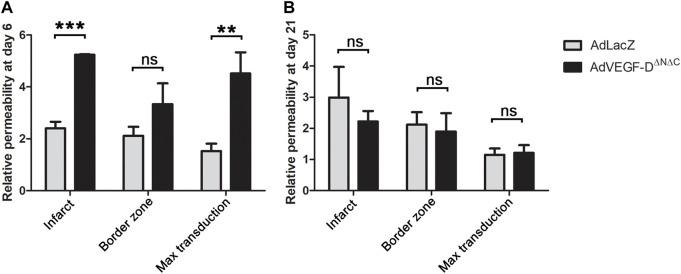
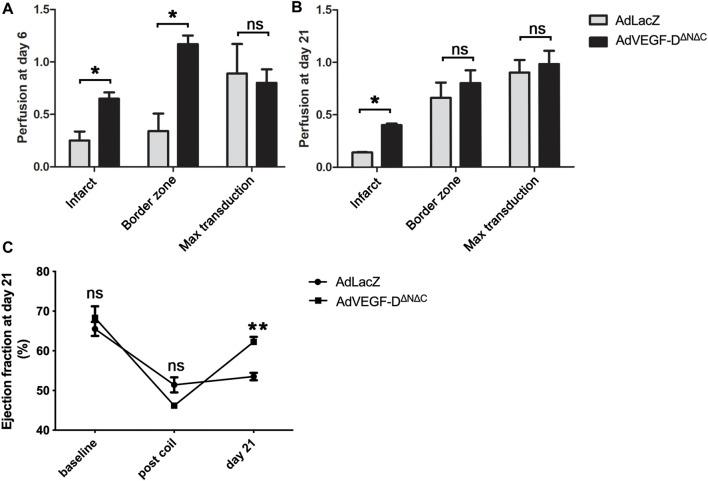
Cardiovascular diseases are the leading cause of death globally. In spite of the availability of improved treatments, there is still a large group of chronic ischemia patients who suffer from significant symptoms and disability. Thus, there is a clear need to develop new treatment strategies for these patients. Therapeutic angiogenesis is a novel therapy method which has shown promising results in preclinical studies. In this study, we evaluated safety and efficacy of adenoviral (Ad) VEGF-D gene transfer for the treatment of myocardial ischemia in a pig model. Adenoviral VEGF-D gene transfer was given to pigs ( = 26) intramyocardial injections using an electromechanical injection catheter. Angiogenic effects were evaluated in an acute myocardial infarction model ( = 18) and functionality of the lymphatic vessels were tested in healthy porcine myocardium ( = 8). AdLacZ was used as a control. AdVEGF-D induced safe and effective myocardial angiogenesis by inducing a four-fold increase in mean capillary area at the edge of the myocardial infarct six days after the gene transfer relative to the control AdLacZ group. The effect was sustained over 21 days after the gene transfer, and there were no signs of vessels regression. AdVEGF-D also increased perfusion 3.4-fold near the infarct border zone relative to the control as measured by fluorescent microspheres. Ejection fraction was 8.7% higher in the AdVEGF-D treated group 21 days after the gene transfer relative to the AdLacZ control group. Modified Miles assay detected a transient increase in plasma protein extravasation after the AdVEGF-D treatment and a mild accumulation of pericardial effusate was observed at d6. However, AdVEGF-D also induced the growth of functional lymphatic vasculature, and the amount of pericardial fluid and level of vascular permeability had returned to normal by d21. Endovascular intramyocardial AdVEGF-D gene therapy proved to be safe and effective in the acute porcine myocardial infarction model and provides a new potential treatment option for patients with severe coronary heart disease.
心血管疾病是全球主要的死亡原因。尽管有了改进的治疗方法,但仍有一大群慢性缺血患者遭受严重症状和残疾的折磨。因此,显然需要为这些患者开发新的治疗策略。治疗性血管生成是一种新型治疗方法,在临床前研究中已显示出有希望的结果。在本研究中,我们评估了腺病毒(Ad)VEGF-D基因转移治疗猪模型心肌缺血的安全性和有效性。使用机电注射导管对26头猪进行心肌内注射腺病毒VEGF-D基因转移。在急性心肌梗死模型(18头)中评估血管生成作用,并在健康猪心肌(8头)中测试淋巴管的功能。AdLacZ用作对照。与对照AdLacZ组相比,基因转移后6天,AdVEGF-D通过使心肌梗死边缘的平均毛细血管面积增加四倍,诱导了安全有效的心肌血管生成。该效果在基因转移后持续21天,并且没有血管消退的迹象。通过荧光微球测量,相对于对照,AdVEGF-D还使梗死边界区附近的灌注增加了3.4倍。基因转移后21天,AdVEGF-D治疗组的射血分数比AdLacZ对照组高8.7%。改良的迈尔斯试验检测到AdVEGF-D治疗后血浆蛋白外渗短暂增加,在第6天观察到心包积液轻度积聚。然而,AdVEGF-D也诱导了功能性淋巴管的生长,到第21天,心包液量和血管通透性水平已恢复正常。血管内心肌内AdVEGF-D基因治疗在急性猪心肌梗死模型中被证明是安全有效的,并为严重冠心病患者提供了一种新的潜在治疗选择。


 Zotero 插件