
阿尔及利亚西部天然蜂蜜中的微量元素和重金属含量
Trace Elements and Heavy Metal Contents in West Algerian Natural Honey.
作者信息
Bereksi-Reguig Dalila, Bouchentouf Salim, Allali Hocine, Adamczuk Agnieszka, Kowalska Grażyna, Kowalski Radosław
机构信息
Department of Chemistry, Faculty of Sciences, Abou Bekr Belkaïd University, P.O. Box 119, Tlemcen 13000, Algeria.
Doctor Tahar Moulay University of Saida Algeria, BP 138 Cité EN-NASR, Saïda 20000, Algeria.
出版信息
J Anal Methods Chem. 2022 Dec 30;2022:7890856. doi: 10.1155/2022/7890856. eCollection 2022.
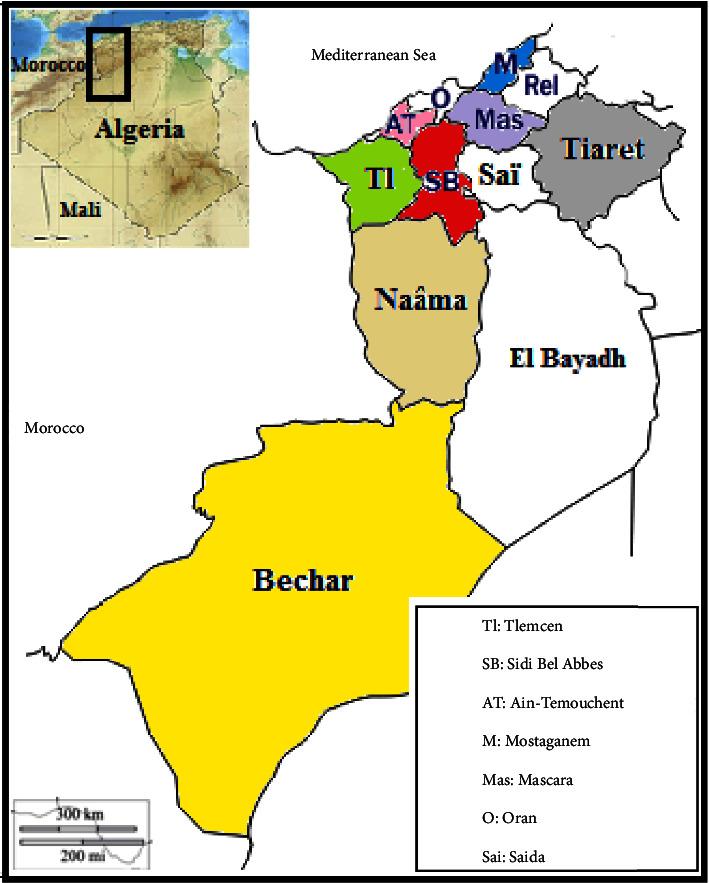
Analysis of trace elements and heavy metals in honey is essential for honey quality and safety and also monitoring environmental pollution. This study aimed to evaluate the composition of thirty-seven honey samples of different botanical origins (14 multifloral and 23 unifloral) obtained from beekeepers located in the west region of Algeria. Inductively coupled plasma-mass spectrometry (ICP-MS) and atomic absorption spectroscopy (AAS) methods were used to determine the levels of 19 elements in honey (K, Na, Ca, Mg, Mn, Cu, Fe, Zn, V, Cr, Co, As, Ru, Rh, Cd, W, Pt, Au, and Pb). Ru, Rh, Pt and, Au were not detected in any of the tested honey samples. The most abundant minerals were K, Ca, Na, and Mg ranging within 153.00-989.00 mg/kg, 33.10-502.00 mg/kg, 13.30-281.00 mg/kg, and 20.80-162.00 mg/kg, respectively. Fe, Mn, Zn, and Cu were the most abundant heavy metals while Pb, V, Cr, W, Co, and Cd were the lowest ones (<1 mg/kg) in the honey samples surveyed. Several honey types, lavender, rosemary, mild white mustard, thyme, milk thistle, carob tree, orange tree, , , camphor, jujube tree, sage, and harmal, were studied, and the statistical analysis was carried out using principal component analysis (PCA) and hierarchical cluster analysis (HCA) techniques to evaluate the data. The results showed that the analyses of mineral content were sufficient to determine the floral origin and their variability may be related to geochemical and geographical differences. On other hand, all elements detected were at levels below safe thresholds.
分析蜂蜜中的微量元素和重金属对于蜂蜜质量与安全以及监测环境污染至关重要。本研究旨在评估从阿尔及利亚西部地区养蜂人处获得的37个不同植物来源(14个多花种和23个单花种)蜂蜜样本的成分。采用电感耦合等离子体质谱法(ICP-MS)和原子吸收光谱法(AAS)测定蜂蜜中19种元素(钾、钠、钙、镁、锰、铜、铁、锌、钒、铬、钴、砷、钌、铑、镉、钨、铂、金和铅)的含量。在所测试的蜂蜜样本中均未检测到钌、铑、铂和金。含量最丰富的矿物质为钾、钙、钠和镁,含量范围分别在153.00 - 989.00毫克/千克、33.10 - 502.00毫克/千克、13.30 - 281.00毫克/千克和20.80 - 162.00毫克/千克之间。在所调查的蜂蜜样本中,铁、锰、锌和铜是含量最丰富的重金属,而铅、钒、铬、钨、钴和镉含量最低(<1毫克/千克)。研究了几种蜂蜜类型,包括薰衣草、迷迭香、淡白芥菜籽、百里香、水飞蓟、角豆树、橙子树、樟脑、枣树、鼠尾草和骆驼蓬,并使用主成分分析(PCA)和层次聚类分析(HCA)技术进行统计分析以评估数据。结果表明,矿物质含量分析足以确定花源,其变异性可能与地球化学和地理差异有关。另一方面,所有检测到的元素含量均低于安全阈值。

 Zotero 插件