
关节镜肩袖修复术后上肢运动员的患者结局和重返赛场情况:系统评价。
Patient outcomes and return to play after arthroscopic rotator cuff repair in overhead athletes: a systematic review.
机构信息
Department of Orthopaedic, Trauma, and Reconstructive Surgery, RWTH University Hospital, Pauwelsstraße 30, 52074, Aachen, Germany.
Department of Medicine, Surgery and Dentistry, University of Salerno, 84081, Baronissi, SA, Italy.
出版信息
J Orthop Traumatol. 2023 Jan 19;24(1):3. doi: 10.1186/s10195-023-00683-w.
BACKGROUND
Rotator cuff tear injuries in overhead athletes are common and may lead to chronic pain and joint disability, impairing sport participation and leading to premature retirement. The improvement of the patient reported outcome measures (PROMs) was evaluated, as were the time and level of return to sport and the rate of complication in overhead athletes who had undergone arthroscopic rotator cuff repair.
METHODS
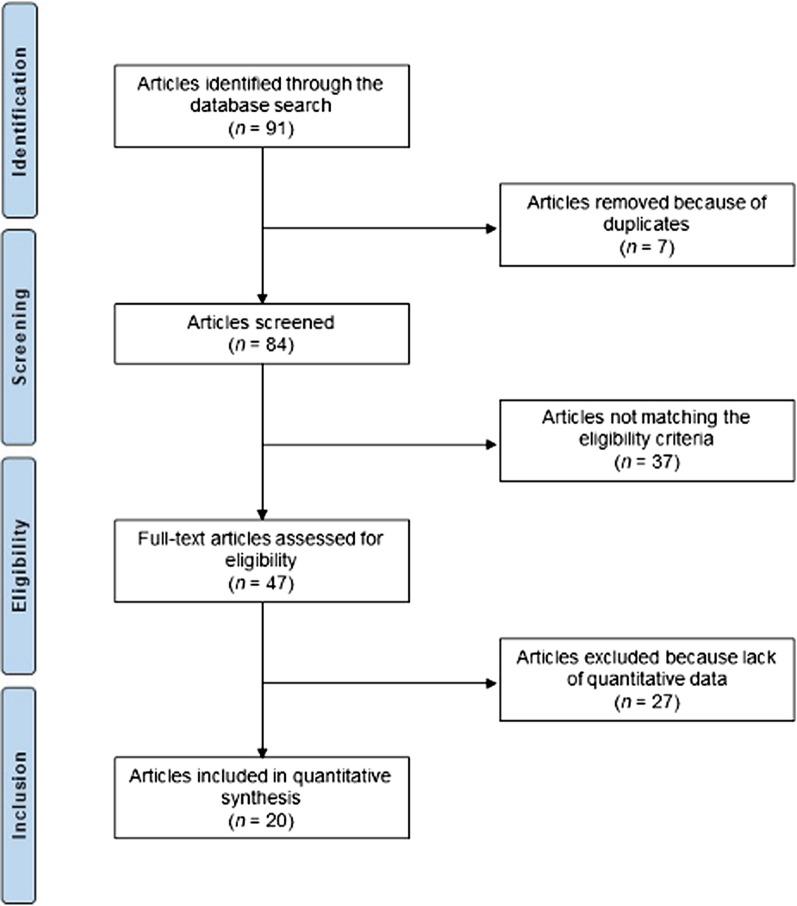
This systematic review was conducted according to the Preferred Reporting Items for Systematic Reviews and Meta-Analyses: the 2020 PRISMA statement. In September 2022, the following databases were accessed: Pubmed, Web of Science, Google Scholar and Embase. No time constraints were used for the search. All the clinical trials investigating arthroscopic rotator cuff repair in overhead athletes were accessed.
RESULTS
Data from 20 studies were collected. The mean length of the follow-up was 40 months. All PROMs improved at last follow-up: Kerlan-Jobe Orthopaedic Clinic score (P = 0.02), visual analogue scale (P = 0.003), Constant score (P < 0.0001), University of California Los Angeles Shoulder score (P = 0.006) and American Shoulder and Elbow Surgeons' score (P < 0.0001). Elevation also improved (P = 0.004). No difference was found in external and internal rotation (P = 0.2 and P = 0.3, respectively). In total, 75.4% (522 of 692 of patients) were able to return to play within a mean of 6.4 ± 6.0 months. Of 692 patients, 433 (62.5%) were able to return to sport at pre-injury level. Fourteen out of 138 patients (10.1%) underwent a further reoperation. The overall rate of complications was 7.1% (20 of 280).
CONCLUSION
Arthroscopic reconstruction of the rotator cuff is effective in improving function of the shoulder in overhead athletes, with a rate of return to sport in 75.4% of patients within an average of 6.4 months.
LEVEL OF EVIDENCE
III, systematic review.
TRIAL REGISTRATION
Not applicable.
背景
肩部过顶运动员的肩袖撕裂伤很常见,可能导致慢性疼痛和关节功能障碍,影响运动参与并导致过早退役。本研究评估了接受关节镜肩袖修复术的过顶运动员的患者报告结局测量(PROMs)改善情况,重返运动的时间和水平,以及并发症发生率。
方法
本系统评价按照系统评价和荟萃分析的首选报告项目:2020 年 PRISMA 声明进行。2022 年 9 月,检索了以下数据库:Pubmed、Web of Science、Google Scholar 和 Embase。搜索没有时间限制。所有调查关节镜肩袖修复术在过顶运动员中的应用的临床试验都被纳入研究。
结果
共纳入 20 项研究的数据。平均随访时间为 40 个月。所有 PROMs 在末次随访时均有改善:Kerlan-Jobe 骨科诊所评分(P = 0.02)、视觉模拟评分(P = 0.003)、Constant 评分(P < 0.0001)、加利福尼亚大学洛杉矶分校肩部评分(P = 0.006)和美国肩肘外科医生评分(P < 0.0001)。外展也有改善(P = 0.004)。外旋和内旋无差异(P = 0.2 和 P = 0.3)。692 例患者中,522 例(75.4%)平均 6.4±6.0 个月内能够重返运动。692 例患者中,433 例(62.5%)能够恢复到受伤前的运动水平。138 例患者中有 14 例(10.1%)接受了进一步的再次手术。总体并发症发生率为 7.1%(20/280)。
结论
关节镜肩袖重建可有效改善过顶运动员肩部功能,75.4%的患者平均 6.4 个月内重返运动。
证据水平
III 级,系统评价。
试验注册
不适用。
 Zotero 插件