
血钾升高事件后 RAASi 治疗不充分的临床影响。
Clinical impact of suboptimal RAASi therapy following an episode of hyperkalemia.
机构信息
Department of Medical Science, Kawasaki Medical School, 577 Matsushima, Kurashiki, Okayama, 701-0192, Japan.
Department of Medicine, David Geffen School of Medicine at the University of California Los Angeles, Los Angeles, CA, USA.
出版信息
BMC Nephrol. 2023 Jan 19;24(1):18. doi: 10.1186/s12882-022-03054-5.
BACKGROUND
Hyperkalemia (HK) is a barrier to optimization of renin-angiotensin-aldosterone system inhibitor (RAASi) therapy in heart failure (HF) and chronic kidney disease (CKD). We investigated cardiorenal risk associated with changes in RAASi regimen after an episode of HK in patients with HF and/or CKD.
METHODS
This observational study utilized data from hospital records, claims, and health registers from the US (Optum's de-identified Market Clarity Data) and Japan (Medical Data Vision). Included patients had an index episode of HK between July 2019 and September 2021 (US), or May 2020 and September 2021 (Japan), with prior diagnosis of HF or CKD (stage 3 or 4), and RAASi use. Risk of a cardiorenal composite outcome (HF emergency visit, HF hospitalization, or progression to end-stage kidney disease) was determined in patients who discontinued RAASi, down-titrated their dose by > 25%, or maintained or up-titrated their dose following the HK episode.
RESULTS
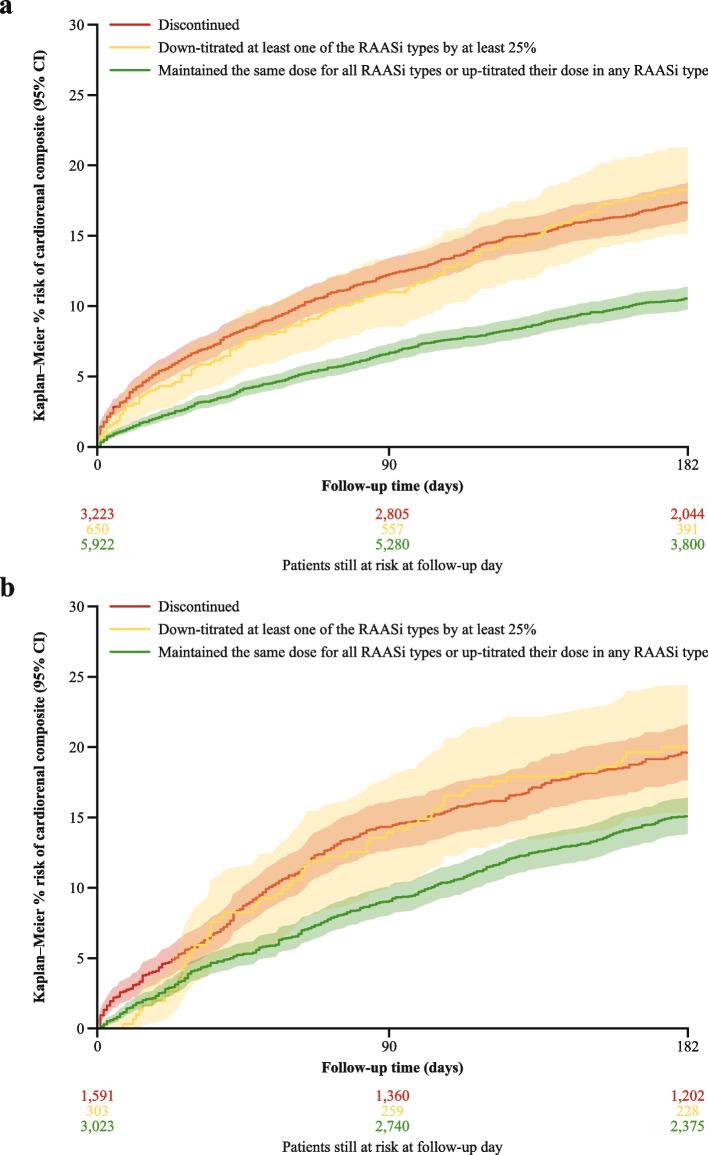
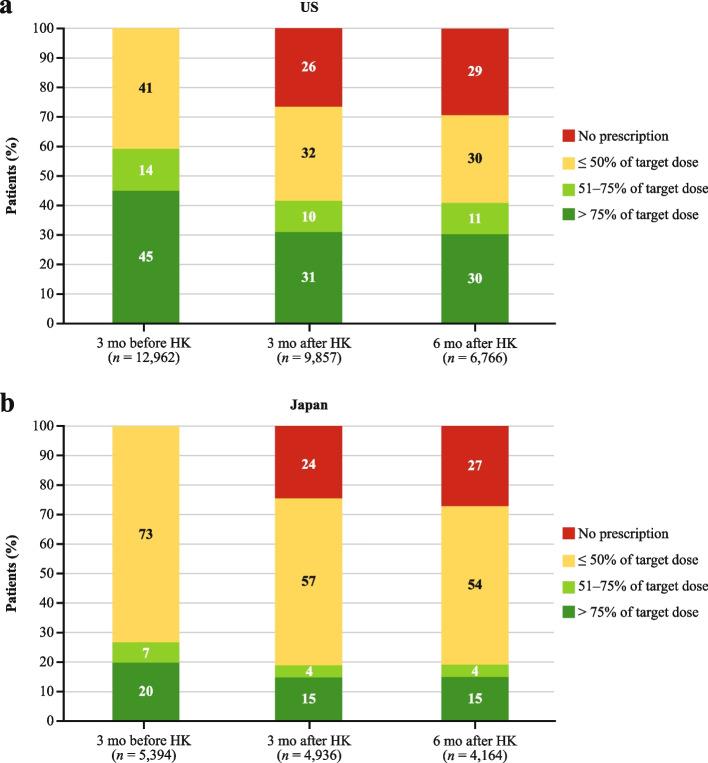
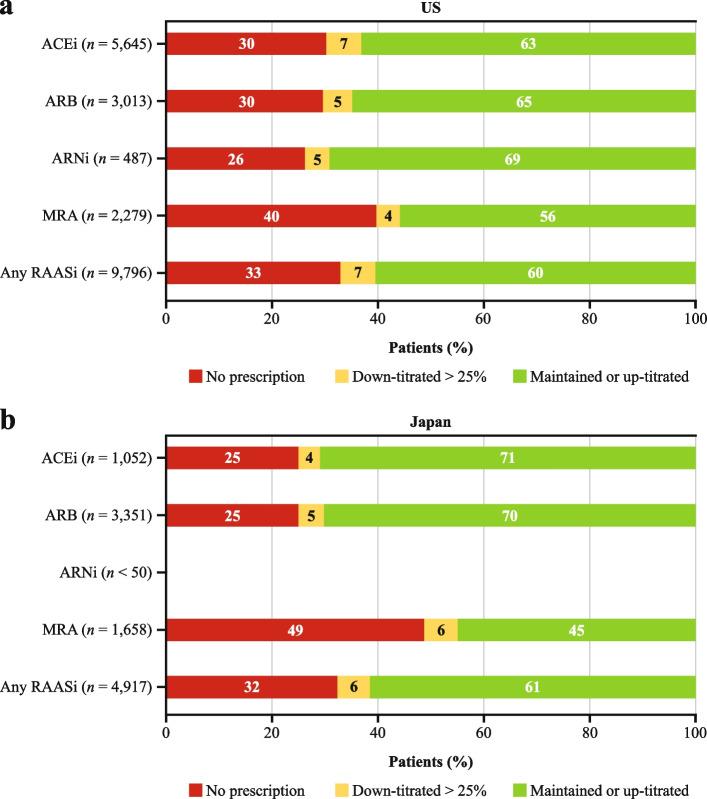
A total of 15,488 and 6020 patients were included from the US and Japan, respectively. Prior to the episode of HK, 59% (US) and 27% (Japan) of patients had achieved > 50% target RAASi dose. Following the episode of HK, 33% (US) and 32% (Japan) of patients did not fill a new RAASi prescription. Risk of the cardiorenal outcome at 6 months was higher in patients who discontinued or down-titrated versus maintained or up-titrated RAASi treatment both in the US (17.5, 18.3, and 10.6%; p < 0.001) and in Japan (19.7, 20.0, and 15.1%; p < 0.001).
CONCLUSION
HK-related RAASi discontinuation or down-titration was associated with higher risk of cardiorenal events versus maintained or up-titrated RAASi.
背景
高钾血症(HK)是心力衰竭(HF)和慢性肾脏病(CKD)患者优化肾素-血管紧张素-醛固酮系统抑制剂(RAASi)治疗的障碍。我们研究了 HF 和/或 CKD 患者发生 HK 后改变 RAASi 方案与心肾风险的相关性。
方法
这项观察性研究利用了来自美国(Optum 的去识别市场清晰数据)和日本(Medical Data Vision)的医院记录、索赔和健康登记的数据。纳入的患者在 2019 年 7 月至 2021 年 9 月(美国)或 2020 年 5 月至 2021 年 9 月(日本)期间发生了指数次 HK,并且之前诊断为 HF 或 CKD(3 或 4 期),并使用了 RAASi。在 HK 发作后停止使用 RAASi、剂量减少超过 25%、维持或增加剂量的患者中,确定了心肾复合结局(HF 急诊就诊、HF 住院或进展为终末期肾病)的风险。
结果
分别从美国和日本纳入了 15488 例和 6020 例患者。在 HK 发作之前,59%(美国)和 27%(日本)的患者达到了 >50%的目标 RAASi 剂量。在 HK 发作后,33%(美国)和 32%(日本)的患者没有开新的 RAASi 处方。在 HF 住院或进展为终末期肾病的风险方面,与维持或增加 RAASi 治疗的患者相比,停止或减少 RAASi 治疗的患者在 6 个月时更高,这在美国(17.5%、18.3%和 10.6%;p<0.001)和日本(19.7%、20.0%和 15.1%;p<0.001)均如此。
结论
与维持或增加 RAASi 相比,与 HK 相关的 RAASi 停药或剂量减少与更高的心肾事件风险相关。
 Zotero 插件