
人工智能在微塑料成像技术方面的研究进展综述:最新进展、热点和挑战
A Critical Review on Artificial Intelligence-Based Microplastics Imaging Technology: Recent Advances, Hot-Spots and Challenges.
机构信息
School of Materials and Environmental Engineering, Fujian Polytechnic Normal University, Fuzhou 350300, China.
School of Big Data and Artificial Intelligence, Fujian Polytechnic Normal University, Fuzhou 350300, China.
出版信息
Int J Environ Res Public Health. 2023 Jan 9;20(2):1150. doi: 10.3390/ijerph20021150.
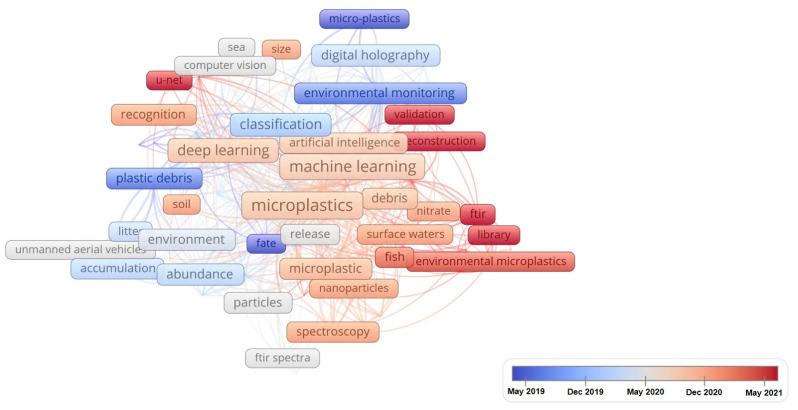
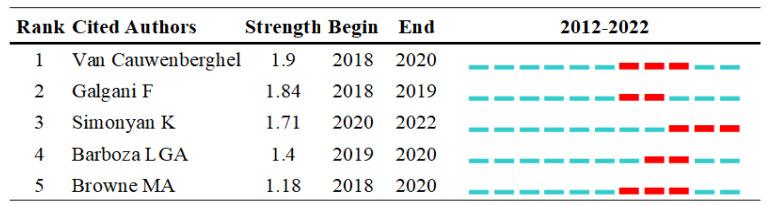
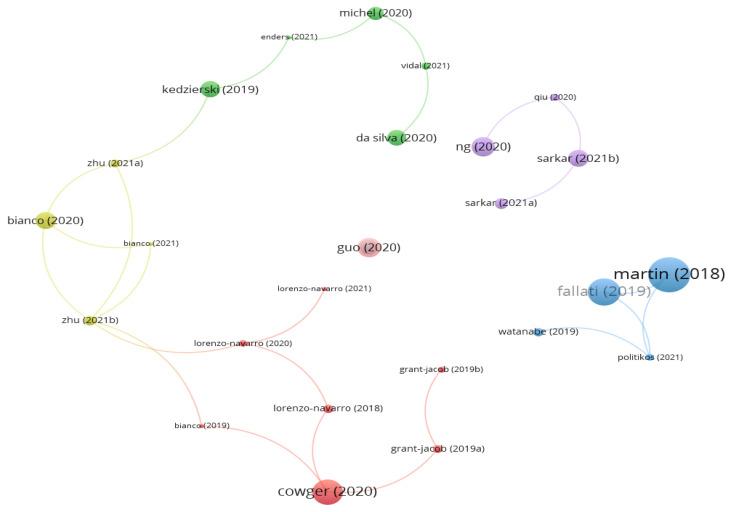
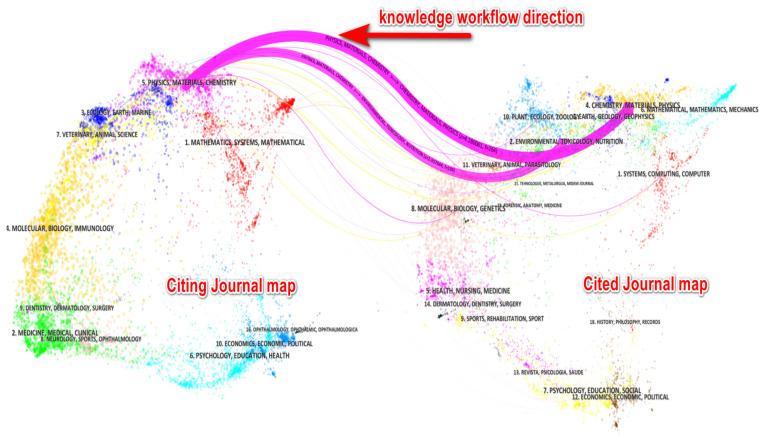
Due to the rapid artificial intelligence technology progress and innovation in various fields, this research aims to use science mapping tools to comprehensively and objectively analyze recent advances, hot-spots, and challenges in artificial intelligence-based microplastic-imaging field from the Web of Science (2019-2022). By text mining and visualization in the scientific literature we emphasized some opportunities to bring forward further explication and analysis by (i) exploring efficient and low-cost automatic quantification methods in the appearance properties of microplastics, such as shape, size, volume, and topology, (ii) investigating microplastics water-soluble synthetic polymers and interaction with other soil and water ecology environments via artificial intelligence technologies, (iii) advancing efficient artificial intelligence algorithms and models, even including intelligent robot technology, (iv) seeking to create and share robust data sets, such as spectral libraries and toxicity database and co-operation mechanism, (v) optimizing the existing deep learning models based on the readily available data set to balance the related algorithm performance and interpretability, (vi) facilitating Unmanned Aerial Vehicle technology coupled with artificial intelligence technologies and data sets in the mass quantities of microplastics. Our major findings were that the research of artificial intelligence methods to revolutionize environmental science was progressing toward multiple cross-cutting areas, dramatically increasing aspects of the ecology of plastisphere, microplastics toxicity, rapid identification, and volume assessment of microplastics. The above findings can not only determine the characteristics and track of scientific development, but also help to find suitable research opportunities to carry out more in-depth research with many problems remaining.
由于人工智能技术在各个领域的快速进步和创新,本研究旨在使用科学图谱工具,从 Web of Science(2019-2022 年)全面客观地分析基于人工智能的微塑料成像领域的最新进展、热点和挑战。通过对科学文献的文本挖掘和可视化,我们强调了一些机会,可以通过以下方式提出进一步的解释和分析:(i)探索微塑料外观特性(如形状、大小、体积和拓扑结构)的高效、低成本自动量化方法,(ii)通过人工智能技术研究微塑料水溶性合成聚合物及其与其他土壤和水生态环境的相互作用,(iii)推进高效的人工智能算法和模型,甚至包括智能机器人技术,(iv)寻求创建和共享强大的数据集,如光谱库和毒性数据库以及合作机制,(v)优化基于现有数据集的现有深度学习模型,以平衡相关算法性能和可解释性,(vi)促进与人工智能技术和数据集相结合的无人机技术在大量微塑料中的应用。我们的主要发现是,人工智能方法在环境科学中的革命性研究正在向多个交叉领域发展,极大地增加了塑料圈生态学、微塑料毒性、快速识别和微塑料体积评估等方面的内容。这些发现不仅可以确定科学发展的特点和轨迹,还可以帮助发现合适的研究机会,开展更深入的研究,解决许多遗留问题。









 Zotero 插件