
在秘鲁采集的利瓦氏水仙与米罗水仙(石蒜科)的抗利什曼原虫活性
Antileishmanial Activity of S. Leiva & Meerow (Amaryllidaceae) Collected in Peru.
作者信息
Soto-Vásquez Marilú Roxana, Alvarado-García Paul Alan Arkin, Osorio Edison H, Tallini Luciana R, Bastida Jaume
机构信息
Facultad de Farmacia y Bioquímica, Universidad Nacional de Trujillo, Av. Juan Pablo II s/n, Trujillo 13011, Peru.
Escuela de Medicina, Universidad Cesar Vallejo, Av. Larco s/n, Trujillo 13011, Peru.
出版信息
Plants (Basel). 2023 Jan 10;12(2):322. doi: 10.3390/plants12020322.
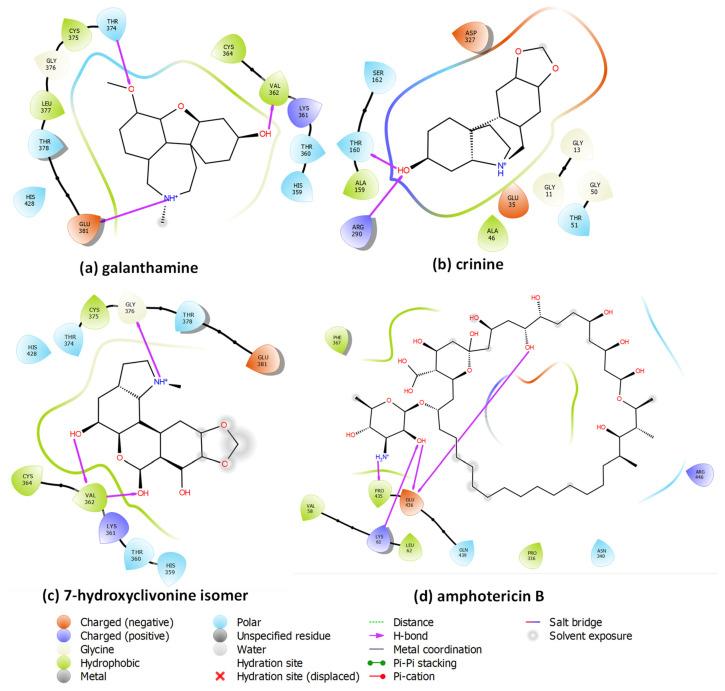
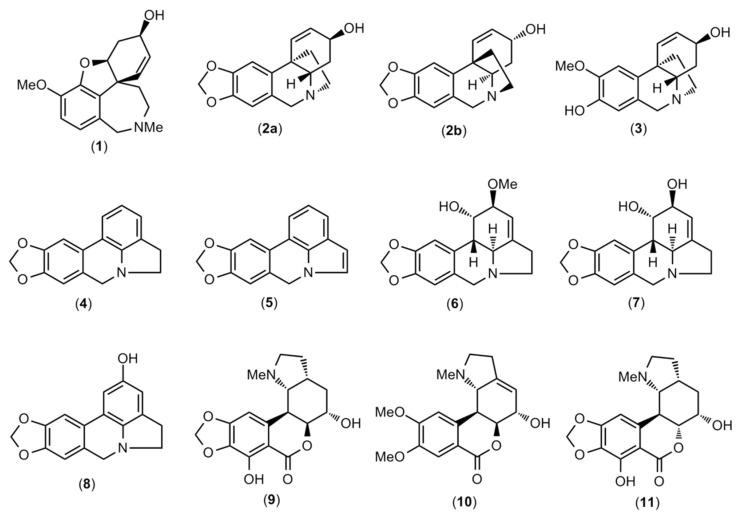
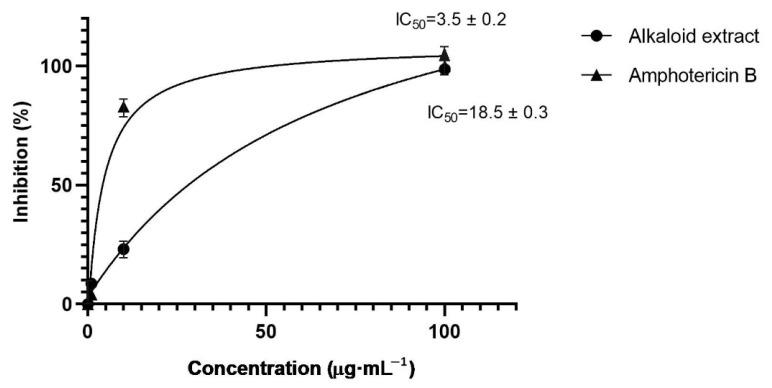
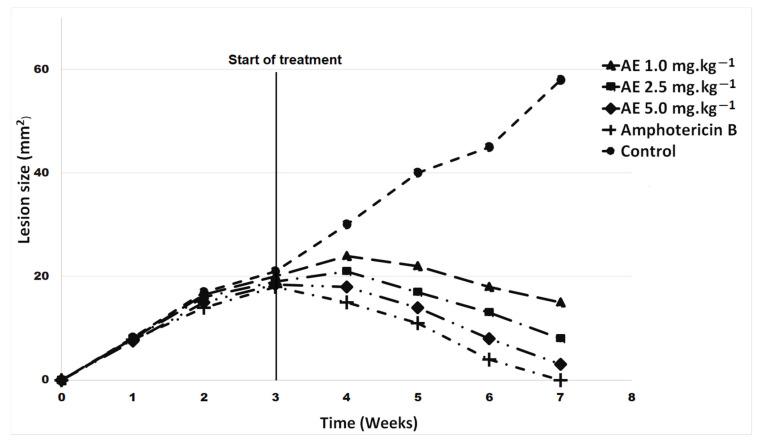
Leishmaniasis is a worldwide infectious parasitic disease caused by different species of protozoa of the genus Leishmania, which are transmitted to animals and humans through the bite of insects of the Psychodidae family. In the present work, the antileishmanial activity of an alkaloid extract of the bulbs of Clinanthus milagroanthus S. Leiva & Meerow (Amaryllidaceae) was evaluated in vitro, in vivo, and in silico against the parasite Leishmania braziliensis, and the chemical profile of the sample was determined by GC-MS analysis. At concentrations of 1, 10, and 100 µg·mL−1, the alkaloid extract presented inhibition percentages of 8.7%, 23.1%, and 98.8%, respectively, against L. braziliensis with a p < 0.05, and IC50 values of 18.5 ± 0.3 µg·mL−1. Furthermore, at a dose of 1.0 mg·kg−1, a greater decrease in lesion size was observed (90%) for in vivo assays, as well as a decrease in infection (96%), finding no significant differences (p > 0.05) in comparison with amphotericin B (92% and 98%, respectively). Eleven alkaloids were identified in C. milagroanthus bulbs: galanthamine, vittatine/crinine, 8-O-demethylmaritidine, anhydrolycorine, 11,12-dehydroanhydrolycorine, hippamine, lycorine, 2-hydroxyanhydrolycorine, 7-hydroxyclivonine, 2α-hydroxyhomolycorine, and 7-hydroxyclivonine isomer. A molecular model of Leishmania braziliensis trypanothione reductase (TRLb) was built using computational experiments to evaluate in silico the potential of the Amaryllidaceae alkaloid identified in C. milagroanthus toward this enzyme. The structures galanthamine, 7-hydroxyclivonine isomer, and crinine showed better estimated free energy of binding than the reference compound, amphotericin B. In conclusion, this is the first in vitro, in vivo, and in silico report about the antileishmanial potential and alkaloid profiling of the extract of C. milagroanthus bulbs, which could become an interesting source of bioactive molecules.
利什曼病是一种由利什曼原虫属不同种类的原生动物引起的全球性传染性寄生虫病,通过白蛉科昆虫叮咬传播给动物和人类。在本研究中,对米拉格罗花clinanthus milagroanthus S. Leiva & Meerow(石蒜科)鳞茎的生物碱提取物针对巴西利什曼原虫进行了体外、体内和计算机模拟的抗利什曼活性评估,并通过气相色谱 - 质谱分析确定了样品的化学图谱。在浓度为1、10和100 μg·mL−1时,生物碱提取物对巴西利什曼原虫的抑制率分别为8.7%、23.1%和98.8%,p < 0.05,IC50值为18.5 ± 0.3 μg·mL−1。此外,在体内试验中,剂量为1.0 mg·kg−1时,观察到病变大小有更大程度的减小(90%),感染率也降低(96%),与两性霉素B相比(分别为92%和98%)未发现显著差异(p > 0.05)。在米拉格罗花鳞茎中鉴定出了11种生物碱:加兰他敏、维塔亭/克里宁、8 - O - 去甲基马里替丁、脱水石蒜碱、11,12 - 脱氢脱水石蒜碱、海马碱、石蒜碱、2 - 羟基脱水石蒜碱、7 - 羟基克利沃宁、2α - 羟基高石蒜碱和7 - 羟基克利沃宁异构体。利用计算机实验构建了巴西利什曼原虫锥虫硫醇还原酶(TRLb)的分子模型,以在计算机模拟中评估米拉格罗花中鉴定出的石蒜科生物碱对该酶的作用潜力。加兰他敏、7 - 羟基克利沃宁异构体和克里宁的结构显示出比参考化合物两性霉素B更好的估计结合自由能。总之,这是关于米拉格罗花鳞茎提取物的抗利什曼潜力和生物碱谱的首次体外、体内和计算机模拟报告,该提取物可能成为生物活性分子的一个有趣来源。

 Zotero 插件