
不可逆电穿孔治疗胰腺癌:当前数据与未来方向。
Irreversible electroporation for the management of pancreatic cancer: Current data and future directions.
机构信息
Second Department of Radiology, School of Medicine, National and Kapodistrian University of Athens, Athens 12461, Attiki, Greece.
Unit of Hepato-Pancreatic-Biliary Surgery, "F. Miulli" Regional General Hospital, Acquaviva delle Fonti 70021, Bari, Italy.
出版信息
World J Gastroenterol. 2023 Jan 14;29(2):223-231. doi: 10.3748/wjg.v29.i2.223.
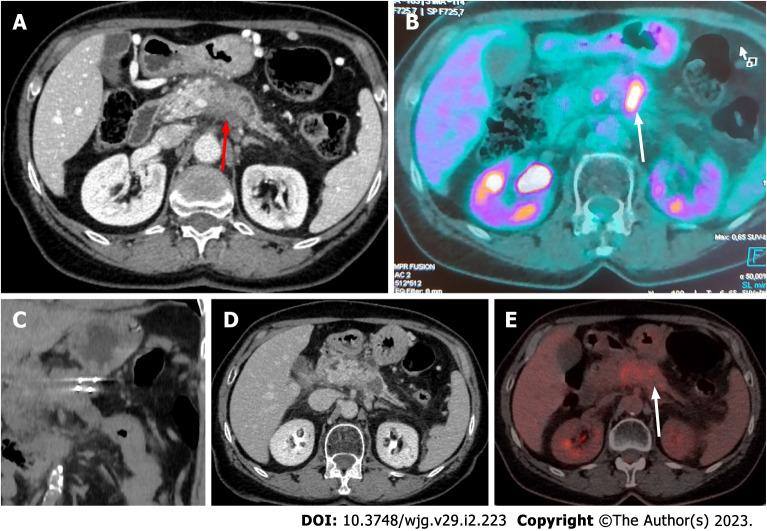
Pancreatic cancer is currently the seventh leading cause of cancer death (4.5% of all cancer deaths) while 80%-90% of the patients suffer from unresectable disease at the time of diagnosis. Prognosis remains poor, with a mean survival up to 15 mo following systemic chemotherapy. Loco-regional thermal ablative techniques are rarely implemented due to the increased risk of thermal injury to the adjacent structures, which can lead to severe adverse events. Irreversible electroporation, a promising novel non-thermal ablative modality, has been recently introduced in clinical practice for the management of inoperable pancreatic cancer as a safer and more effective loco-regional treatment option. Experimental and initial clinical data are optimistic. This review will focus on the basic principles of IRE technology, currently available data, and future directions.
目前胰腺癌是癌症死亡的第七大主要原因(占所有癌症死亡人数的 4.5%),而 80%-90%的患者在诊断时已患有不可切除的疾病。由于邻近结构发生热损伤的风险增加,预后仍然很差,全身化疗后平均生存时间长达 15 个月。由于可能导致严重的不良事件,局部热消融技术很少实施。不可逆电穿孔(IRE)是一种有前途的新型非热消融模式,最近已被引入临床实践,作为一种更安全、更有效的局部区域治疗选择,用于治疗不可切除的胰腺癌。实验和初步临床数据较为乐观。本文将重点介绍 IRE 技术的基本原理、现有数据和未来方向。
 Zotero 插件