
通过核磁共振研究抗生素与聚苯乙烯纳米颗粒之间的结合
Binding Between Antibiotics and Polystyrene Nanoparticles Examined by NMR.
作者信息
Arachchi Saduni S, Palma Stephanie P, Sanders Charlotte I, Xu Hui, Ghosh Biswas Rajshree, Soong Ronald, Simpson André J, Casabianca Leah B
机构信息
Department of Chemistry, Clemson University, Clemson, South Carolina29634, United States.
Department of Chemistry, University of Toronto Scarborough, Toronto, OntarioM1C 1A4, Canada.
出版信息
ACS Environ Au. 2022 Oct 24;3(1):47-55. doi: 10.1021/acsenvironau.2c00047. eCollection 2023 Jan 18.
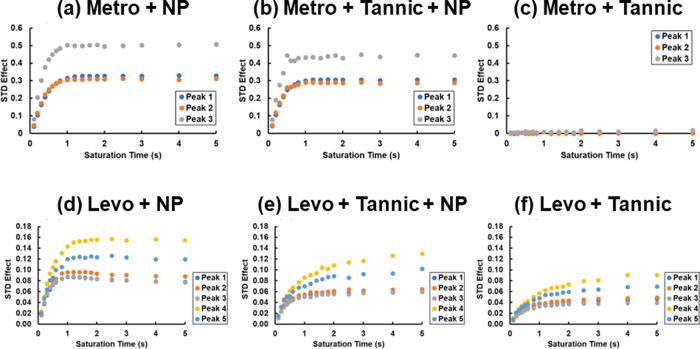
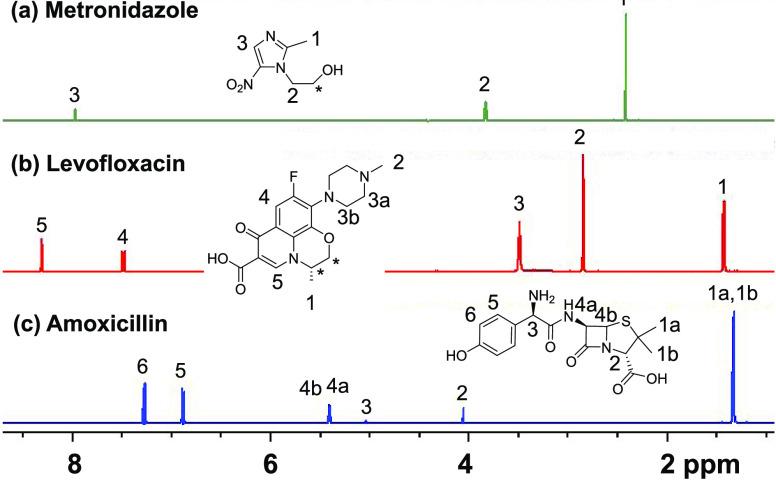
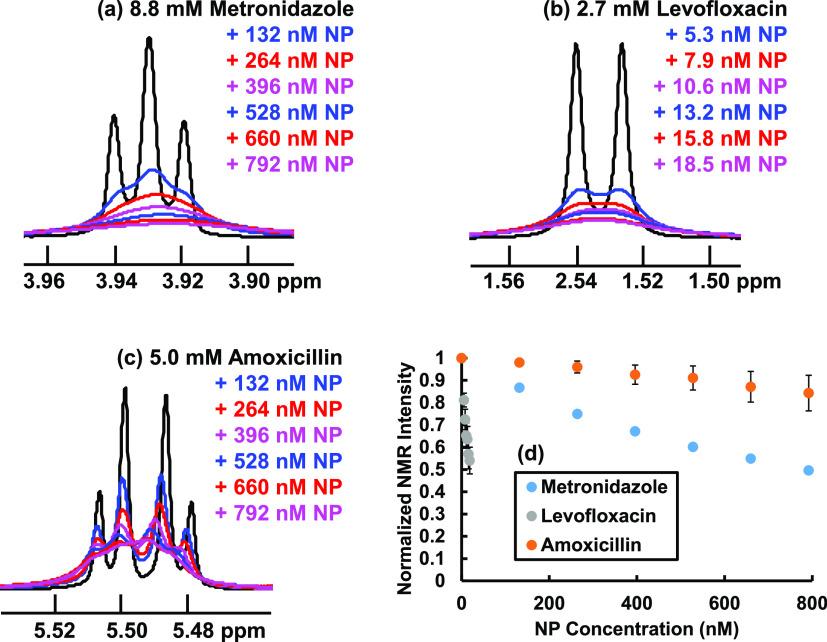
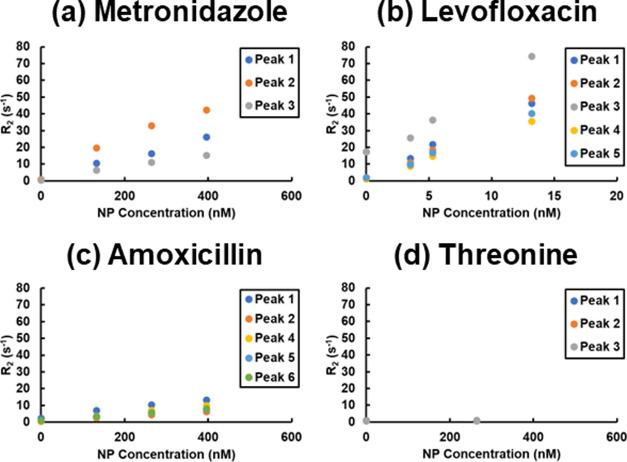
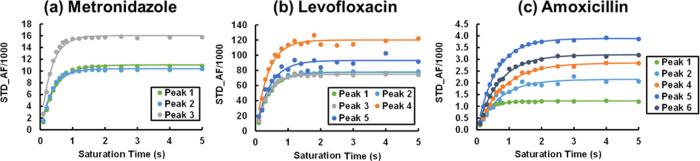
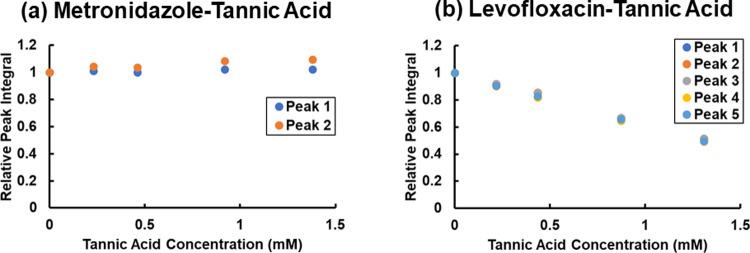
Elucidating the interactions between plastic nanoparticles and small molecules is important to understanding these interactions as they occur in polluted waterways. For example, plastic that breaks down into micro- and nanoscale particles will interact with small molecule pollutants that are also present in contaminated waters. Other components of natural water, such as dissolved organic matter, will also influence these interactions. Here we use a collection of complementary NMR techniques to examine the binding between polystyrene nanoparticles and three common antibiotics, belonging to a class of molecules that are expected to be common in polluted water. Through examination of proton NMR signal intensity, relaxation times, saturation-transfer difference (STD) NMR, and competition STD-NMR, we find that the antibiotics have binding strengths in the order amoxicillin < metronidazole ≪ levofloxacin. Levofloxacin is able to compete for binding sites, preventing the other two antibiotics from binding. The presence of tannic acid disrupts the binding between levofloxacin and the polystyrene nanoparticles, but does not influence the binding between metronidazole and these nanoparticles.
阐明塑料纳米颗粒与小分子之间的相互作用对于理解这些相互作用在受污染水道中的发生情况非常重要。例如,分解成微米级和纳米级颗粒的塑料会与受污染水体中也存在的小分子污染物相互作用。天然水的其他成分,如溶解有机物,也会影响这些相互作用。在这里,我们使用一系列互补的核磁共振技术来研究聚苯乙烯纳米颗粒与三种常见抗生素之间的结合,这三种抗生素属于一类预计在受污染水中常见的分子。通过检查质子核磁共振信号强度、弛豫时间、饱和转移差异(STD)核磁共振和竞争STD-核磁共振,我们发现抗生素的结合强度顺序为阿莫西林<甲硝唑≪左氧氟沙星。左氧氟沙星能够竞争结合位点,阻止其他两种抗生素结合。单宁酸的存在会破坏左氧氟沙星与聚苯乙烯纳米颗粒之间的结合,但不会影响甲硝唑与这些纳米颗粒之间的结合。

 Zotero 插件