
双价谷氨酸脱羧酶自身抗体 ELISA 提高成人自身免疫性糖尿病的临床实用性和风险预测。
Bivalent GAD autoantibody ELISA improves clinical utility and risk prediction for adult autoimmune diabetes.
机构信息
Diabetes Center, Shin-Koga Hospital, Kurume, Japan.
Department of Endocrinology and Diabetes, School of Medicine, Saitama Medical University, Iruma, Japan.
出版信息
J Diabetes Investig. 2023 Apr;14(4):570-581. doi: 10.1111/jdi.13980. Epub 2023 Jan 23.
AIM/INTRODUCTION: To investigate the differences in the clinical significance and glutamic acid decarboxylase autoantibody (GADA) affinity between RIA (RIA-GADA) and ELISA (ELISA-GADA) in patients with type 1 diabetes.
METHODS
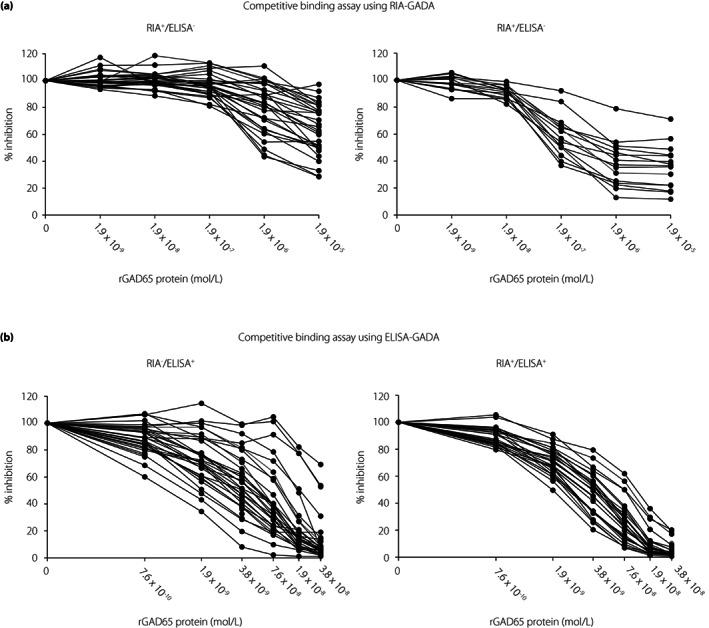
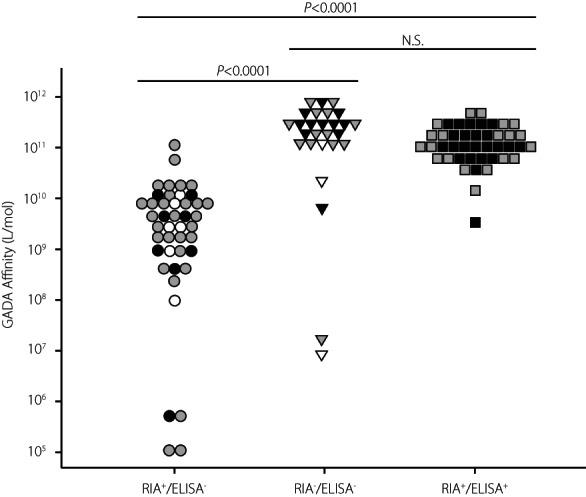
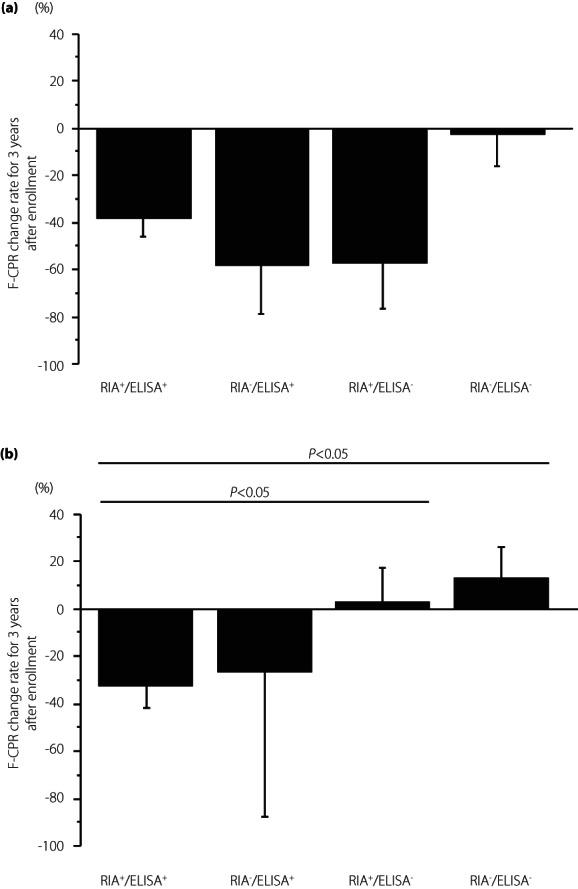
A total of 415 patients with type 1 diabetes were enrolled, including 199 acute-onset type 1 diabetes, 168 slowly progressive type 1 diabetes (SPIDDM), and 48 fulminant type 1 diabetes. GADA affinity was measured by a competitive binding experiment using unlabeled recombinant human GAD65 protein, and the diagnostic performance of both assays and the relationship between GADA affinity and the decline of fasting C-peptide (F-CPR) were examined.
RESULTS
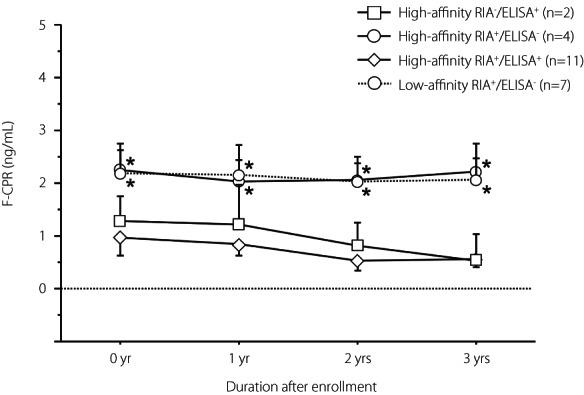
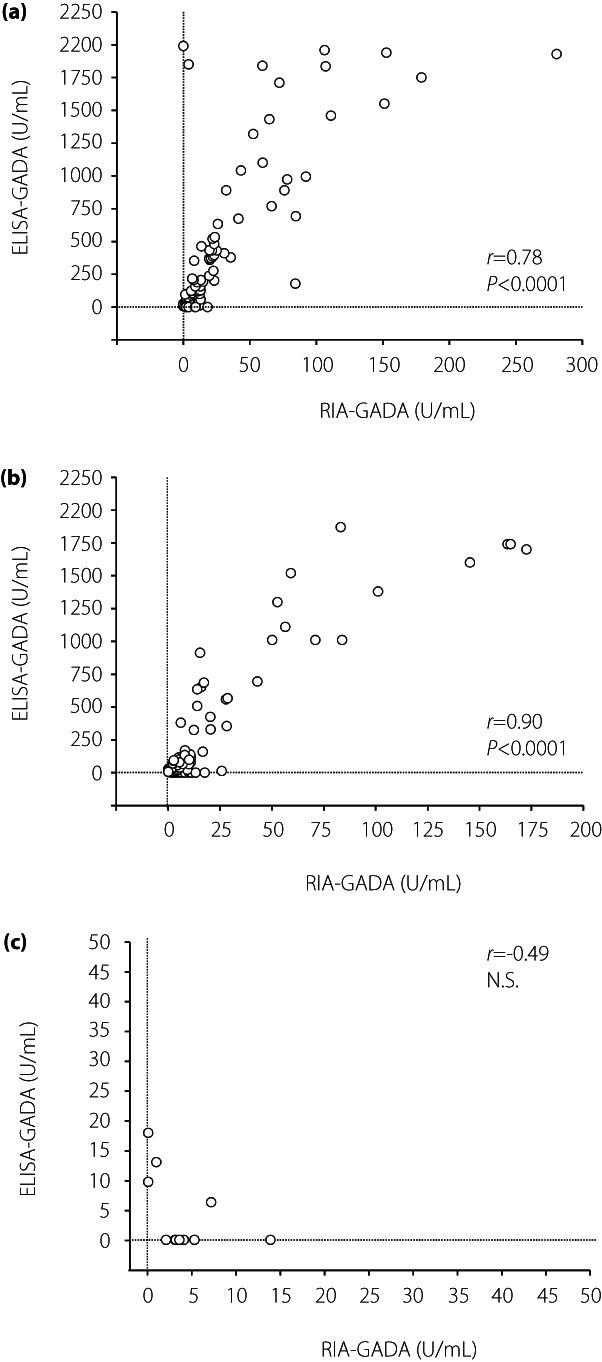
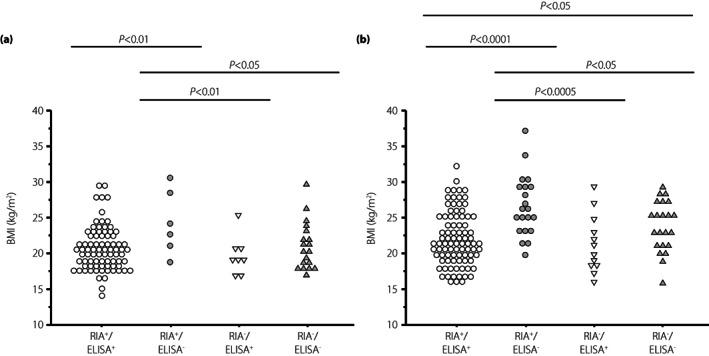
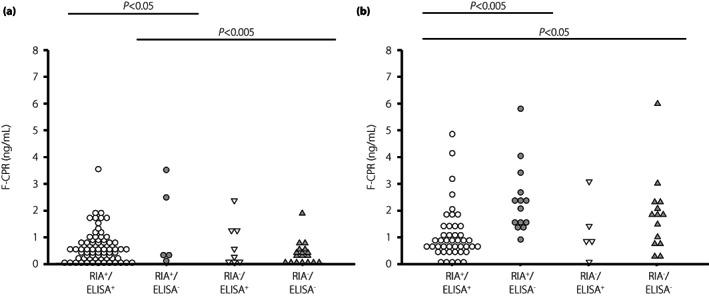
While the ELISA-GADA displayed a higher sensitivity than the RIA method in diagnosing type 1 diabetes in acute-onset patients, about 40% of SPIDDM patients with low-titer RIA-GADA were determined as negative by the ELISA method. Patients with type 1 diabetes with RIA-GADA alone had an older age of onset, less diabetic ketoacidosis, a higher BMI, and a higher F-CPR compared with patients positive for both RIA-GADA and ELISA-GADA. Additionally, 36% of RIA-GADA-positive patients had low-affinity GADA (<10 L/mol), which was significantly higher than in the ELISA-GADA-positive patients (4%, P < 0.0001). Furthermore, over a 3 year monitoring period, F-CPR levels decreased in ELISA-GADA-positive SPIDDM, whereas it was maintained in patients with RIA-GADA alone, regardless of GADA affinity.
CONCLUSIONS
These results suggest that bivalent ELISA for GADA is superior to the RIA method in diagnosing type 1 diabetes. Moreover, the diagnostic superiority of the ELISA-GADA made possible the concurrent identification of SPIDDM patients at high-risk of early progression, and allowed for more accurate clinical diagnosis and management.
目的/引言:探讨谷氨酸脱羧酶自身抗体(GADA)在 1 型糖尿病患者中放射免疫分析(RIA-GADA)和酶联免疫吸附试验(ELISA-GADA)的临床意义和谷氨酸脱羧酶自身抗体(GADA)亲和力的差异。
方法
共纳入 415 例 1 型糖尿病患者,其中急性起病 1 型糖尿病 199 例,缓慢进展 1 型糖尿病(SPIDDM)168 例,暴发性 1 型糖尿病 48 例。采用未标记重组人 GAD65 蛋白竞争结合实验测定 GADA 亲和力,检测两种检测方法的诊断性能及 GADA 亲和力与空腹 C 肽(F-CPR)下降的关系。
结果
ELISA-GADA 诊断急性起病患者 1 型糖尿病的敏感性高于 RIA 法,约 40%低滴度 RIA-GADA 的 SPIDDM 患者被 ELISA 法判定为阴性。仅 RIA-GADA 阳性的 1 型糖尿病患者发病年龄较大,糖尿病酮症酸中毒较少,BMI 较高,F-CPR 较高。此外,36%的 RIA-GADA 阳性患者具有低亲和力 GADA(<10 L/mol),明显高于 ELISA-GADA 阳性患者(4%,P<0.0001)。此外,在 3 年监测期间,ELISA-GADA 阳性 SPIDDM 患者的 F-CPR 水平下降,而 RIA-GADA 阳性患者的 F-CPR 水平保持不变,无论 GADA 亲和力如何。
结论
这些结果表明,双价 ELISA 检测 GADA 在诊断 1 型糖尿病方面优于 RIA 法。此外,ELISA-GADA 的诊断优势使得有可能同时识别出高危早期进展的 SPIDDM 患者,并能更准确地进行临床诊断和管理。
 Zotero 插件