
脂联素 - 舒张性心功能障碍的分层生物标志物。
Adiponectin - stratification biomarker in diastolic cardiac dysfunction.
机构信息
Faculty of Medicine, Titu Maiorescu University Bucharest, Bucharest, Romania.
CF2 Clinical Hospital Bucharest, Romania.
出版信息
J Enzyme Inhib Med Chem. 2023 Dec;38(1):2171030. doi: 10.1080/14756366.2023.2171030.
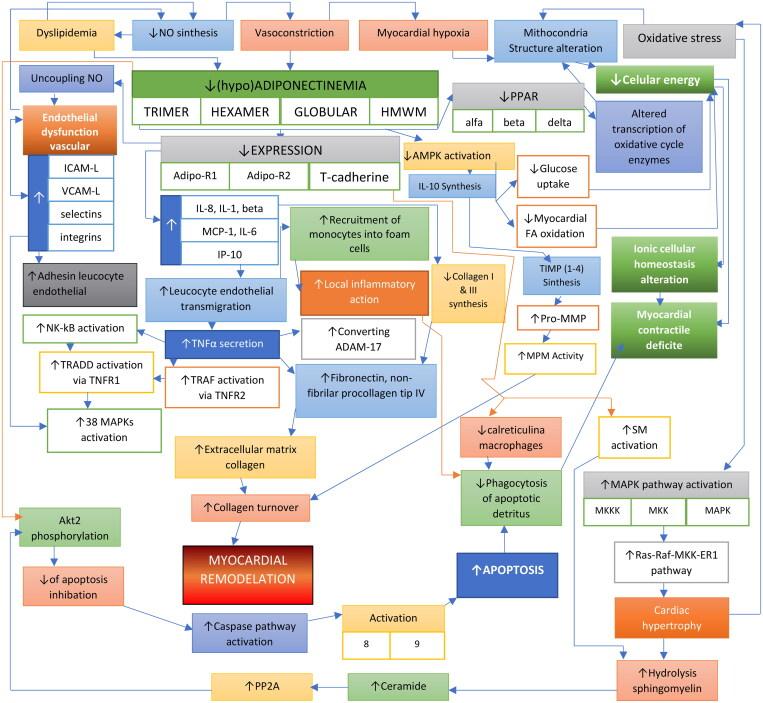
This study does not propose to elucidate how adiponectin secretion is regulated, but how its adiponectin concentration is an indicator of heart disease. About adiponectin, it is not known whether it is functionally an enzyme, or very likely a cytokine/chemokine/hormone, secreted by fat cells/adipocytes in the abdomen. Abdominal fat secretes 67 hormones, and all of which cause disease. For example, adiponectin generates diabetes and ischaemic heart disease via dyslipidemia. Based on clinical symptoms, electrocardiographic and echocardiographic parameters, a group of 208 patients with diastolic cardiac dysfunction with or without preserved systolic function, developed on a background of painful chronic ischaemic heart disease, stable angina on exertion, was constituted. The serum levels of adiponectin, total cholesterol, LDL cholesterol, HDL cholesterol and triglycerides were measured. Using the identified values, it was appreciated whether adiponectin correlates with the type of any of the two conditions, so that it can be recognised as a diagnostic and risk stratification marker.
本研究旨在探讨脂联素浓度如何成为心脏病的指标,而不是阐明脂联素的分泌是如何受到调节的。关于脂联素,目前尚不清楚它是否具有酶的功能,而更有可能是一种细胞因子/趋化因子/激素,由腹部脂肪细胞/脂肪细胞分泌。腹部脂肪分泌 67 种激素,所有这些激素都会导致疾病。例如,脂联素通过血脂异常导致糖尿病和缺血性心脏病。在疼痛性慢性缺血性心脏病、稳定型劳力性心绞痛的背景下,建立了一组 208 例伴有或不伴有收缩功能保留的舒张性心功能障碍患者的临床症状、心电图和超声心动图参数。测量了血清脂联素、总胆固醇、LDL 胆固醇、HDL 胆固醇和甘油三酯的水平。利用所确定的值,评估脂联素是否与两种情况中的任何一种类型相关,以便将其识别为诊断和风险分层标志物。
 Zotero 插件