
感知审美价值的层级构建的神经机制。
Neural mechanisms underlying the hierarchical construction of perceived aesthetic value.
机构信息
Division of Humanities and Social Sciences, California Institute of Technology, 1200 E California Blvd, Pasadena, CA, 91125, USA.
Department of Psychiatry, Columbia University Irving Medical Center, New York, NY, 10032, USA.
出版信息
Nat Commun. 2023 Jan 24;14(1):127. doi: 10.1038/s41467-022-35654-y.
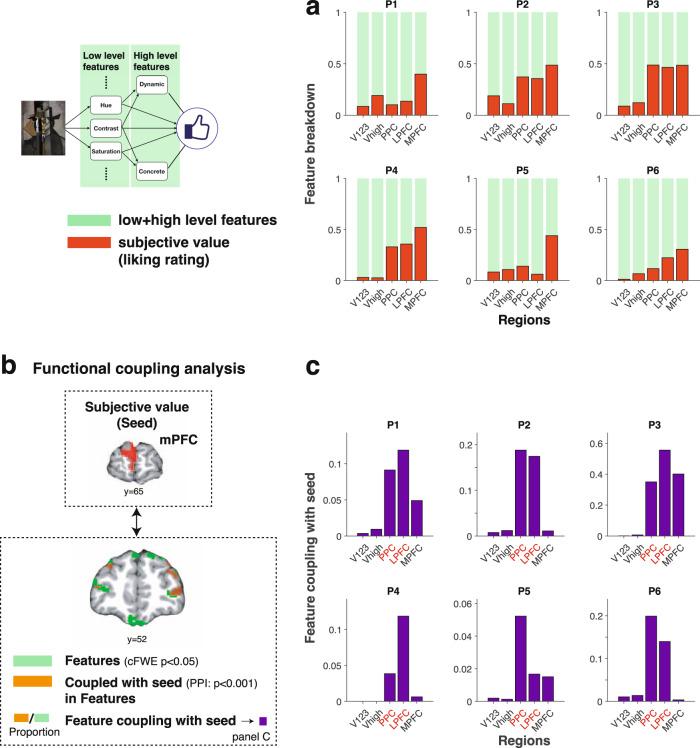
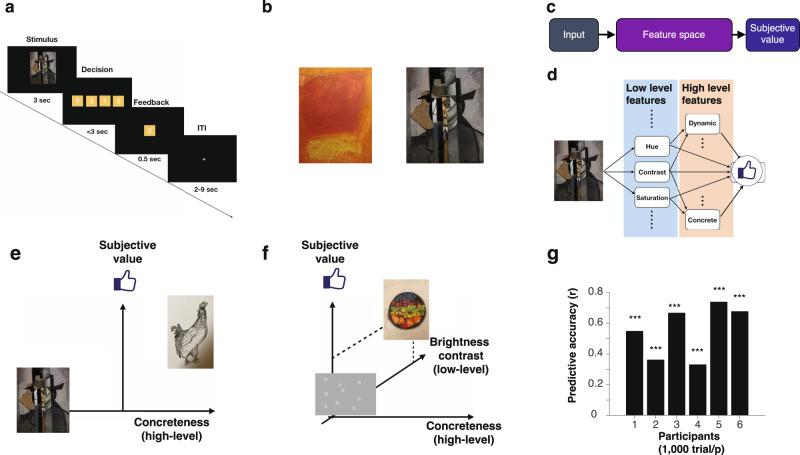
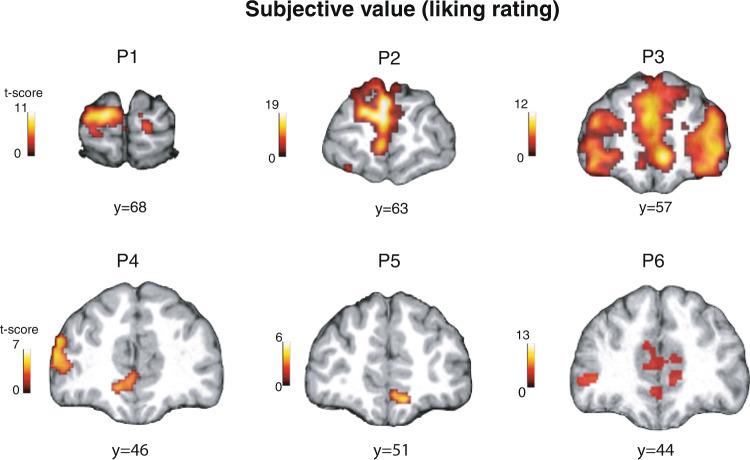
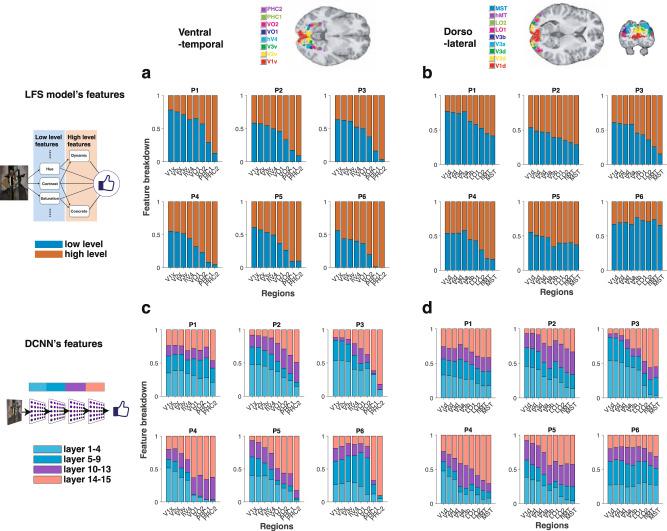
Little is known about how the brain computes the perceived aesthetic value of complex stimuli such as visual art. Here, we used computational methods in combination with functional neuroimaging to provide evidence that the aesthetic value of a visual stimulus is computed in a hierarchical manner via a weighted integration over both low and high level stimulus features contained in early and late visual cortex, extending into parietal and lateral prefrontal cortices. Feature representations in parietal and lateral prefrontal cortex may in turn be utilized to produce an overall aesthetic value in the medial prefrontal cortex. Such brain-wide computations are not only consistent with a feature-based mechanism for value construction, but also resemble computations performed by a deep convolutional neural network. Our findings thus shed light on the existence of a general neurocomputational mechanism for rapidly and flexibly producing value judgements across an array of complex novel stimuli and situations.
目前对于大脑如何计算复杂刺激(如视觉艺术)的感知美学价值知之甚少。在这里,我们使用计算方法结合功能神经影像学,提供证据表明,视觉刺激的美学价值是通过对早期和晚期视觉皮层中包含的低水平和高水平刺激特征进行加权整合来分层计算的,这种整合延伸到顶叶和外侧前额叶皮层。顶叶和外侧前额叶皮层中的特征表示反过来可能被用于在前内侧前额叶皮层中产生整体美学价值。这种全脑计算不仅与基于特征的价值构建机制一致,而且类似于深度卷积神经网络执行的计算。因此,我们的发现揭示了存在一种通用的神经计算机制,可以快速灵活地对一系列复杂的新刺激和情况产生价值判断。



 Zotero 插件