
不同内源性核苷酸对血小板 P2Y 受体的刺激通过偏向信号转导导致功能选择性。
Stimulation of platelet P2Y receptors by different endogenous nucleotides leads to functional selectivity via biased signalling.
机构信息
Sackler Institute of Pulmonary Pharmacology, Institute of Pharmaceutical Science, King's College London, London, UK.
School of Immunology and Microbial Sciences, King's College London, London, UK.
出版信息
Br J Pharmacol. 2024 Feb;181(4):564-579. doi: 10.1111/bph.16039. Epub 2023 Feb 13.
BACKGROUND AND PURPOSE
Platelet function during inflammation is dependent on activation by endogenous nucleotides. Non-canonical signalling via the P2Y receptor is important for these non-thrombotic functions of platelets. However, apart from ADP, the role of other endogenous nucleotides acting as agonists at P2Y receptors is unknown. This study compared the effects of ADP, Ap3A, NAD , ADP-ribose, and Up4A on platelet functions contributing to inflammation or haemostasis.
EXPERIMENTAL APPROACH
Platelets obtained from healthy human volunteers were incubated with ADP, Ap3A, NAD , ADP-ribose, or Up4A, with aggregation and fibrinogen binding measured (examples of function during haemostasis) or before exposure to fMLP to measure platelet chemotaxis (an inflammatory function). In silico molecular docking of these nucleotides to the binding pocket of P2Y receptors was then assessed.
KEY RESULTS
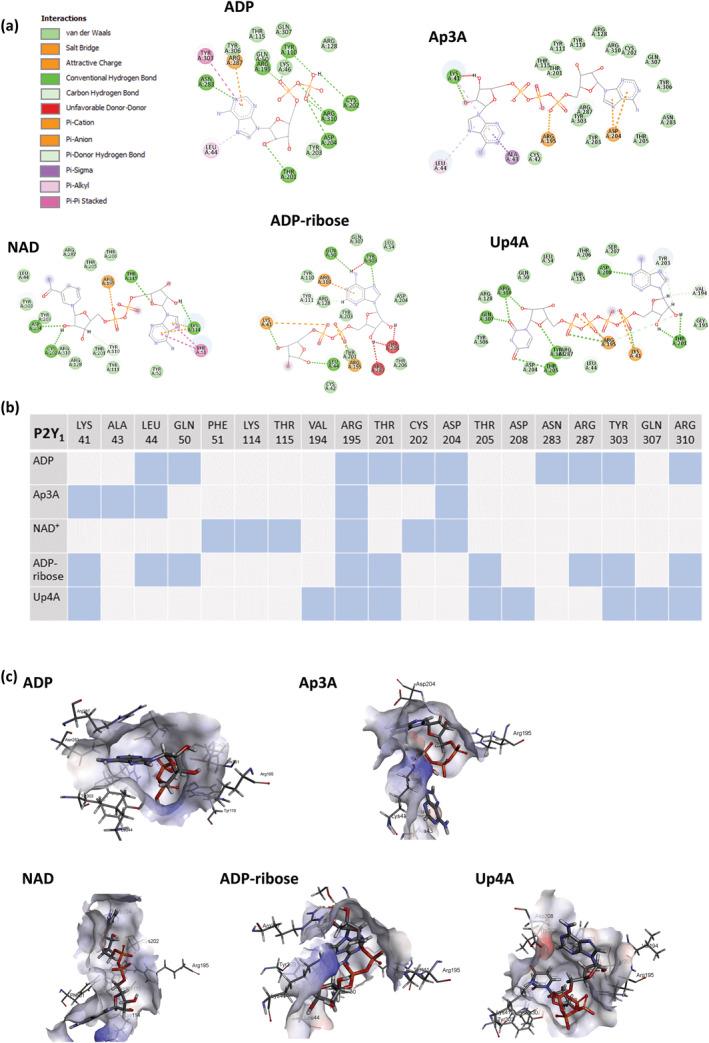
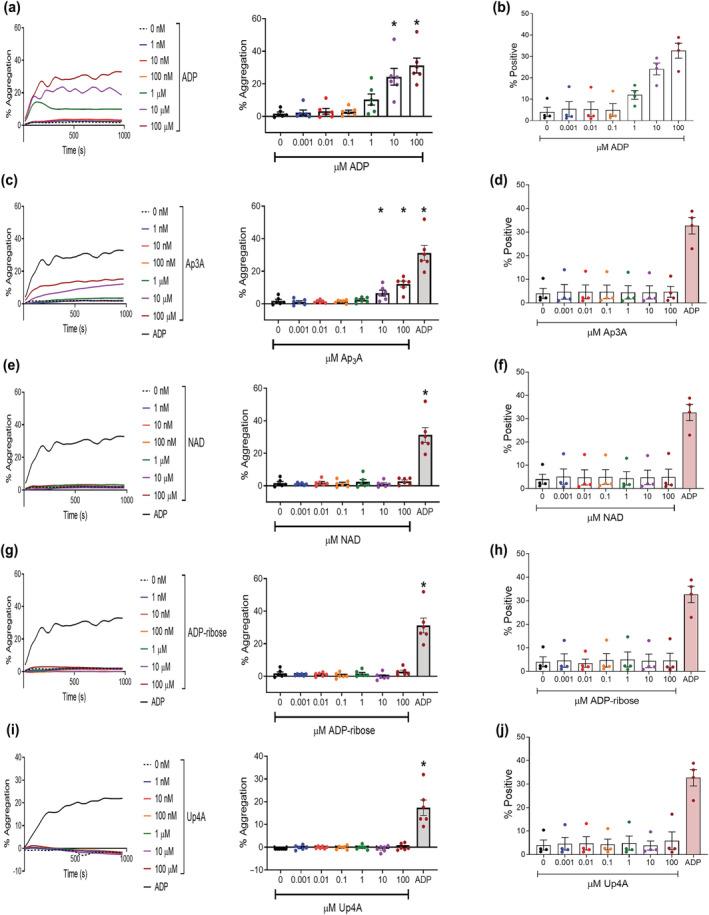
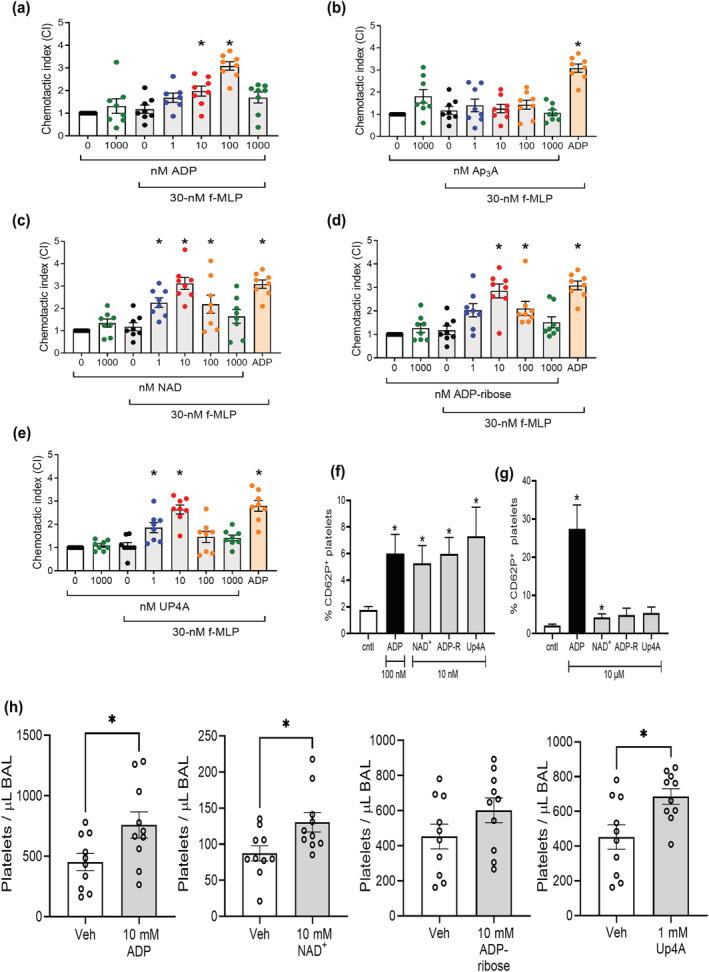
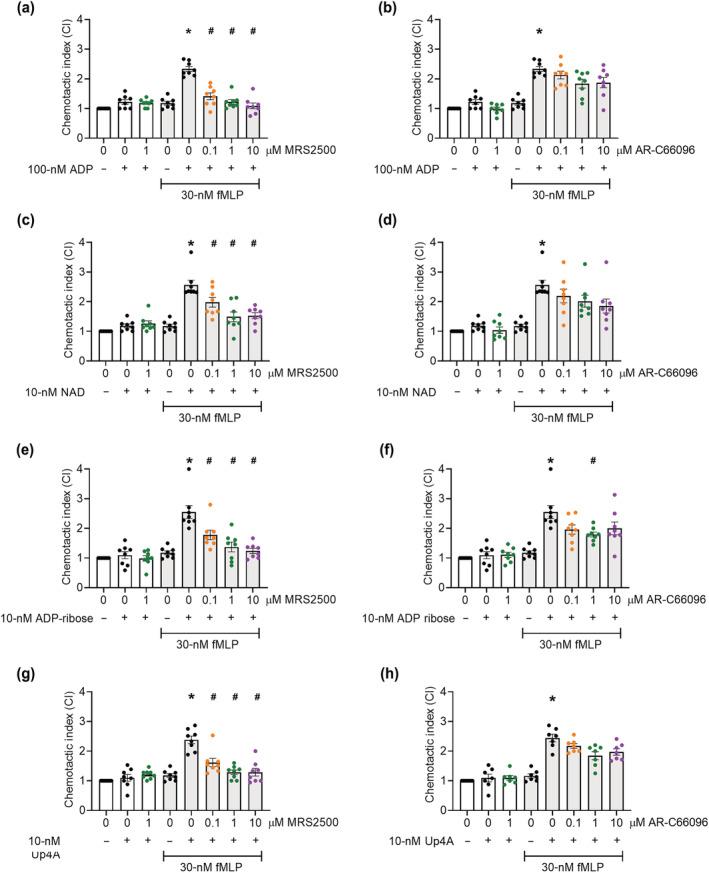
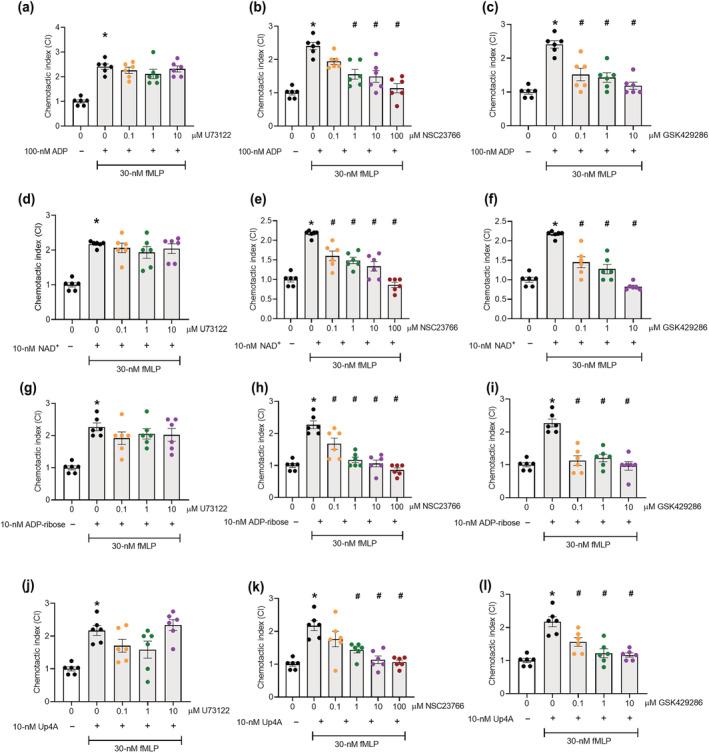
Platelet aggregation and binding to fibrinogen induced by ADP was not mimicked by NAD , ADP-ribose, and Up4A. However, these endogenous nucleotides induced P2Y -dependent platelet chemotaxis, an effect that required RhoA and Rac-1 activity, but not canonical PLC activity. Analysis of molecular docking of the P2Y receptor revealed distinct differences of amino acid interactions and depth of fit within the binding pocket for Ap3A, NAD , ADP-ribose, or Up4A compared with ADP.
CONCLUSION AND IMPLICATIONS
Platelet function (aggregation vs motility) can be differentially modulated by biased-agonist activation of P2Y receptors. This may be due to the character of the ligand-binding pocket interaction. This has implications for future therapeutic strategies aimed to suppress platelet activation during inflammation without affecting haemostasis as is the requirement of current ant-platelet drugs.
LINKED ARTICLES
This article is part of a themed issue on Platelet purinergic receptor and non-thrombotic disease. To view the other articles in this section visit http://onlinelibrary.wiley.com/doi/10.1111/bph.v181.4/issuetoc.
背景与目的
炎症期间血小板的功能取决于内源性核苷酸的激活。非经典信号通过 P2Y 受体对于血小板的这些非血栓形成功能非常重要。然而,除了 ADP 之外,作为 P2Y 受体激动剂的其他内源性核苷酸的作用尚不清楚。本研究比较了 ADP、Ap3A、NAD、ADP-核糖和 Up4A 对参与炎症或止血的血小板功能的影响。
实验方法
从健康的人类志愿者中获得血小板,用 ADP、Ap3A、NAD、ADP-核糖或 Up4A 孵育,测量聚集和纤维蛋白原结合(止血过程中的功能示例)或在暴露于 fMLP 之前测量血小板趋化性(炎症功能)。然后评估这些核苷酸与 P2Y 受体结合口袋的计算机分子对接。
主要结果
ADP 诱导的血小板聚集和纤维蛋白原结合不能被 NAD、ADP-核糖和 Up4A 模拟。然而,这些内源性核苷酸诱导 P2Y 依赖性血小板趋化性,这种效应需要 RhoA 和 Rac-1 活性,但不需要经典的 PLC 活性。对 P2Y 受体的分子对接分析显示,与 ADP 相比,Ap3A、NAD、ADP-核糖或 Up4A 在氨基酸相互作用和结合口袋中的拟合深度方面存在明显差异。
结论与意义
P2Y 受体的偏性激动剂激活可使血小板功能(聚集与运动)产生差异调节。这可能是由于配体结合口袋相互作用的性质所致。这对未来旨在抑制炎症期间血小板激活而不影响止血的治疗策略具有重要意义,这是当前抗血小板药物的要求。
相关文章
本文是血小板嘌呤能受体和非血栓性疾病专题的一部分。要查看本部分的其他文章,请访问 http://onlinelibrary.wiley.com/doi/10.1111/bph.v181.4/issuetoc。
 Zotero 插件