
延边地区朝鲜族与汉族人群下颌第三磨牙与下颌管位置关系的锥形束 CT 分析
Cone-Beam Computed Tomography Analysis on the Relationship between the Mandibular Third Molar and the Position of the Mandibular Canal in Koreans from the Yanbian Area and the Han People.
机构信息
Department of Stomatology, Affiliated Hospital of Yanbian University, Yanji 133000, China.
出版信息
Int J Clin Pract. 2023 Jan 3;2023:9563476. doi: 10.1155/2023/9563476. eCollection 2023.
OBJECTIVE
To analyze differences in the positional relationships between the mandibular third molar (MTM) and the mandibular canal in Korean and Han patients using cone-beam computed tomography (CBCT) and to provide a basis for preoperative risk assessments.
MATERIALS AND METHODS
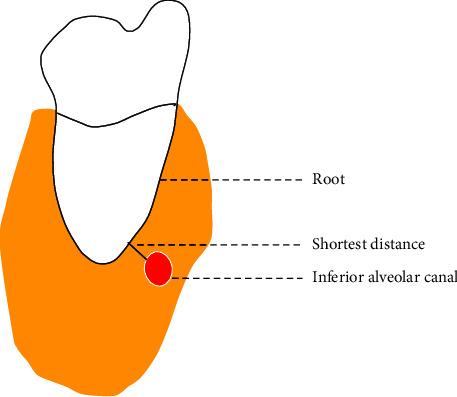
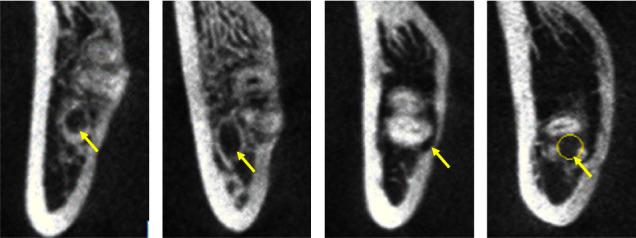
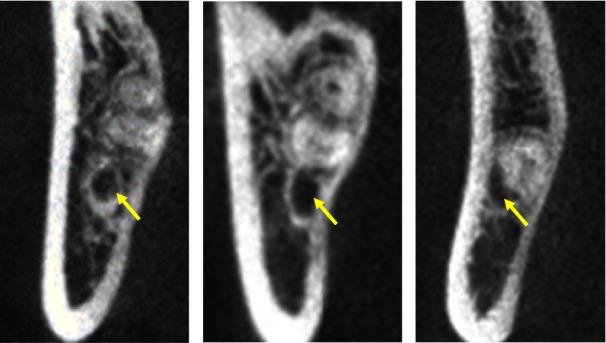
The CBCT imaging data of 260 Korean and Han patients were collected. The patients' genders, ages, impaction types and depths, relative positions between the MTMs and the mandibular nerve canals, and the shortest distances and shapes at the root tips and cortical bones were all recorded and analyzed. All data were compared using the nonparametric test, ordered logistic regression analysis, a chi-square test, and Fisher's exact test.
RESULTS
The relationship between the mandibular canal and the relative position of the MTM differed between Korean and Han patients, mainly in the different types of impactions, and the difference was statistically significant ( < 0.05). The shortest distance between the mesioangular and horizontally impacted mandibular canals and the buccal side of the MTM in Korean patients was less than in Han patients, and the difference was statistically significant ( < 0.05). For horizontal impactions, the probability of cortical bone interruption was 1.980 times greater in Korean patients than in Han patients, and the difference was statistically significant ( < 0.05). The significance threshold was set at 0.05.
CONCLUSION
There are some differences in the positional relationship between the mandibular canal in the MTM region and the rate of cortical bone disruption between Koreans from the Yanbian area and the Hans. This should gain clinical attention.
目的
利用锥形束 CT(CBCT)分析韩国人和汉族人群下颌第三磨牙(MTM)与下颌神经管之间位置关系的差异,为术前风险评估提供依据。
材料与方法
收集 260 例韩国人和汉族患者的 CBCT 影像学资料。记录并分析患者的性别、年龄、阻生类型和深度、MTM 与下颌神经管的相对位置以及根尖和皮质骨的最短距离和形态。所有数据均采用非参数检验、有序逻辑回归分析、卡方检验和 Fisher 确切概率法进行比较。
结果
韩国人和汉族患者下颌神经管与 MTM 相对位置的关系不同,主要表现在阻生类型不同,差异有统计学意义( < 0.05)。韩国人近中阻生和水平阻生下颌神经管与 MTM 颊侧之间的最短距离小于汉族人,差异有统计学意义( < 0.05)。对于水平阻生,韩国患者发生皮质骨中断的概率是汉族患者的 1.980 倍,差异有统计学意义( < 0.05)。设定显著性水平为 0.05。
结论
延边地区朝鲜族和汉族人群下颌第三磨牙区下颌神经管与皮质骨中断率之间存在一些位置关系差异,应引起临床关注。

 Zotero 插件