
单吻合口十二指肠空肠旁路术联合袖状胃切除术患者的四年营养结局:澳大利亚的经验。
Four-Year Nutritional Outcomes in Single-Anastomosis Duodeno-Ileal Bypass with Sleeve Gastrectomy Patients: an Australian Experience.
机构信息
Perth Surgical & Bariatrics, 30 Churchill Avenue, WA, 6008, Subiaco, Perth, Australia.
Big Data Scientists, Perth, Australia.
出版信息
Obes Surg. 2023 Mar;33(3):750-760. doi: 10.1007/s11695-023-06461-1. Epub 2023 Jan 26.
UNLABELLED
Nutritional deficiencies following malabsorptive surgeries are a major concern.
PURPOSE
To present clinical-based, mid-term nutritional outcomes in single-anastomosis duodeno-ileal bypass with sleeve gastrectomy (SADI-S) patients using a nutritional supplement based on the American Society for Metabolic & Bariatric Surgery (ASMBS) guidelines.
SETTING
Single private institute, Australia.
MATERIALS AND METHODS
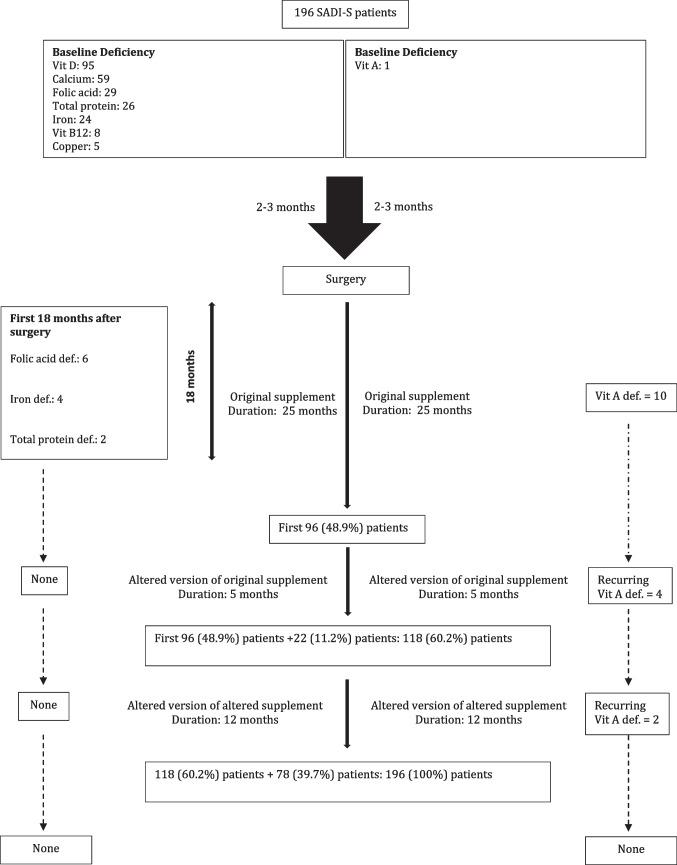
Data from 196 patients who underwent a primary SADI-S by a single surgeon from January 2017 through March 2022 were retrospectively analysed. All patients received either original or altered formulated nutritional supplementation throughout the study. In total, three formulae, slightly different from each other, were used at three different time points to formulate the supplement.
RESULTS
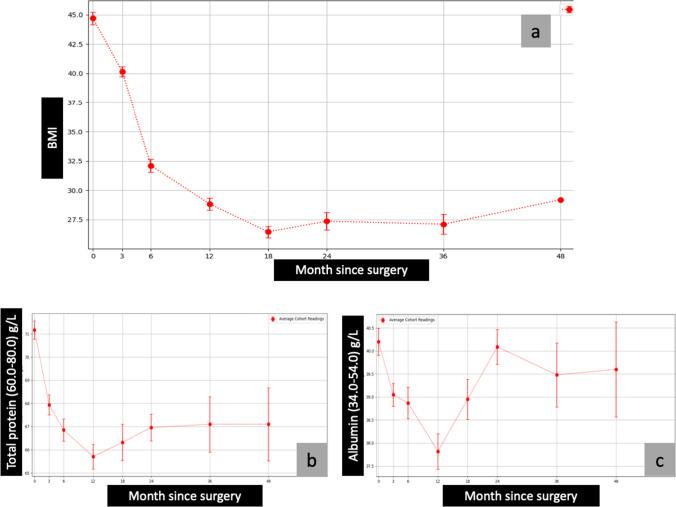
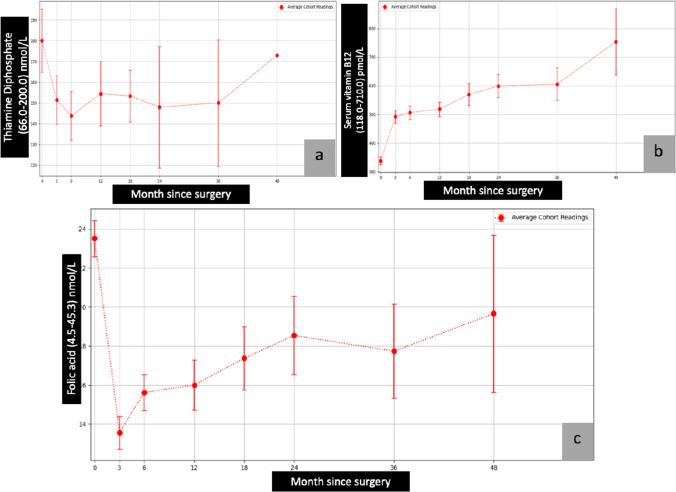
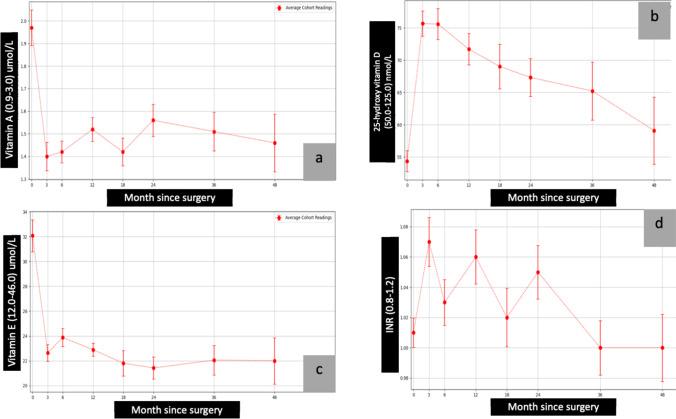
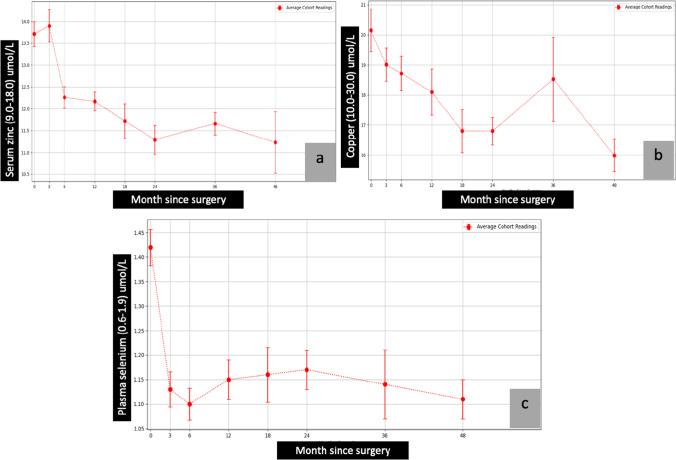
In total, 196 patients were included. The average age and preoperative body mass index were 44.9 ± 6.7 years and 43.6 ± 22.5 kg/m, respectively. Nutritional follow-up was available on 77.5%, 73.2%, 73.4%, and 59.7% of patients at 12, 24, 36, and 48 months, respectively. At baseline, 48.3%, 30%, 14.9%, 13.3%, 12.4%, 3.8%, 2.3%, and 0.5% of the patients had vitamin D, calcium, folic acid, total protein, iron, vitamin B12, copper, and vitamin A deficiencies, respectively. Postoperatively, mild to moderate vitamin deficiencies were noted in 14.2% of the patients in the first 18 months; however, at 4 years, the cohort had zero nutritional deficiencies. There were no long-term complications, revisions/conversions, or mortalities related to nutritional deficiencies.
CONCLUSION
Factors, like preoperative and postoperative early, aggressive correction of nutritional deficiencies, regular laboratory monitoring and follow-ups with the multidisciplinary team, and adherence to our formulated nutritional supplement, have contributed to favourable nutritional outcomes at 4 years.
目的
根据美国代谢与减肥外科学会(ASMBS)指南,介绍单吻合口十二指肠空肠旁路术加袖状胃切除术(SADI-S)患者的基于临床的中期营养结局。
背景
营养吸收不良手术后发生营养缺乏是一个主要问题。
材料和方法
对 2017 年 1 月至 2022 年 3 月期间由一位外科医生进行的 196 例原发性 SADI-S 患者的数据进行回顾性分析。所有患者在整个研究期间都接受了基于临床的中期营养结局的治疗。总共使用了三种配方,在三个不同的时间点略有不同,以制定补充剂。
结果
共纳入 196 例患者。平均年龄和术前体重指数分别为 44.9 ± 6.7 岁和 43.6 ± 22.5 kg/m。在 12、24、36 和 48 个月时,分别有 77.5%、73.2%、73.4%和 59.7%的患者可获得营养随访。基线时,分别有 48.3%、30%、14.9%、13.3%、12.4%、3.8%、2.3%和 0.5%的患者存在维生素 D、钙、叶酸、总蛋白、铁、维生素 B12、铜和维生素 A 缺乏。术后前 18 个月,14.2%的患者出现轻度至中度维生素缺乏,但 4 年后,该队列无任何营养缺乏。没有与营养缺乏相关的长期并发症、修改/转换或死亡。
结论
术前和术后早期积极纠正营养缺乏、定期实验室监测、多学科团队随访以及遵循我们制定的营养补充剂等因素,有助于在 4 年内获得良好的营养结局。

 Zotero 插件