
我们如何才能最好地让年轻人参与到他们的健康决策中来?有针对性的优先决策方法的范围综述。
How do we best engage young people in decision-making about their health? A scoping review of deliberative priority setting methods.
机构信息
Global Health Research Institute, Human Development and Health, Faculty of Medicine, University of Southampton, Southampton, UK.
SAMRC Developmental Pathways for Health Research Unit, School of Clinical Medicine, University of the Witwatersrand, Johannesburg, South Africa.
出版信息
Int J Equity Health. 2023 Jan 25;22(1):17. doi: 10.1186/s12939-022-01794-2.
INTRODUCTION
International organisations have called to increase young people's involvement in healthcare and health policy development. We currently lack effective methods for facilitating meaningful engagement by young people in health-related decision-making. The purpose of this scoping review is to identify deliberative priority setting methods and explore the effectiveness of these in engaging young people in healthcare and health policy decision-making.
METHODS
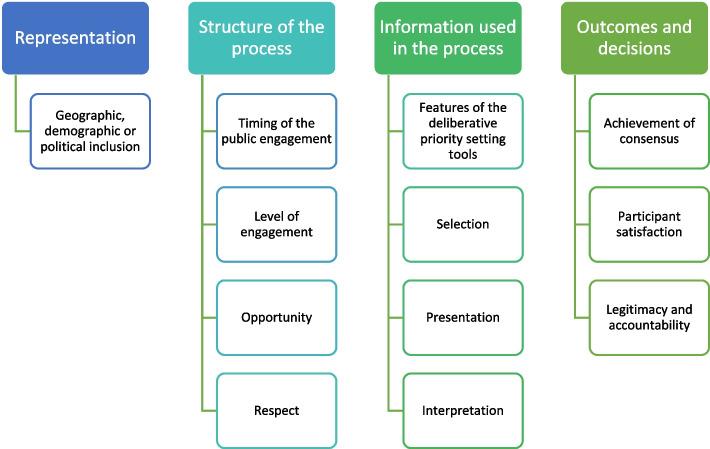
Seven databases were searched systematically, using MeSH and free text terms, for articles published in English before July 2021 that described the use of deliberative priority setting methods for health decision-making with young people. All titles, abstracts and full-text papers were screened by a team of six independent reviewers between them. Data extraction followed the Centre for Reviews and Dissemination guidelines. The results are presented as a narrative synthesis, structured around four components for evaluating deliberative processes: 1) representation and inclusion of diverse participants, 2) the way the process is run including levels and timing of participant engagement, 3) the quality of the information provided to participants and 4) resulting outcomes and decisions.
FINDINGS
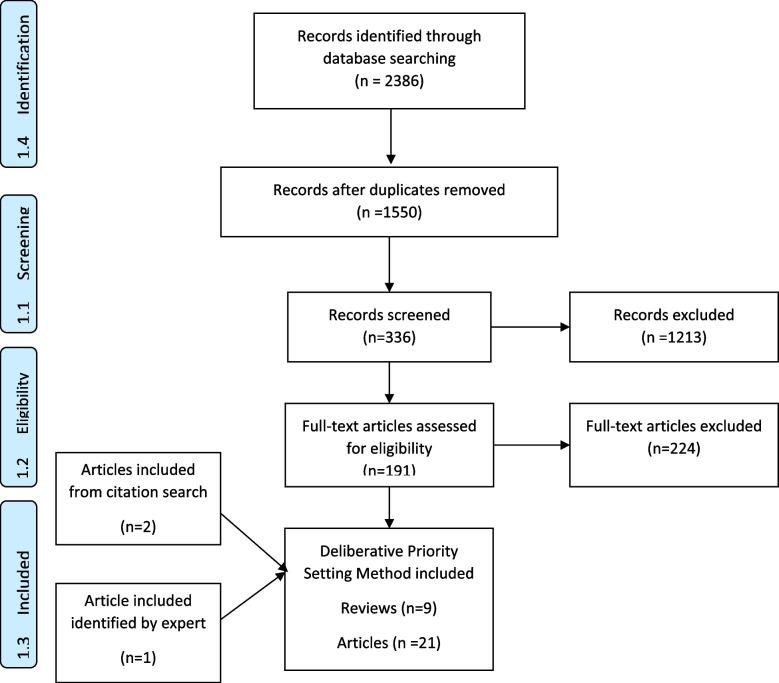
The search yielded 9 reviews and 21 studies. The more engaging deliberative priority setting tools involved young people-led committees, mixed methods for identifying and prioritising issues and digital data collection and communication tools. Long-term and frequent contact with young people to build trust underpinned the success of some of the tools, as did offering incentives for taking part and skills development using creative methods. The review also suggests that successful priority setting processes with young people involve consideration of power dynamics, since young people's decisions are likely to be made together with family members, health professionals and academics.
DISCUSSION
Young people's engagement in decision-making about their health is best achieved through investing time in building strong relationships and ensuring young people are appropriately rewarded for their time and contribution. If young people are to be instrumental in improving their health and architects of their own futures, decision-making processes need to respect young people's autonomy and agency. Our review suggests that methods of power-sharing with young people do exist but that they have yet to be adopted by organisations and global institutions setting global health policy.
简介
国际组织呼吁增加年轻人参与医疗保健和卫生政策制定。目前,我们缺乏有效的方法来促进年轻人参与与健康相关的决策。本范围综述的目的是确定审议性优先排序方法,并探讨这些方法在使年轻人参与医疗保健和卫生政策决策中的有效性。
方法
使用 MeSH 和自由文本术语,系统地搜索了 7 个数据库,以查找 2021 年 7 月之前发表的描述使用审议性优先排序方法进行健康决策的文章,这些方法与年轻人有关。六名独立评审员组成的团队共同筛选所有标题、摘要和全文论文。根据综述与传播中心的指南进行数据提取。结果以叙述性综合形式呈现,围绕审议过程的四个组成部分进行组织:1)代表和纳入多样化的参与者,2)过程的运作方式,包括参与者参与的层次和时间,3)向参与者提供的信息质量,4)结果和决策。
发现
搜索结果产生了 9 篇综述和 21 项研究。更具参与性的审议性优先排序工具涉及年轻人领导的委员会、混合方法识别和优先排序问题以及数字数据收集和沟通工具。一些工具的成功背后是与年轻人建立信任的长期和频繁的联系,为参与提供激励和使用创造性方法进行技能发展也是如此。该综述还表明,与年轻人成功进行优先排序过程涉及考虑权力动态,因为年轻人的决策很可能与家庭成员、卫生专业人员和学者一起做出。
讨论
年轻人参与有关其健康的决策的最佳方式是投入时间建立牢固的关系,并确保年轻人因其时间和贡献而得到适当的回报。如果年轻人要在改善自身健康和规划自己的未来方面发挥作用,决策过程就需要尊重年轻人的自主权和代理权。我们的综述表明,与年轻人分享权力的方法确实存在,但这些方法尚未被制定全球卫生政策的组织和全球机构采用。
 Zotero 插件