
不同种质山胡椒果实油脂积累及生物柴油特性评价与生物柴油开发高产油机制揭示
Evaluation of oil accumulation and biodiesel property of Lindera glauca fruits among different germplasms and revelation of high oil producing mechanism for developing biodiesel.
作者信息
Lin Zixin, Chen Feng, Wang Hongjuan, Hu Jinhe, Shi Lingling, Zhang Zhixiang, Xiu Yu, Lin Shanzhi
机构信息
Beijing Advanced Innovation Center for Tree Breeding By Molecular Design, College of Biological Sciences and Biotechnology, School of Soil and Water Conservation, National Engineering Laboratory for Tree Breeding, Key Laboratory of Genetics and Breeding in Forest Trees and Ornamental Plants, Ministry of Education, Tree and Ornamental Plant Breeding and Biotechnology Laboratory of National Forestry and Grassland Administration, Beijing Forestry University, Beijing, 100083, China.
Department of Biochemistry and Molecular Biology, Yanjing Medical College, Capital Medical University, Beijing, 101300, China.
出版信息
Biotechnol Biofuels Bioprod. 2023 Jan 25;16(1):14. doi: 10.1186/s13068-023-02265-8.
BACKGROUND
Lindera glauca with rich resource and fruit oil has emerged as novel source of biodiesel in China, but different germplasms show a variation for fruit oil content and FA profile. To develop L. glauca fruit oils as biodiesel, a concurrent exploration of oil content, FA composition, biodiesel yield, fuel property and prediction model construction was conducted on the fruits from 8 plus germplasms to select superior genotype for ideal biodiesel production. Another vital focus was to highlight mechanism that govern the differences in oil content and FA profile of different germplasms. The cross-accessions comparisons associated with oil-synthesized gene transcriptional level and oil accumulative amount led to the identification of potential determinants (enzymes, transporters or transcription factors) and regulatory mechanisms responsible for high-quality oil accumulation.
RESULTS
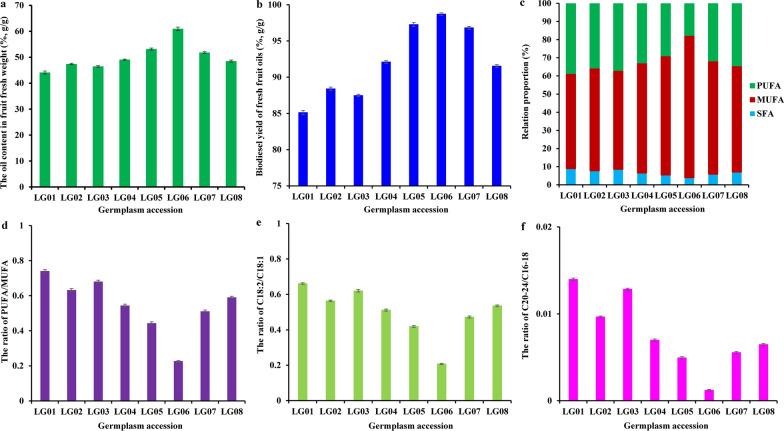
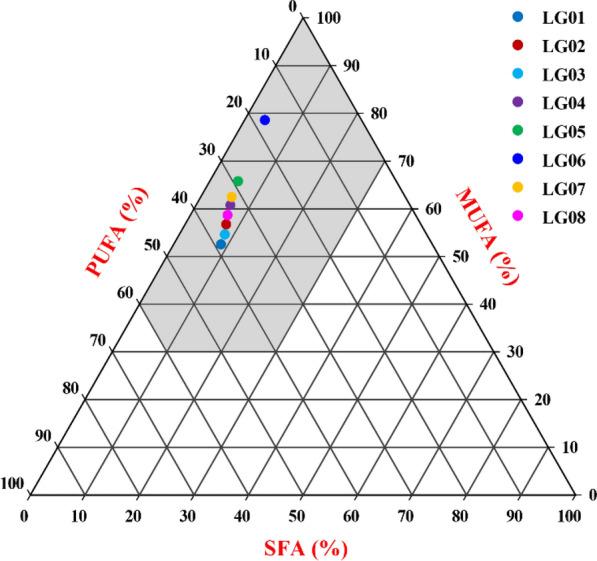
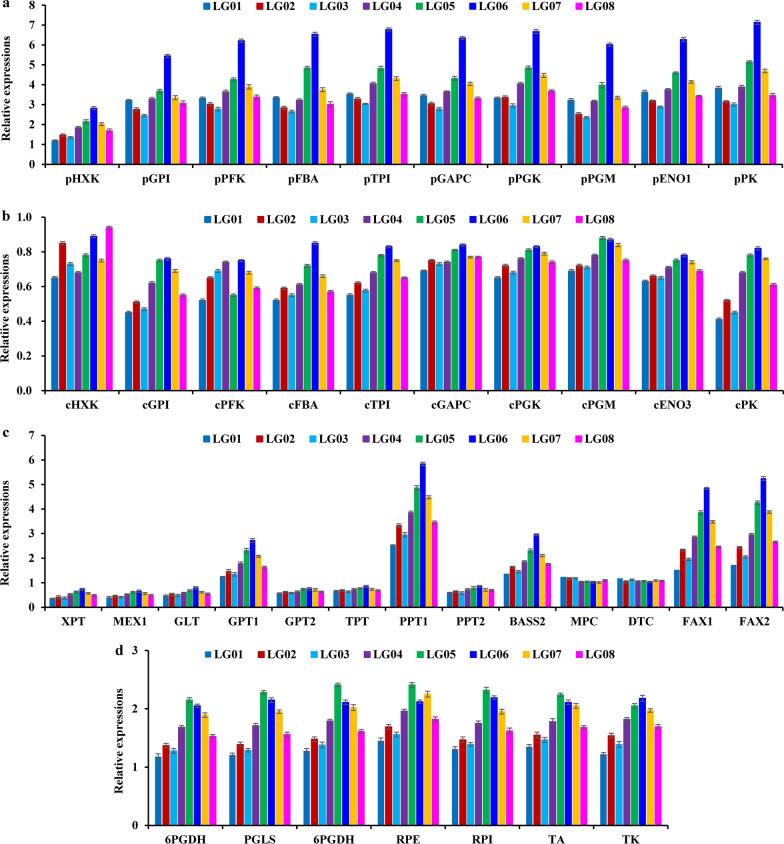
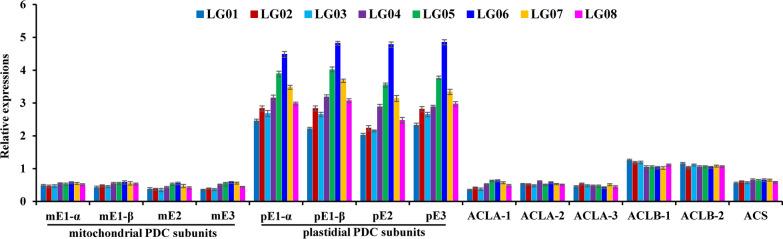
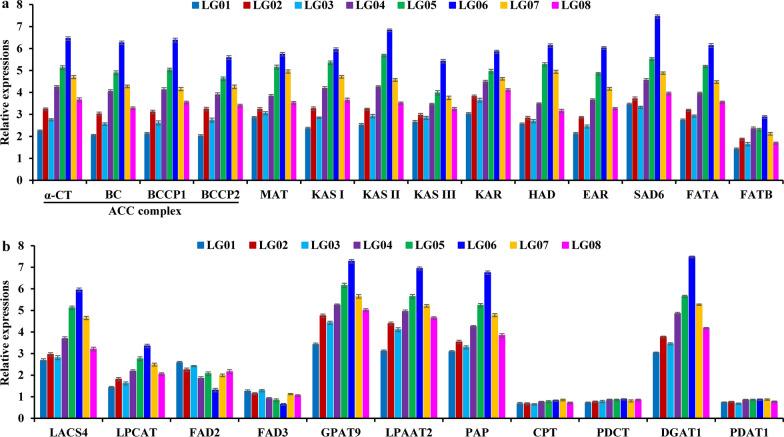
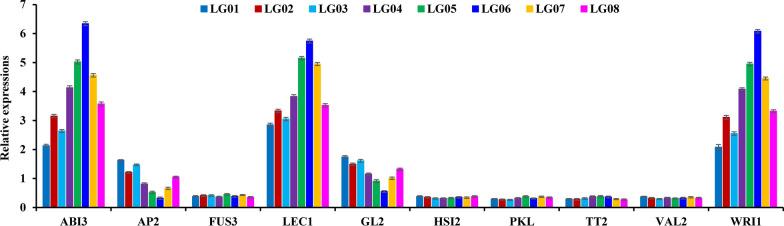
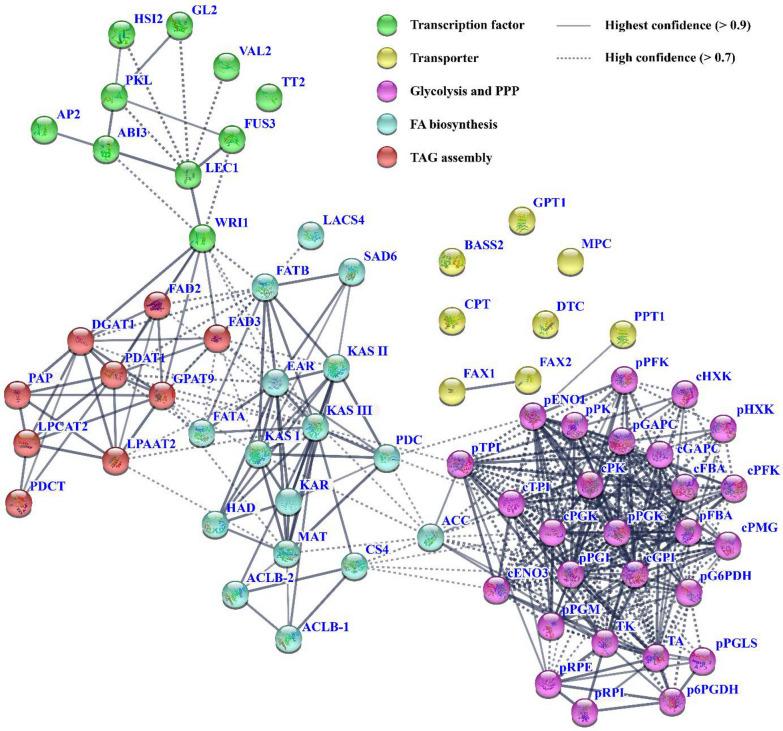
To select superior germplasm and unravel regulatory mechanism of high oil production for developing L. glauca fruit oils as biodiesel, 8 plus trees (accession LG01/02/03/04/05/06/07/08) with high-yield fruits were selected to evaluate the differences in oil content, FA profile, biodiesel yield and fuel property, and to construct fuel property prediction model, revealing a variation in the levels of fruit oil (45.12-60.95%), monounsaturated FA (52.43-78.46%) and polyunsaturated FA (17.69-38.73%), and biodiesel yield (80.12-98.71%) across different accessions. Of note, LG06 had a maximum yield of oil (60.95%) and biodiesel (98.71%), and ideal proportions of C18:1 (77.89%), C18:2 (14.16%) and C18:3 (1.55%), indicating that fruit oils from accession LG06 was the most suitable for high-quality biodiesel production. To highlight molecular mechanism that govern such differences in oil content and FA composition of different accessions, the quantitative relationship between oil-synthesized gene transcription and oil accumulative amount were conducted on different accessions to identify some vital determinants (enzymes, transporters or transcription factors) with a model of carbon metabolic regulatory for high-quality oil accumulation by an integrated analysis of our recent transcriptome data and qRT-PCR detection. Our findings may present strategies for developing L. glauca fruit oils as biodiesel feedstock and engineering its oil accumulation.
CONCLUSIONS
This is the first report on the cross-accessions evaluations of L. glauca fruit oils to determine ideal accession for producing ideal biodiesel, and the associations of oil accumulative amount with oil-synthesized gene transcription was performed to identify some crucial determinants (enzymes, transporters or transcription factors) with metabolic regulation model established for governing high oil production. Our finding may provide molecular basis for new strategies of developing biodiesel resource and engineering oil accumulation.
背景
山胡椒资源丰富,果实含油,已成为中国新型生物柴油来源,但不同种质的果实含油量和脂肪酸组成存在差异。为将山胡椒果实油开发为生物柴油,对8个以上优良种质的果实进行了含油量、脂肪酸组成、生物柴油产量、燃料特性及预测模型构建的同步研究,以筛选出适合理想生物柴油生产的优良基因型。另一个重要重点是突出控制不同种质含油量和脂肪酸组成差异的机制。通过与油合成基因转录水平和油积累量相关的跨种质比较,确定了负责优质油积累的潜在决定因素(酶、转运蛋白或转录因子)及调控机制。
结果
为筛选优良种质并揭示高产油的调控机制,以开发山胡椒果实油作为生物柴油,选择了8株以上高产果实的树(种质LG01/02/03/04/05/06/07/08),评估其含油量、脂肪酸组成、生物柴油产量和燃料特性的差异,并构建燃料特性预测模型,结果显示不同种质的果实油含量(45.12 - 60.95%)、单不饱和脂肪酸(52.43 - 78.46%)、多不饱和脂肪酸(17.69 - 38.73%)和生物柴油产量(80.12 - 98.71%)存在差异。值得注意的是,LG06的油产量(60.95%)和生物柴油产量(98.71%)最高,且C18:1(77.89%)、C18:2(14.16%)和C18:3(1.55%)比例理想,表明LG06种质的果实油最适合生产优质生物柴油。为突出控制不同种质含油量和脂肪酸组成差异的分子机制,对不同种质进行了油合成基因转录与油积累量的定量关系研究,通过整合近期转录组数据和qRT-PCR检测,以碳代谢调控模型确定了一些负责优质油积累的重要决定因素(酶、转运蛋白或转录因子)。我们的研究结果可能为将山胡椒果实油开发为生物柴油原料及其油积累工程提供策略。
结论
这是首次关于山胡椒果实油跨种质评估以确定生产理想生物柴油的理想种质的报告,并进行了油积累量与油合成基因转录的关联分析,以确定一些关键决定因素(酶、转运蛋白或转录因子),并建立了用于控制高产油的代谢调控模型。我们的研究结果可能为开发生物柴油资源和油积累工程的新策略提供分子基础。

 Zotero 插件