
通过下一代测序对哥伦比亚骨髓登记处的 1763 名干细胞供者进行 HLA-A、HLA-B、HLA-C、HLA-DRB1 和 HLA-DQB1 等位基因和单倍型频率的分布。
Distributions of the HLA-A, HLA-B, HLA-C, HLA-DRB1, and HLA-DQB1 alleles and haplotype frequencies of 1763 stem cell donors in the Colombian Bone Marrow Registry typed by next-generation sequencing.
机构信息
Instituto Distrital de Ciencia, Biotecnología e Innovación en Salud - IDCBIS, Bogotá, Colombia.
出版信息
Front Immunol. 2023 Jan 9;13:1057657. doi: 10.3389/fimmu.2022.1057657. eCollection 2022.
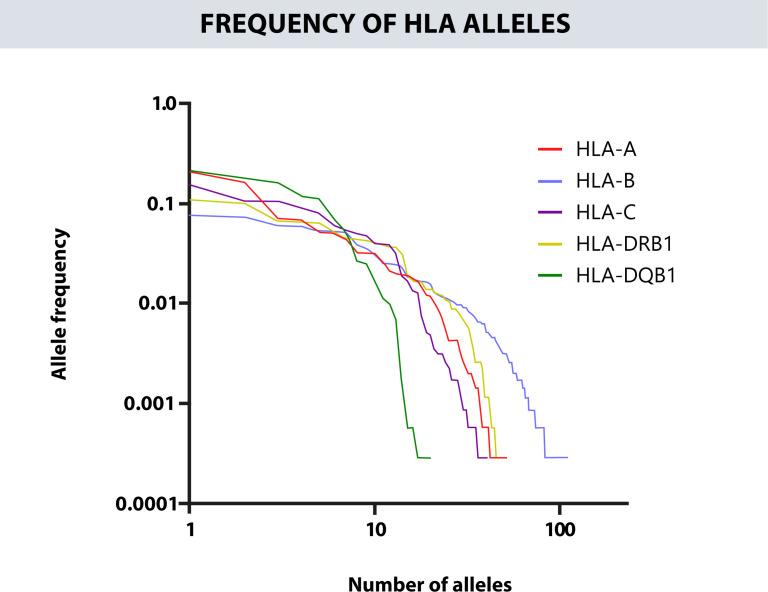
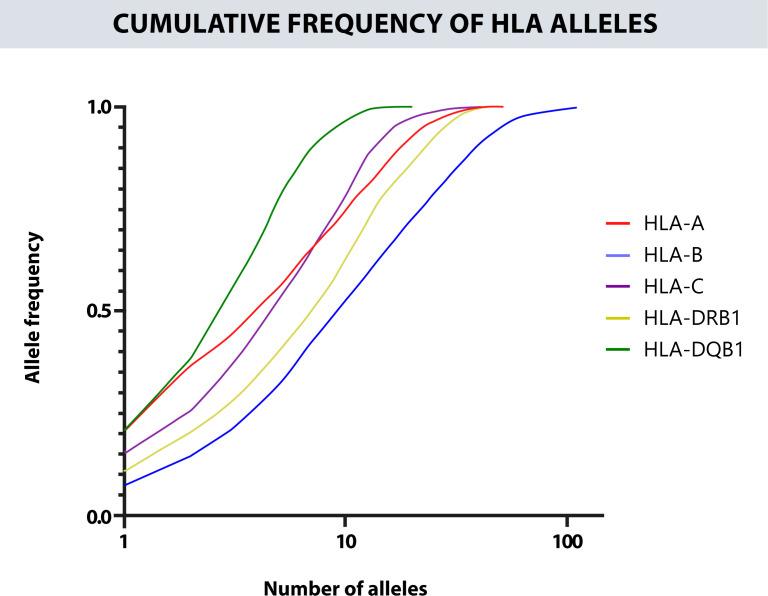
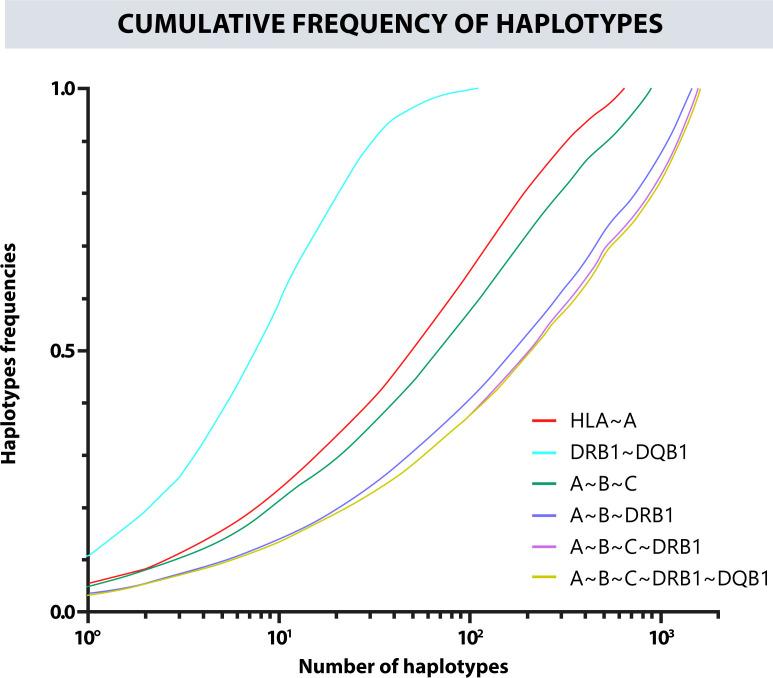
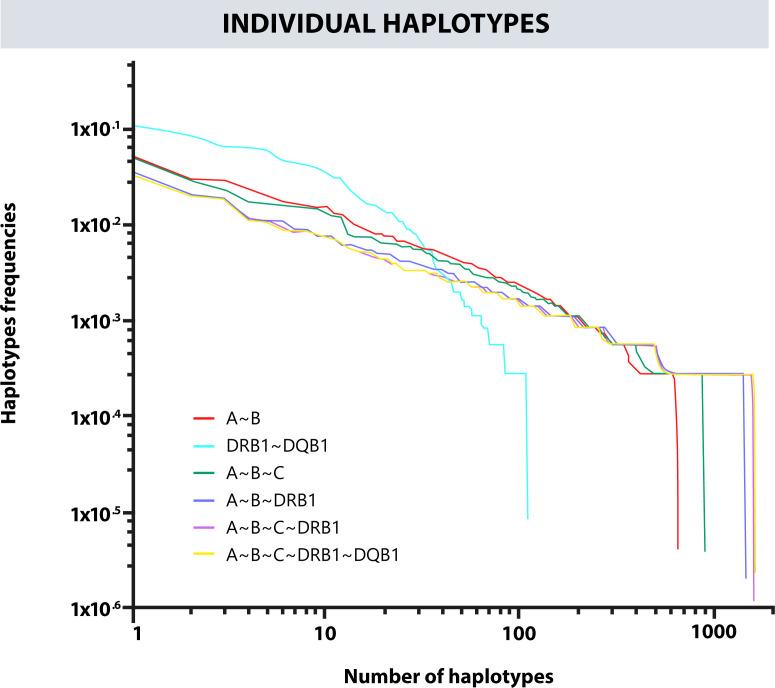
The HLA compatibility continues to be the main limitation when finding compatible donors, especially if an identical match is not found within the patient's family group. The creation of bone marrow registries allowed a therapeutic option by identifying 10/10 compatible unrelated donors (URD). However, the availability and frequency of haplotypes and HLA alleles are different among ethnic groups and geographical areas, increasing the difficulty of finding identical matches in international registries. In this study, the HLA-A, -B, -C, -DRB1, and -DQB1 loci of 1763 donors registered in the Colombian Bone Marrow Registry were typed by next-generation sequencing. A total of 52 HLA-A, 111 HLA-B, 41 HLA-C, 47 HLA-DRB1, and 20 HLA-DQB1 alleles were identified. The 3 most frequent alleles for each loci were A24:02g (20,8%), A02:01g (16,1%), A01:01g (7.06%); B35:43g (7.69%), B40:02g (7.18%), B44:03g (6.07%); C04:01g (15.40%), C01:02g (10.49%), C07:02g (10.44%); DRB104:07g (11.03%), DRB107:01g (9.78%), DRB108:02g (6.72%); DQB103:02g (20.96%), DQB103:01g (17.78%) and DQB102:01g (16.05%). A total of 497 HLA-A-C-B-DRB1-DQB1 haplotypes were observed with a frequency greater than or equal to 0.05% (> 0.05%); the haplotypes with the highest frequency were A24:02gB*35:43gC01:02g~DQB103:02gDRB104:07g (3.34%), A29:02gB44:03g~C16:01gDQB1*02:01gDRB107:01g (2.04%), and A01:01gB*08:01gC07:01g~DQB102:01g~DRB1*03:01g (1.83%). This data will allow the new Colombian Bone Marrow Donor Registry to assess the genetic heterogeneity of the Colombian population and serve as a tool of interest for future searches of unrelated donors in the country.
HLA 配型仍是寻找合适供者的主要限制因素,尤其是在患者的家族群体中无法找到完全匹配的供者时。骨髓库的建立使得通过识别 10/10 完全匹配的无关供者(URD)成为一种治疗选择。然而,不同种族和地理区域的单倍型和 HLA 等位基因的可用性和频率不同,这增加了在国际注册中心找到完全匹配的供者的难度。在这项研究中,对哥伦比亚骨髓库登记的 1763 名供者的 HLA-A、-B、-C、-DRB1 和-DQB1 基因座进行了下一代测序分型。共鉴定出 52 个 HLA-A、111 个 HLA-B、41 个 HLA-C、47 个 HLA-DRB1 和 20 个 HLA-DQB1 等位基因。每个基因座的 3 个最常见等位基因分别为 A24:02g(20.8%)、A02:01g(16.1%)、A01:01g(7.06%);B35:43g(7.69%)、B40:02g(7.18%)、B44:03g(6.07%);C04:01g(15.40%)、C01:02g(10.49%)、C07:02g(10.44%);DRB104:07g(11.03%)、DRB107:01g(9.78%)、DRB108:02g(6.72%);DQB103:02g(20.96%)、DQB103:01g(17.78%)和 DQB102:01g(16.05%)。共观察到 497 个 HLA-A-C-B-DRB1-DQB1 单体型,其频率大于或等于 0.05%(>0.05%);频率最高的单体型为 A24:02gB*35:43gC01:02g~DQB103:02gDRB104:07g(3.34%)、A29:02gB44:03g~C16:01gDQB1*02:01gDRB107:01g(2.04%)和 A01:01gB*08:01gC07:01g~DQB102:01g~DRB1*03:01g(1.83%)。该数据将使新的哥伦比亚骨髓供者登记处能够评估哥伦比亚人群的遗传异质性,并作为该国未来寻找无关供者的有用工具。


 Zotero 插件