
择期退行性脊柱手术后患者的炎症生物标志物行为特征及其与术后脊柱感染患者的差异:一项系统评价方案
The Inflammatory Biomarkers Behavior Profile of Patients Following Elective Degenerative Spine Surgery and Differences Compared to Those Coursing With a Postoperative Spinal Infection: Protocol for a Systematic Review.
作者信息
Romero Rangel José Alberto Israel, Jiménez Ponce Fiacro, Wong Chew Rosa Maria, Talavera Piña Juan Osvaldo, Martínez Tovar Adolfo
机构信息
Spine Clinic, Neurological Center, The American-British Cowdray Medical Center IAP, Mexico City, Mexico.
National Autonomous University of Mexico, Mexico City, Mexico.
出版信息
JMIR Res Protoc. 2023 Apr 28;12:e41555. doi: 10.2196/41555.
BACKGROUND
The incidence of postoperative spinal infection (PSI) ranges from 0% to 10%, with devastating effects on the patient prognosis because of higher morbidity while increasing costs to the health care system. PSIs are elusive and difficult to diagnose, especially in the early postoperative state, because of confusing clinical symptoms, rise in serum biomarkers, or imaging studies. Current research on diagnosis has focused on serum biomarkers; nevertheless, most series rely on retrospective cohorts where biomarkers are studied individually and at different time points.
OBJECTIVE
This paper presents the protocol for a systematic review that aims to determine the inflammatory biomarker behavior profile of patients following elective degenerative spine surgery and their differences compared to those coursing with PSIs.
METHODS
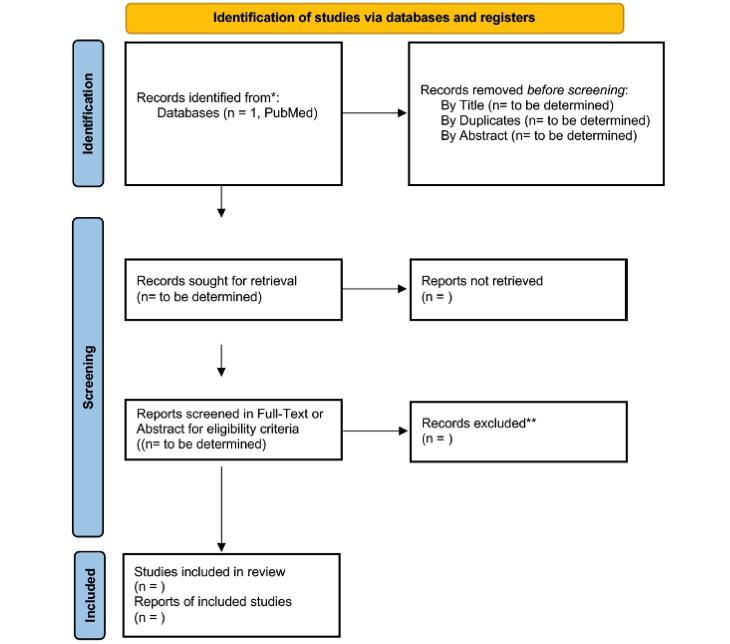
The proposed systematic review will follow the PRISMA (Preferred Reporting Items for Systematic Reviews and Meta-Analyses) statement. This protocol was registered at PROSPERO on January 19, 2022. We will include studies related to biomarkers in adult patients operated on for degenerative spinal diseases and those developing PSIs. The following information will be extracted from the papers: (1) study title; (2) study author; (3) year; (4) evidence level; (5) research type; (6) diagnosis group (elective postoperative degenerative disease or PSI); (7a) region (cervical, thoracic, lumbosacral, and coccygeal); (7b) type of infection by anatomical or radiological site; (8) surgery type (including instrumentation or not); (9) number of cases; (10) mean age or individual age; (11) individual serum biomarker values from the preoperative state up to 90 days postoperative for both groups, including (10a) interleukin-6, (10b) presepsin, (10c) erythrocyte sedimentation rate, (10d) leukocyte count, (10e) neutrophil count, (10f) C-reactive protein, (10g) serum amyloid, (10h) white cell count, (10i) albumin, (10j) prealbumin, (10k) procalcitonin, (10l) retinol-associated protein, and (10m) Dickkopf-1; (11) postoperative days at symptoms or diagnosis; (12) type of organism; (13) day of starting antibiotics; (14) duration of treatment; and (15) any biases (including comorbidities, especially those affecting immunological status). All data on biomarkers will be presented graphically over time.
RESULTS
No ethical approval will be required, as this review is based on published data and does not involve interaction with human participants. The search for this systematic review commenced in February 2021, and we expect to publish the findings in mid-2023.
CONCLUSIONS
This study will provide the behavior profile of biomarkers for PSI and patients following elective surgery for degenerative spinal diseases from the preoperative period up to 90 days postoperative, providing cutoff values on the day of diagnosis. This research will provide clinicians with highly trustable cutoff reference values for PSI diagnosis. Finally, we expect to provide a basis for future research on biomarkers that help diagnose more accurately and in a timely manner in the early stages of illness, ultimately impacting the patient's physical and mental health, and reducing the disease burden.
TRIAL REGISTRATION
PROSPERO CRD42022304645; https://www.crd.york.ac.uk/prospero/display_record.php?RecordID=304645.
INTERNATIONAL REGISTERED REPORT IDENTIFIER (IRRID): DERR1-10.2196/41555.
背景
术后脊柱感染(PSI)的发生率在0%至10%之间,由于其较高的发病率以及对医疗保健系统成本的增加,对患者预后具有毁灭性影响。PSI难以捉摸且难以诊断,尤其是在术后早期,原因在于临床症状令人困惑、血清生物标志物升高或影像学检查结果不明确。目前关于诊断的研究主要集中在血清生物标志物上;然而,大多数系列研究依赖回顾性队列,其中生物标志物是在不同时间点单独进行研究的。
目的
本文介绍了一项系统评价的方案,旨在确定择期退行性脊柱手术后患者的炎症生物标志物行为特征,以及与PSI患者相比的差异。
方法
拟进行的系统评价将遵循PRISMA(系统评价和荟萃分析的首选报告项目)声明。该方案于2022年1月19日在PROSPERO注册。我们将纳入与接受退行性脊柱疾病手术的成年患者以及发生PSI的患者的生物标志物相关的研究。将从论文中提取以下信息:(1)研究标题;(2)研究作者;(3)年份;(4)证据水平;(5)研究类型;(6)诊断组(择期术后退行性疾病或PSI);(7a)部位(颈椎、胸椎、腰骶部和尾骨);(7b)按解剖或放射学部位划分的感染类型;(8)手术类型(包括是否有内固定);(9)病例数;(10)平均年龄或个体年龄;(11)两组术前至术后90天的个体血清生物标志物值,包括(10a)白细胞介素-6、(10b)可溶性髓系细胞触发受体-1、(10c)红细胞沉降率、(10d)白细胞计数、(10e)中性粒细胞计数、(10f)C反应蛋白、(10g)血清淀粉样蛋白、(10h)白细胞计数、(10i)白蛋白、(10j)前白蛋白、(10k)降钙素原、(10l)视黄醇结合蛋白和(10m)Dickkopf-1;(11)出现症状或诊断的术后天数;(12)病原体类型;(13)开始使用抗生素的日期;(14)治疗持续时间;以及(15)任何偏倚(包括合并症,尤其是影响免疫状态的合并症)。所有关于生物标志物的数据将随时间以图形方式呈现。
结果
由于本评价基于已发表的数据且不涉及与人类参与者的互动,因此无需伦理批准。该系统评价的检索于2021年2月开始,我们预计在2023年年中发表研究结果。
结论
本研究将提供PSI以及择期退行性脊柱疾病手术后患者从术前到术后90天的生物标志物行为特征,并给出诊断当天的临界值。本研究将为临床医生提供用于PSI诊断的高度可信的临界参考值。最后,我们期望为未来关于生物标志物的研究提供基础,以帮助在疾病早期更准确、及时地进行诊断,最终影响患者的身心健康,并减轻疾病负担。
试验注册
PROSPERO CRD420223来04645;https://www.crd.york.ac.uk/prospero/display_record.php?RecordID=304645。
国际注册报告识别号(IRRID):DERR1-10.2196/41555。
 Zotero 插件