
低 L3 骨骼肌指数与卵巢癌的临床病理特征和预后相关:一项荟萃分析。
Low L3 skeletal muscle index associated with the clinicopathological characteristics and prognosis of ovarian cancer: a meta-analysis.
机构信息
Department of Obstetrics and Gynecology, Renji Hospital, School of Medicine, Shanghai Jiao Tong University, Shanghai, China.
Shanghai Key Laboratory of Gynecologic Oncology, Renji Hospital, School of Medicine, Shanghai Jiao Tong University, Shanghai, China.
出版信息
J Cachexia Sarcopenia Muscle. 2023 Apr;14(2):697-705. doi: 10.1002/jcsm.13175. Epub 2023 Jan 31.
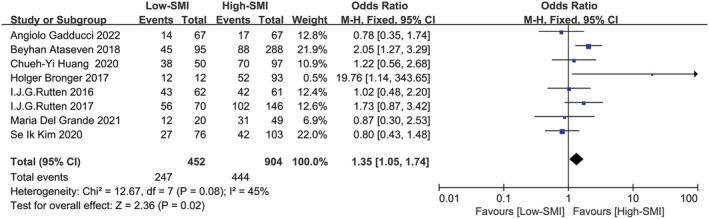
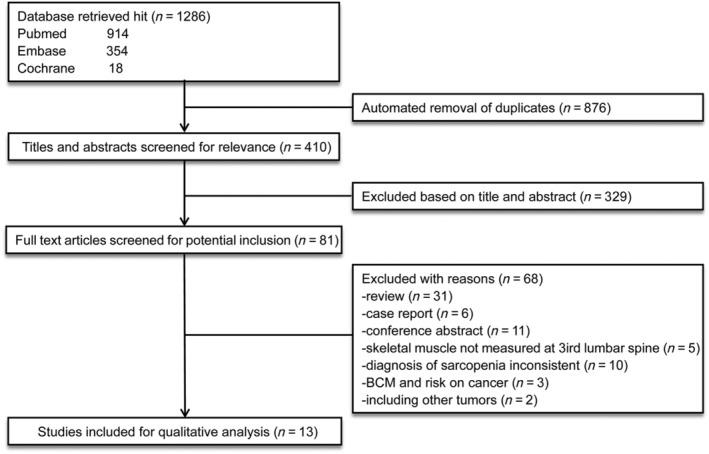
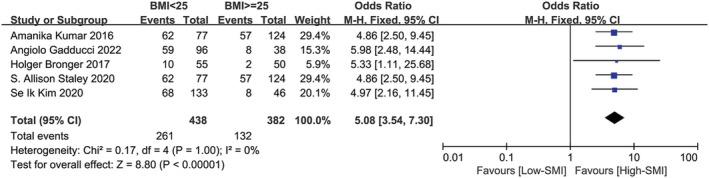
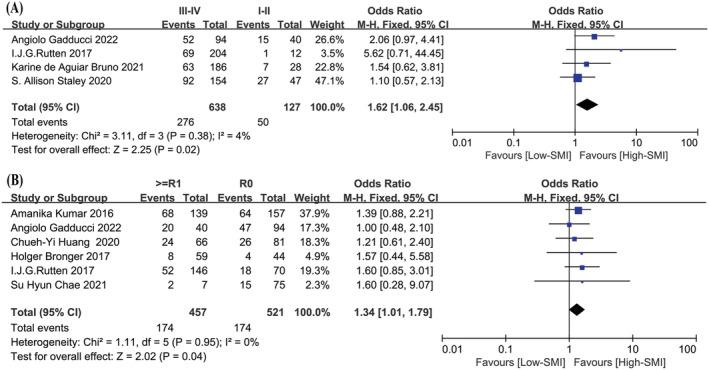
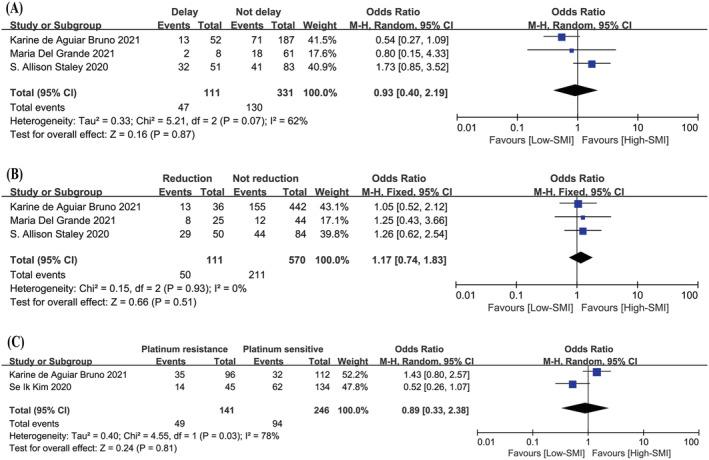
Sarcopenia is a syndrome characterized by progressive loss of skeletal muscle mass, strength and function, which is one of the most important clinical features of cancer malnutrition, representing a poor prognostic indicator in oncology. Sarcopenia is commonly assessed by measuring the skeletal muscle index (SMI) of the third lumbar spine (L3) using computed tomography (CT). The primary aim of this meta-analysis was to study the association between low SMI and comprehensive clinicopathological characteristics as well as prognosis in patients with ovarian cancer. Data were searched in PubMed, EMBASE and Cochrane databases from inception to 10 June 2022. Studies evaluating the prognostic effect of SMI on ovarian cancer survival or chemotherapy-related side effects were included. The risk of bias and study quality were assessed via the Newcastle-Ottawa Scale (NOS). The search strategy yielded 1286 hits in all three databases combined. Thirteen studies were included for qualitative and quantitative analysis, comprising 1814 patients. Our meta-analysis revealed the significant association between low SMI and progression-free survival (PFS) [P = 0.02; hazard ratio (HR): 1.40, 95% confidence interval (CI): 1.06-1.85], as well as 5-year overall survival (OS) [P = 0.02; odds ratio (OR): 1.35, 95% CI: 1.05-1.74]. Low SMI was also obviously associated with body mass index (BMI) < 25 (P < 0.00001; OR: 5.08, 95% CI: 3.54-7.30), FIGO stage (P = 0.02; OR: 1.62, 95% CI: 1.06-2.45) and R0 cytoreduction (P = 0.04;OR: 1.34, 95% CI: 1.01-1.79). There was no correlation between low SMI and histological types, pathological grades and chemotherapy-related toxicity. The quality of the evidence was relatively high according to NOS. Our meta-analysis indicated that sarcopenia assessed by SMI was associated with poor clinical characteristics and adverse prognosis in patients with ovarian cancer. Consensus should be reached on standardized cut-off values for defining sarcopenia in patients with ovarian cancer.
肌肉减少症是一种以骨骼肌质量、力量和功能进行性丧失为特征的综合征,是癌症营养不良的最重要临床特征之一,代表肿瘤学中预后不良的指标。肌肉减少症通常通过使用计算机断层扫描 (CT) 测量第三腰椎 (L3) 的骨骼肌指数 (SMI) 来评估。本荟萃分析的主要目的是研究低 SMI 与卵巢癌患者综合临床病理特征和预后之间的关系。数据于 2022 年 6 月 10 日从 PubMed、EMBASE 和 Cochrane 数据库中检索。纳入评估 SMI 对卵巢癌生存或化疗相关副作用的预后影响的研究。通过纽卡斯尔-渥太华量表 (NOS) 评估偏倚风险和研究质量。搜索策略在三个数据库中共产生了 1286 个命中。纳入了 13 项研究进行定性和定量分析,共纳入 1814 名患者。我们的荟萃分析表明,低 SMI 与无进展生存期 (PFS) [P=0.02;风险比 (HR):1.40,95%置信区间 (CI):1.06-1.85] 和 5 年总生存期 (OS) [P=0.02;比值比 (OR):1.35,95%CI:1.05-1.74] 之间存在显著关联。低 SMI 还与体重指数 (BMI) <25 (P<0.00001;OR:5.08,95%CI:3.54-7.30)、FIGO 分期 (P=0.02;OR:1.62,95%CI:1.06-2.45) 和 R0 细胞减灭术 (P=0.04;OR:1.34,95%CI:1.01-1.79) 明显相关。低 SMI 与组织学类型、病理分级和化疗相关毒性之间无相关性。根据 NOS,证据质量相对较高。我们的荟萃分析表明,通过 SMI 评估的肌肉减少症与卵巢癌患者的不良临床特征和不良预后相关。应就定义卵巢癌患者肌肉减少症的标准化截止值达成共识。

 Zotero 插件