
塞拉利昂三个地区抗拉萨病毒 IgG 抗体的血清流行率:一项横断面、基于人群的研究。
Seroprevalence of anti-Lassa Virus IgG antibodies in three districts of Sierra Leone: A cross-sectional, population-based study.
机构信息
Lassa Fever Program, Kenema Government Hospital, Ministry of Health and Sanitation, Kenema, Sierra Leone.
College of Medicine and Allied Health Sciences, University of Sierra Leone, Freetown, Sierra Leone.
出版信息
PLoS Negl Trop Dis. 2023 Feb 9;17(2):e0010938. doi: 10.1371/journal.pntd.0010938. eCollection 2023 Feb.
BACKGROUND
Lassa virus (LASV), the cause of the acute viral hemorrhagic illness Lassa fever (LF), is endemic in West Africa. Infections in humans occur mainly after exposure to infected excrement or urine of the rodent-host, Mastomys natalensis. The prevalence of exposure to LASV in Sierra Leone is crudely estimated and largely unknown. This cross-sectional study aimed to establish a baseline point seroprevalence of IgG antibodies to LASV in three administrative districts of Sierra Leone and identify potential risk factors for seropositivity and LASV exposure.
METHODOLOGY AND PRINCIPAL FINDINGS
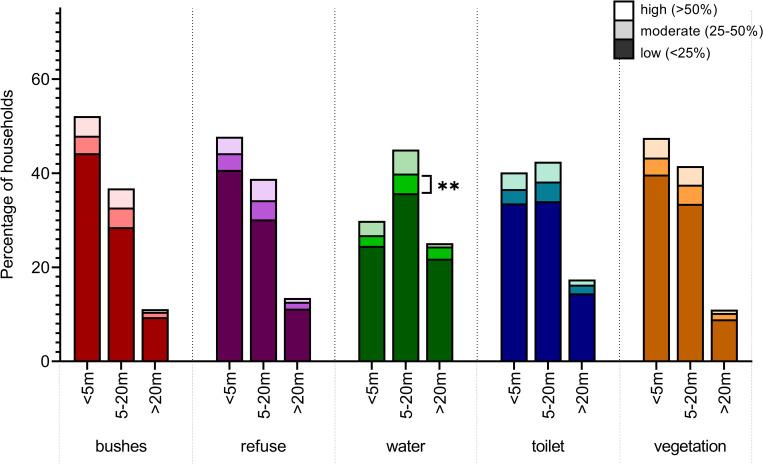
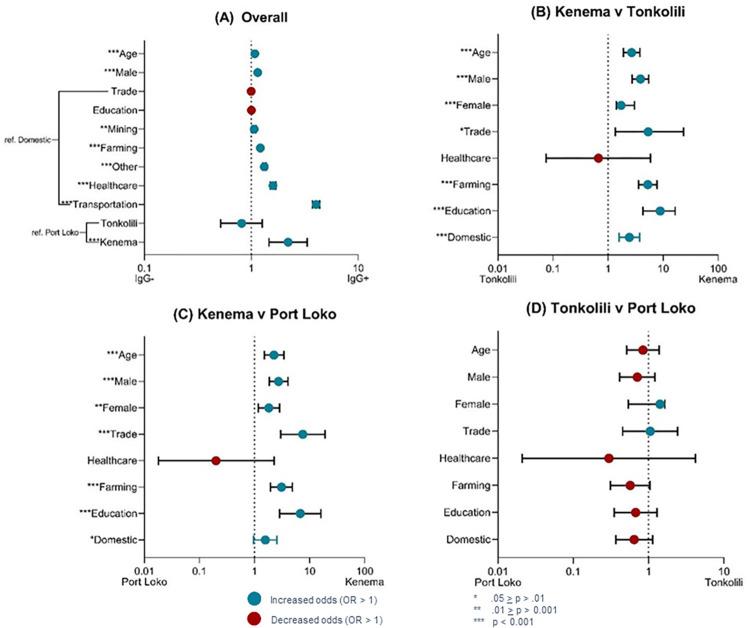
Between 2015 and 2018, over 10,642 participants from Kenema, Tonkolili, and Port Loko Districts were enrolled in this cross-sectional study. Previous LASV and LF epidemiological studies support classification of these districts as "endemic," "emerging," and "non-endemic", respectively. Dried blood spot samples were tested for LASV antibodies by ELISA to determine the seropositivity of participants, indicating previous exposure to LASV. Surveys were administered to each participant to assess demographic and environmental factors associated with a higher risk of exposure to LASV. Overall seroprevalence for antibodies to LASV was 16.0%. In Kenema, Port Loko, and Tonkolili Districts, seroprevalences were 20.1%, 14.1%, and 10.6%, respectively. In a multivariate analysis, individuals were more likely to be LASV seropositive if they were living in Kenema District, regardless of sex, age, or occupation. Environmental factors contributed to an increased risk of LASV exposure, including poor housing construction and proximity to bushland, forested areas, and refuse.
CONCLUSIONS AND SIGNIFICANCE
In this study we determine a baseline LASV seroprevalence in three districts which will inform future epidemiological, ecological, and clinical studies on LF and the LASV in Sierra Leone. The heterogeneity of the distribution of LASV and LF over both space, and time, can make the design of efficacy trials and intervention programs difficult. Having more studies on the prevalence of LASV and identifying potential hyper-endemic areas will greatly increase the awareness of LF and improve targeted control programs related to LASV.
背景
拉沙病毒(LASV)是引起急性病毒性出血热拉沙热(LF)的病原体,在西非流行。人类感染主要是在接触感染的啮齿动物宿主——纳塔尔大鼠的粪便或尿液后发生的。塞拉利昂对 LASV 感染的流行情况的粗略估计很大程度上是未知的。本横断面研究旨在确定塞拉利昂三个行政区 LASV 抗体 IgG 的基线血清阳性率,并确定血清阳性和 LASV 暴露的潜在危险因素。
方法和主要发现
在 2015 年至 2018 年期间,来自凯内马、通科利利和洛科港地区的 10642 多名参与者参加了这项横断面研究。以前的 LASV 和 LF 流行病学研究支持将这些地区分别归类为“流行”、“新兴”和“非流行”。通过 ELISA 检测干血斑样本中的 LASV 抗体,以确定参与者的血清阳性率,表明其以前曾接触过 LASV。对每个参与者进行调查,以评估与 LASV 暴露风险增加相关的人口统计学和环境因素。LASV 抗体的总体血清阳性率为 16.0%。在凯内马、洛科港和通科利利地区,血清阳性率分别为 20.1%、14.1%和 10.6%。在多变量分析中,居住在凯内马地区的个体更有可能 LASV 血清阳性,无论其性别、年龄或职业如何。环境因素增加了 LASV 暴露的风险,包括住房建筑质量差以及靠近灌木丛、森林和垃圾场。
结论和意义
在这项研究中,我们确定了三个地区的 LASV 血清阳性率基线,这将为塞拉利昂 LF 和 LASV 的未来流行病学、生态学和临床研究提供信息。LASV 和 LF 在空间和时间上的分布不均,这使得疗效试验和干预计划的设计变得困难。对 LASV 进行更多的研究并确定潜在的高度流行地区,将极大地提高 LF 的认识,并改善与 LASV 相关的有针对性的控制计划。


 Zotero 插件