
自噬:癌症治疗中的一个富有挑战性的悖论。
Autophagy: A challengeable paradox in cancer treatment.
机构信息
Medical Biology Research Center, Health Technology Institute, Kermanshah University of Medical Sciences, Kermanshah, Iran.
Department of Biology, Payame Noor University, Tehran, Iran.
出版信息
Cancer Med. 2023 May;12(10):11542-11569. doi: 10.1002/cam4.5577. Epub 2023 Feb 9.
OBJECTIVE
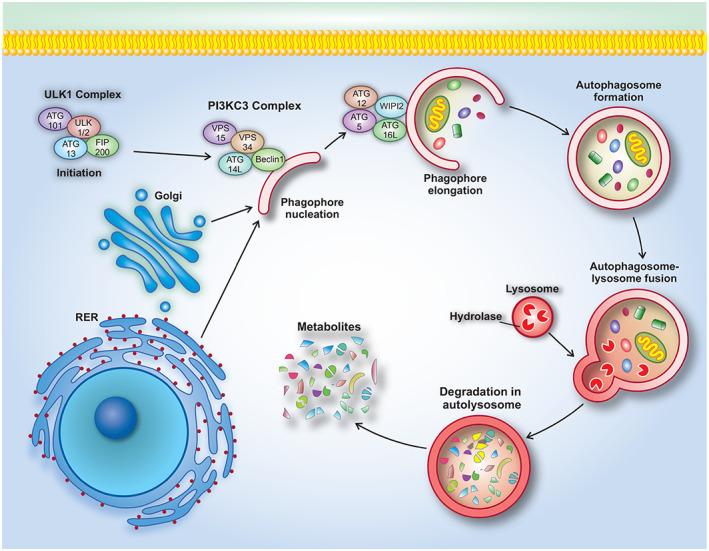
Autophagy is an intracellular degradation pathway conserved in all eukaryotes from yeast to humans. This process plays a quality-control role by destroying harmful cellular components under normal conditions, maintaining cell survival, and establishing cellular adaptation under stressful conditions. Hence, there are various studies indicating dysfunctional autophagy as a factor involved in the development and progression of various human diseases, including cancer. In addition, the importance of autophagy in the development of cancer has been highlighted by paradoxical roles, as a cytoprotective and cytotoxic mechanism. Despite extensive research in the field of cancer, there are many questions and challenges about the roles and effects suggested for autophagy in cancer treatment. The aim of this study was to provide an overview of the paradoxical roles of autophagy in different tumors and related cancer treatment options.
METHODS
In this study, to find articles, a search was made in PubMed and Google scholar databases with the keywords Autophagy, Autophagy in Cancer Management, and Drug Design.
RESULTS
According to the investigation, some studies suggest that several advanced cancers are dependent on autophagy for cell survival, so when cancer cells are exposed to therapy, autophagy is induced and suppresses the anti-cancer effects of therapeutic agents and also results in cell resistance. However, enhanced autophagy from using anti-cancer drugs causes autophagy-mediated cell death in several cancers. Because autophagy also plays roles in both tumor suppression and promotion further research is needed to determine the precise mechanism of this process in cancer treatment.
CONCLUSION
We concluded in this article, autophagy manipulation may either promote or hinder the growth and development of cancer according to the origin of the cancer cells, the type of cancer, and the behavior of the cancer cells exposed to treatment. Thus, before starting treatment it is necessary to determine the basal levels of autophagy in various cancers.
目的
自噬是一种在从酵母到人等所有真核生物中都保守的细胞内降解途径。在正常条件下,该过程通过破坏有害的细胞成分发挥质量控制作用,维持细胞存活,并在应激条件下建立细胞适应。因此,有许多研究表明,功能失调的自噬是参与各种人类疾病(包括癌症)的发展和进展的因素之一。此外,自噬在癌症发展中的重要性已被其作为一种细胞保护和细胞毒性机制的矛盾作用所强调。尽管在癌症领域进行了广泛的研究,但对于自噬在癌症治疗中的作用和影响仍存在许多问题和挑战。本研究旨在提供自噬在不同肿瘤中的矛盾作用及其相关癌症治疗选择的概述。
方法
在这项研究中,为了查找文章,我们在 PubMed 和 Google Scholar 数据库中使用了“Autophagy”、“Autophagy in Cancer Management”和“Drug Design”等关键词进行了搜索。
结果
根据调查,一些研究表明,一些晚期癌症依赖自噬来维持细胞存活,因此当癌细胞暴露于治疗时,自噬被诱导并抑制治疗剂的抗癌作用,也导致细胞耐药。然而,使用抗癌药物增强自噬会导致几种癌症中的自噬介导的细胞死亡。由于自噬在肿瘤抑制和促进中也发挥作用,因此需要进一步研究以确定该过程在癌症治疗中的精确机制。
结论
我们在本文中得出结论,根据癌细胞的起源、癌症的类型和暴露于治疗的癌细胞的行为,自噬的操纵可能会促进或阻碍癌症的生长和发展。因此,在开始治疗之前,有必要确定各种癌症中的自噬基础水平。

 Zotero 插件