
淀粉样蛋白级联假说2.0:概念的推广
The Amyloid Cascade Hypothesis 2.0: Generalization of the Concept.
作者信息
Volloch Vladimir, Rits-Volloch Sophia
机构信息
Department of Developmental Biology, Harvard School of Dental Medicine, Boston, MA, USA.
Division of Molecular Medicine, Children's Hospital, Boston, MA, USA.
出版信息
J Alzheimers Dis Rep. 2023 Jan 19;7(1):21-35. doi: 10.3233/ADR-220079. eCollection 2023.
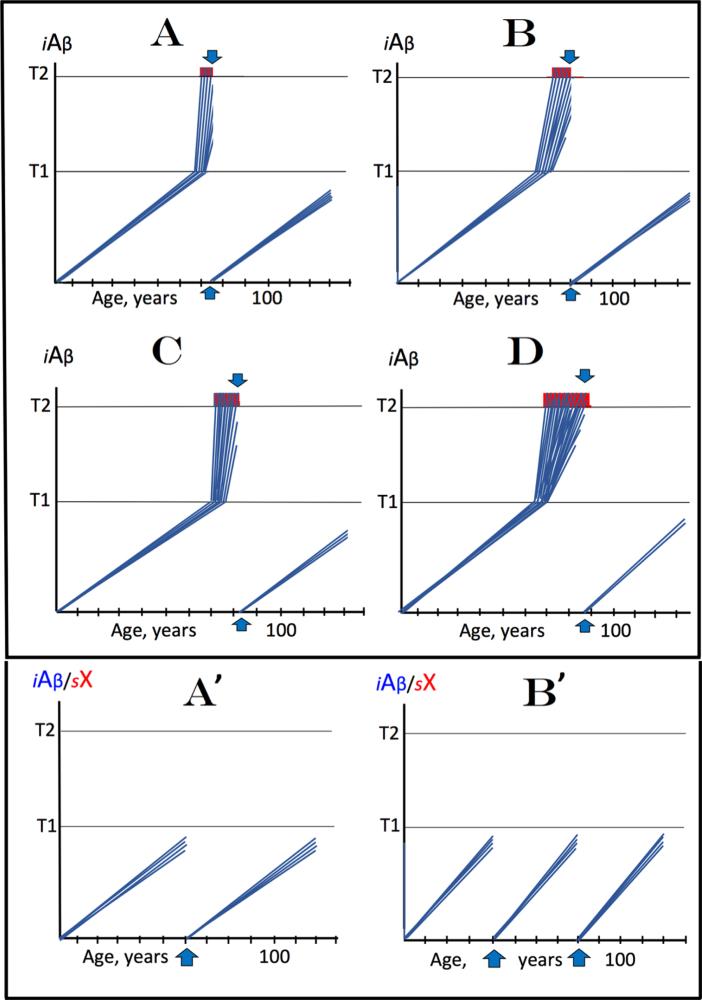
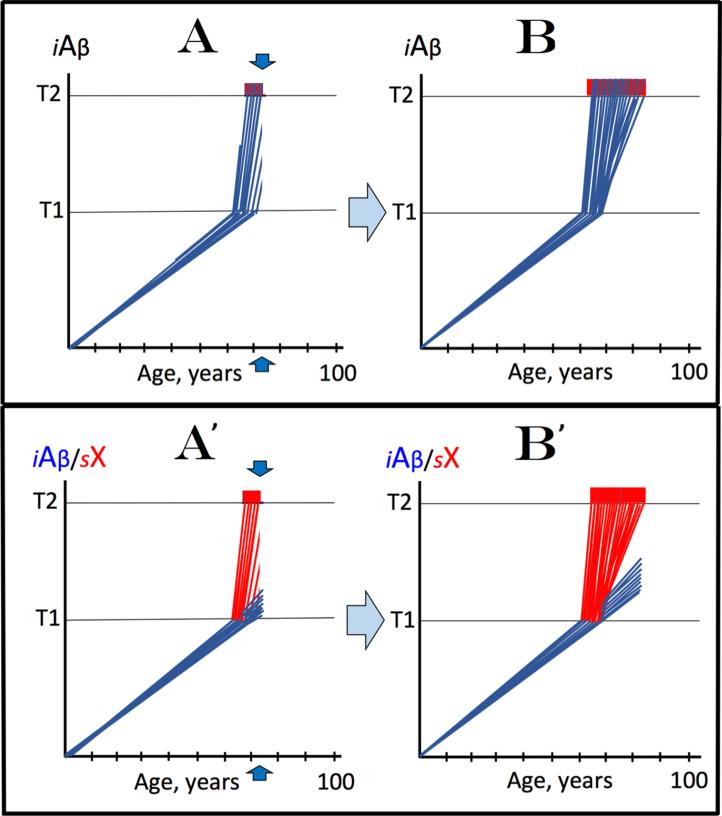
Recently, we proposed the Amyloid Cascade Hypothesis 2.0 (ACH2.0), a reformulation of the ACH. In the former, in contrast to the latter, Alzheimer's disease (AD) is driven by amyloid-β (Aβ) and occurs in two stages. In the first, relatively benign stage, Aβ protein precursor (AβPP)-derived Aβ activates, upon reaching a critical threshold, the AβPP-independent Aβ-generating pathway, triggering a devastating second stage resulting in neuronal death. While the ACH2.0 remains aligned with the ACH premise that Aβ is toxic, the toxicity is exerted because of intra- rather than extracellular Aβ. In this framework, a once-in-a-lifetime-only Aβ depletion treatment via transient activation of BACE1 and/or BACE2 (exploiting their Aβ-cleaving activities) or by any means appears to be the best therapeutic strategy for AD. Whereas the notion of differentially derived Aβ being the principal moving force at both AD stages is both plausible and elegant, a possibility remains that the second AD stage is enabled by an AβPP-derived Aβ-activated self-sustaining mechanism producing a yet undefined deleterious "substance X" (X) which anchors the second AD stage. The present study generalizes the ACH2.0 by incorporating this possibility and shows that, in this scenario, the Aβ depletion therapy may be ineffective at symptomatic AD stages but fully retains its preventive potential for both AD and the aging-associated cognitive decline, which is defined in the ACH2.0 framework as the extended first stage of AD.
最近,我们提出了淀粉样蛋白级联假说2.0(ACH2.0),这是对ACH的重新阐述。与后者相比,在前者中,阿尔茨海默病(AD)由淀粉样β蛋白(Aβ)驱动,并分为两个阶段。在第一个相对良性的阶段,Aβ蛋白前体(AβPP)衍生的Aβ在达到临界阈值时激活不依赖AβPP的Aβ生成途径,引发灾难性的第二阶段,导致神经元死亡。虽然ACH2.0仍然与ACH的前提一致,即Aβ具有毒性,但毒性是由细胞内而非细胞外的Aβ产生的。在此框架下,通过短暂激活β-分泌酶1(BACE1)和/或β-分泌酶2(利用它们切割Aβ的活性)或任何方式进行的一次性终身Aβ清除治疗似乎是治疗AD的最佳策略。虽然不同来源的Aβ在AD两个阶段都是主要驱动力这一观点既合理又精妙,但仍有一种可能性,即AD的第二阶段是由AβPP衍生的Aβ激活的自我维持机制促成的,该机制产生一种尚未明确的有害“物质X”(X),它支撑着AD的第二阶段。本研究通过纳入这种可能性对ACH2.0进行了推广,并表明,在这种情况下,Aβ清除疗法在AD症状阶段可能无效,但完全保留了其对AD和与衰老相关的认知衰退的预防潜力,在ACH2.0框架中,后者被定义为AD的扩展第一阶段。

 Zotero 插件